Noninvasive cardiac modulation via triplet-sensitized photoswitching in the phototherapeutic window
Published in Chemistry and Pharmacy & Pharmacology
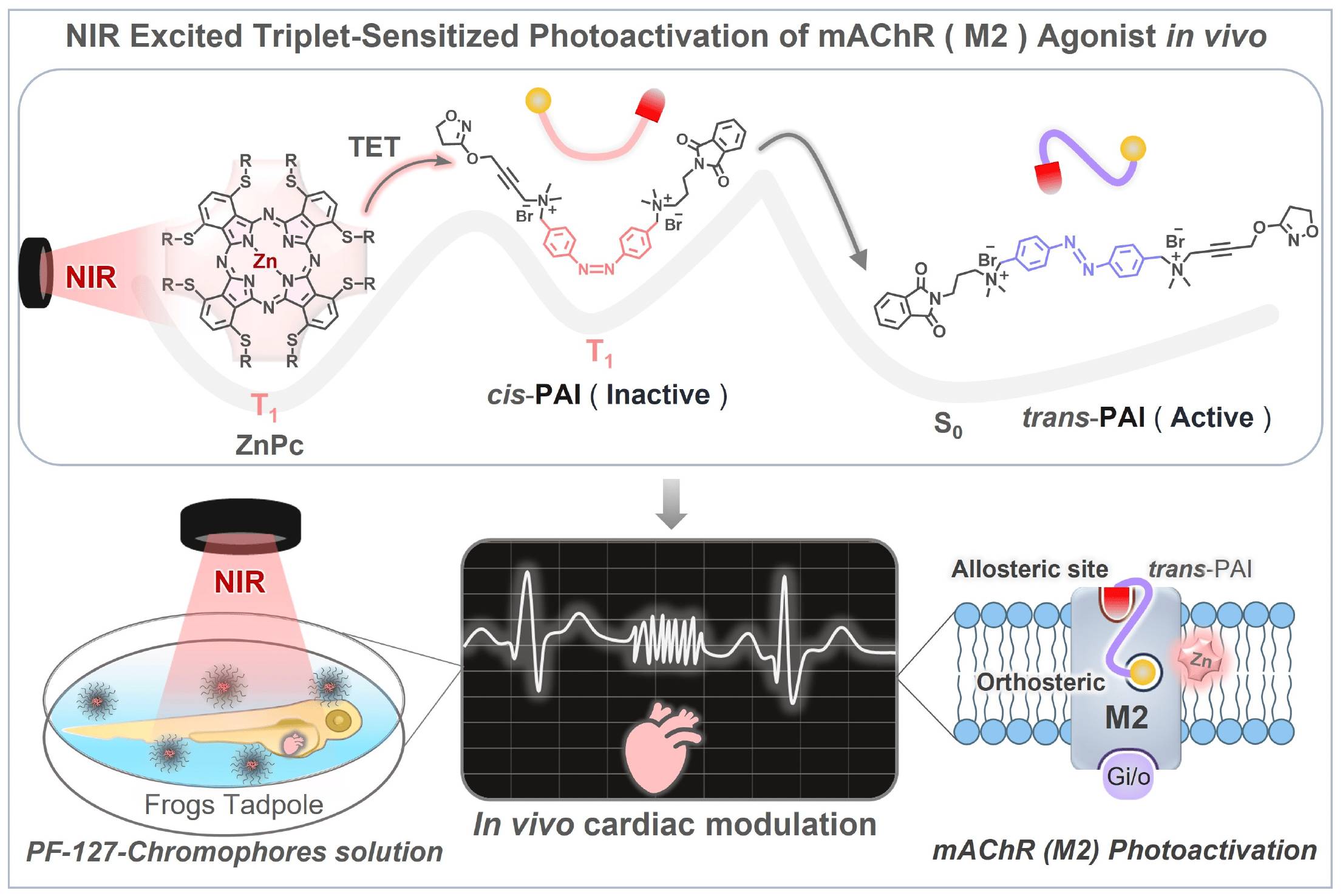



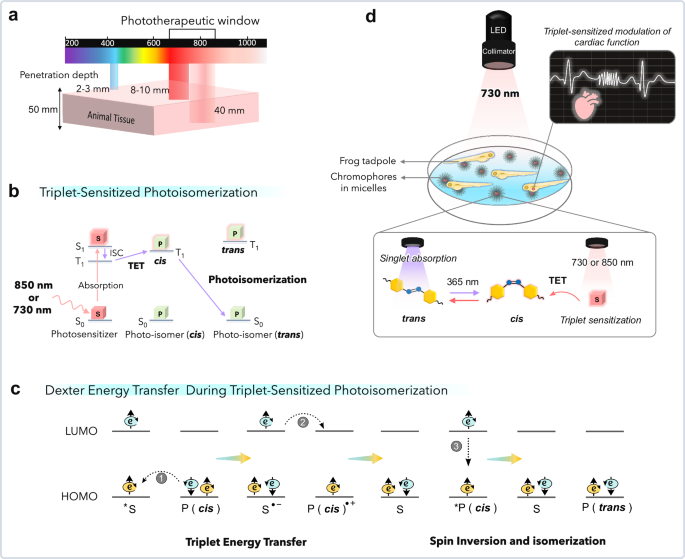

The story of this research revolves around the power of effective teamwork and research collaboration. In 2022, we unexpectedly discovered that the action spectrum of cis-to-trans photoisomerization of azobenzene can be red-shifted through triplet-sensitization (Bharmoria & Moth-Poulsen et al. Chem. Sci. 2022, 13, 11904). Shortly after, our research group relocated to a new home at ICMAB in Barcelona. We wanted to make a strong start in a new environment and translate our triplet-sensitized isomerization into the field of photopharmacology.
Our goals were clear: we wanted to develop a technology for photopharmacology that could lead to deep NIR light penetration into skin with low excitation fluences. We started the project by successfully shifting the action spectrum of azobenzenes towards the NIR-I region. Initial progress was promising, but to achieve full potential, we turned to our collaborators for more advanced sensitizers and photoswitches.
We reached out to Prof. Dumoulin (AMAAU, Türkiye) for expertise in biocompatible photosensitizers. Prof.Dumoulin provided us with a novel biocompatible Zn-phthalocyanine sensitizer absorbing in the NIR-I region. Through Prof. Dumoulin, we were introduced to Prof. Lindsey (NCSU), who supplied us with another biocompatible photosensitizer, nature-inspired bacteriochlorophyll. Around the same time, Naimovičius, an Erasmus+ M.S. student from Prof. Karolis's group (Vilnius University), joined the project. Together with Miroshnichenko, a Ph.D. student in our group, they began working on shifting the action spectrum of novel azobenzenes received from Prof. Kimizuka (Kyushu University) and synthesized by Hölzel from our group in the skin biomimetic film using various photosensitizers.
Once the action spectrum of cis-to-trans isomerization of azobenzenes was successfully shifted to the NIR-I region, we tested the approach in aqueous micellar solutions under ambient conditions. To implement our findings in real-world applications, we reached out to Prof. Pau, a photopharmacologist at IBEC. Prof. Pau provided the azobenzene-based drug (PAI) used to regulate the heart rate. We confirmed that photoisomerization of PAI occurs under low excitation fluences within the NIR-I range. Ekin, a Ph.D. student from Prof. Pau’s group, utilized the PAI-ZnPc micelle formulation to effectively control the heart rate of frog tadpoles upon excitation at 730 nm, marking the success of the project.
The collaborative effort achieved the first application of triplet-sensitized photoswitching in photopharmacology, highlighting that teamwork can translate fundamental research into real-world applications.

Follow the Topic
-
Nature Communications
An open access, multidisciplinary journal dedicated to publishing high-quality research in all areas of the biological, health, physical, chemical and Earth sciences.

Related Collections
With Collections, you can get published faster and increase your visibility.
Women's Health
Publishing Model: Hybrid
Deadline: Ongoing
Tumor Microenvironment Crosstalk and Therapeutic Implications
Publishing Model: Hybrid
Deadline: Nov 02, 2026