Opening Up the Ballot Box: A New Archive Makes Indonesian Election Data More Accessible
Published in Law, Politics & International Studies
Explore the Research
Indonesia Election Archive: Institutions, candidates and results
Scientific Data - Indonesia Election Archive: Institutions, candidates and results
Understanding elections is key to understanding how democracy works. In Indonesia—a country with more than 280 million people and over 200 million registered voters—this understanding is not always easy to achieve. But a new project, the Indonesia Election Archive (IEA), is working to make election data more transparent, systematic, and accessible for researchers, journalists, civil society, and the public.
Developed by a collaborative team of academics and civil society experts in Indonesia and the United States, the IEA brings together two decades of data on election laws, candidates, and results. Its aim is straightforward: to make it easier to study and follow how elections in Indonesia are conducted and how they evolve over time.
Why Indonesia’s Elections Are Important to Study
Indonesia is the world’s third-largest democracy, after India and the United States. It is also a relatively young democracy, having transitioned from authoritarian rule in the late 1990s. Since then, the country has held regular elections for multiple levels of government, including the presidency, national legislatures, governors, and local leaders.
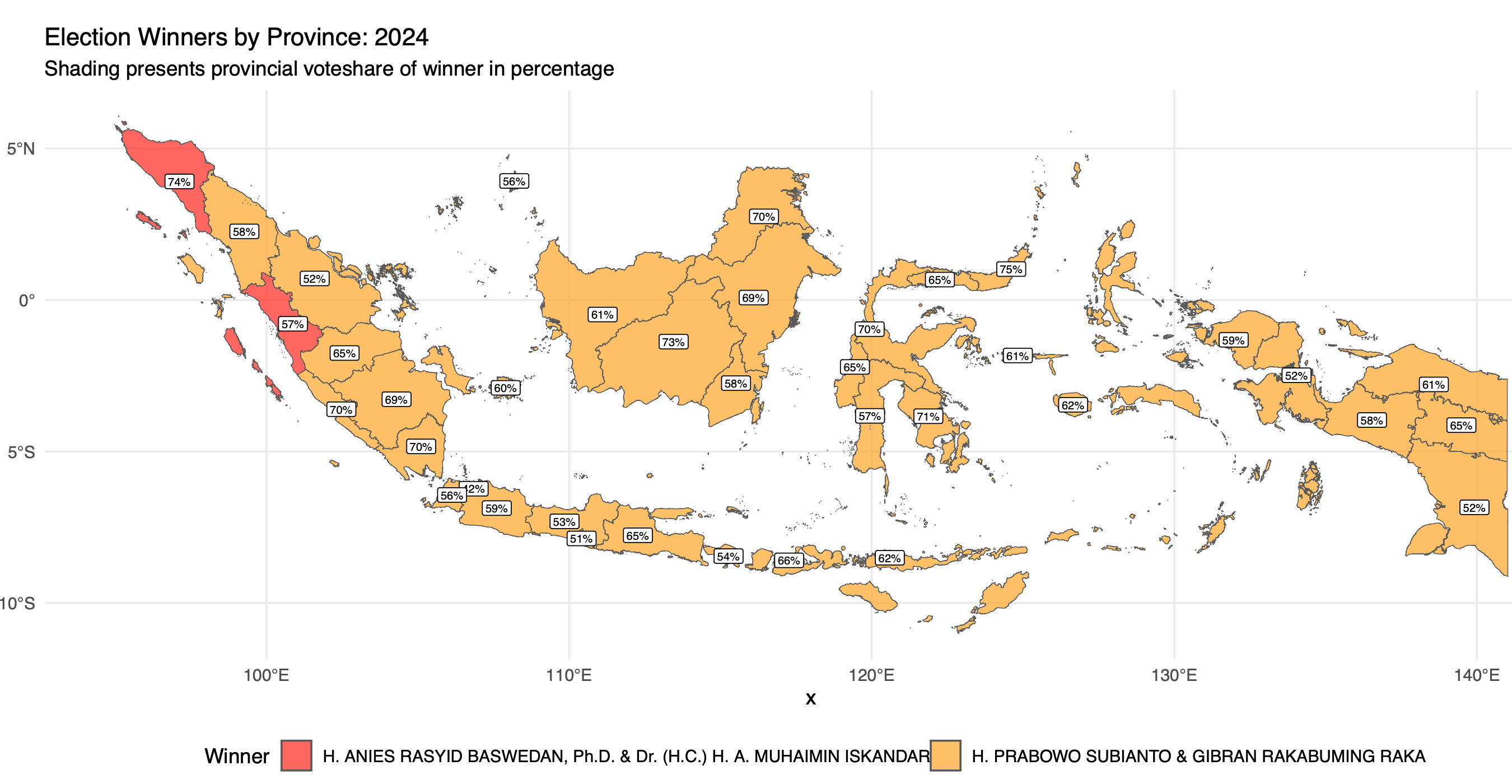
Managing these elections is a large and complex task. In recent cycles, voters have cast ballots for several national and provincial offices on the same day. For example, the 2024 general election involved voting for the President and Vice President, two chambers of the national legislature, and 38 provincial legislatures—all at once.
While the scale of these elections is impressive, it can also lead to challenges. Observers, such as the Asian Network for Free Elections (ANFREL), have noted issues such as voter confusion, unclear legal changes, and inconsistent information availability. These issues point to a broader need: making reliable, well-organized election data available to the public in a consistent way.
What the Indonesia Election Archive Offers
The Indonesia Election Archive responds to this need by compiling and standardizing publicly available information across three categories:
- Election laws and institutional rules (1999–2024)
- Candidate lists (2014, 2019, 2024)
- Official election results (2014, 2019, 2024)
The archive currently focuses on national-level offices—the President and Vice President, the upper house (DPD), and the lower house (DPR)—and includes structured datasets and accompanying documentation. Users can access legal texts in Indonesian, as well as CSV files with candidate and result data. These files are designed to be usable for both academic and public purposes.
The data has been verified using official documents from the Indonesian Electoral Commission (KPU), and steps have been taken to ensure consistency across years and offices.
Building on Earlier Work
The IEA project builds on earlier collaborations between the KPU and Perludem, an Indonesian civil society group focused on democratic reform. In the lead-up to the 2014 and 2019 elections, Perludem worked with KPU to digitize and distribute voter information. These efforts included the development of web-based platforms, open data tools, and educational campaigns.
The IEA extends this work by organizing the information into a permanent, structured archive that remains accessible beyond individual election cycles. Researchers from the University of Maryland joined the project to help systematize and document the data, drawing on international standards for election transparency and accountability.
The archive is structured to be compatible with other international election datasets, such as the Constituency-Level Elections Archive (CLEA), making it easier to conduct comparative or longitudinal analysis.
What the Data Tells Us
One of the main benefits of the IEA is that it allows users to identify trends over time. For example:
- Between 2014 and 2024, over 24,600 candidates competed in DPR elections.
- Gender disparities remain noticeable, with men making up the majority of candidates.
- A small number of parties continue to win the majority of seats, but new or smaller parties occasionally gain representation.
The data also shows the growing complexity of election management in Indonesia, particularly as the number of electoral districts and candidates has increased.
Transparency and Verification
All of the data in the IEA comes from public sources, primarily from the KPU and official government websites. For older elections, the documents were often only available offline or in PDF format, requiring additional work to digitize, extract, and validate the information.
The research team used a mix of automated scraping tools, manual transcription, and internal cross-checking to ensure the reliability of the datasets. Where discrepancies were found, original documents were reviewed and, if needed, additional sources were consulted.
A Resource for Many Audiences
The IEA is designed to be useful for a range of users:
- Researchers can use it for statistical analysis or comparative studies.
- Journalists can fact-check claims and explore historical trends.
- Civil society groups can use it to monitor participation, representation, and election fairness.
- Students and educators can use it as a learning tool in courses on democracy, politics, or Southeast Asia.
The hope is that by lowering barriers to access, more people will be able to engage with election data and contribute to discussions about governance and reform.
Accessing the Archive
All files are available for free via the Open Science Framework:
🔗 https://doi.org/10.17605/OSF.IO/HJQZD
Those seeking additional documentation can also visit:
Future Plans for the Archive
While the current version of the IEA already provides a valuable snapshot of recent elections, it is only the beginning. The project team has a long-term vision for expanding and enriching the archive.
What’s Coming Next:
- Deeper Granularity: Future versions will include more detailed, candidate-level election results—especially for DPR races—allowing for more in-depth longitudinal analyses.
- Extended Historical Coverage: The team plans to incorporate data from elections held before 2014, broadening the archive’s historical scope.
- Regional Elections: The archive will expand to include local and regional contests such as gubernatorial, regency, and city-level elections, in line with Indonesia’s national electoral calendar.
- Updates and Revisions: Existing files will be revised over time as new information becomes available, and as further data validation is conducted.
These plans reflect the project’s goal of developing a comprehensive and sustainable data resource for the study of elections in Indonesia, and the team welcomes feedback or suggestions for improvement.
Looking Ahead
Democracy doesn’t run on elections alone—it also relies on transparency, participation, and information. The Indonesia Election Archive is a step toward making electoral processes more open and understandable.
By organizing two decades of electoral data into a usable format, the IEA helps document how Indonesia’s democracy has evolved—and provides tools to better understand where it might go next.

Follow the Topic
-
Scientific Data
A peer-reviewed, open-access journal for descriptions of datasets, and research that advances the sharing and reuse of scientific data.

Related Collections
With Collections, you can get published faster and increase your visibility.
10 years of the FAIR principles
Publishing Model: Open Access
Deadline: Nov 14, 2026
Data to support cancer treatment, diagnosis, and disease understanding
Publishing Model: Open Access
Deadline: Jan 02, 2027