PEDOT:Polydopamine - High-performance bioelectrodes
Published in Bioengineering & Biotechnology and Materials
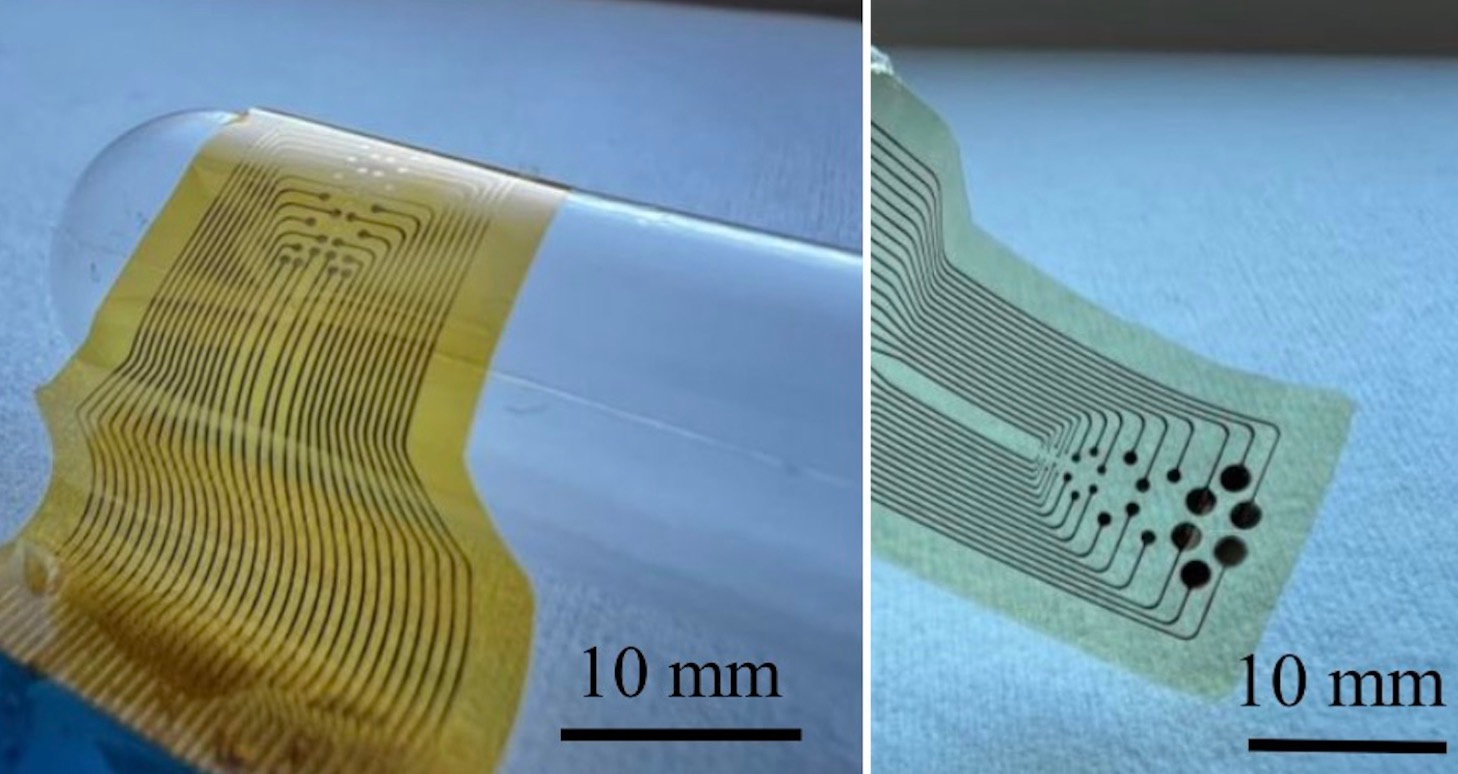




In the field of bioelectrodes, we strive to design interface materials (i.e. coatings) that can provide good charge-transduction. The ideal coating will offer seamless electronic-ionic charge transduction, reliability, biochemical affinity to the target medium, the ability to further functionalise the surface. One of the most prevalent such materials in research is PEDOT:PSS. Despite the high-performance, many published works report adhesion failure from the underlying substrate, limiting its reliability and widespread use.
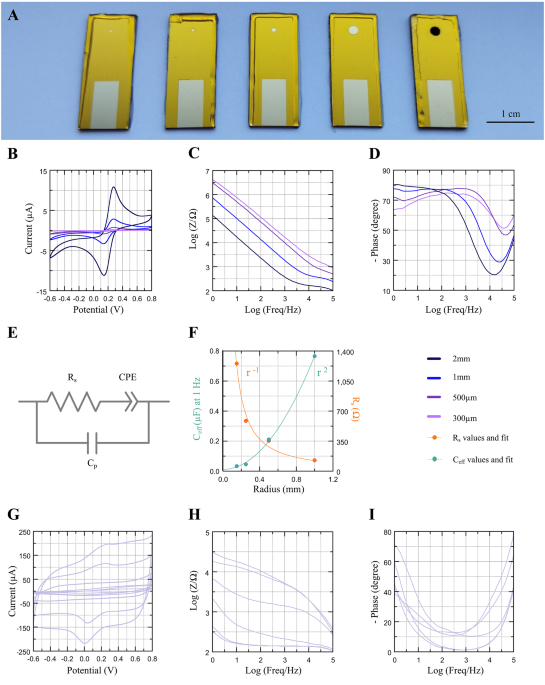
While navigating the meanders of defining her research path, my Ph.D. student S. Saghir took inspiration from nature and wondered whether Polydopamine (PDA), a strong non-selective adhesive found in mussels, could be used to solve this reliability challenge. First, we proved that Polydopamine can be used as co-ion in the doping of PEDOT. In other words, we could replace PSS with PDA and synthesise PEDOT:PDA. Next, we designed a robust electropolymerisation process where by carefully selecting chemistries and parameters, PEDOT:PDA can be deposited on gold electrodes with great repeatability. We were then excited to observe large electrochemical performance metrics (impedance, charge storage capacity, charge injection), comparable to the best PEDOT coatings in the literature.
And then came the Eureka moment, when we tested and proved the hypothesis that PDA introduces an adhesion advantage when incorporated in a PEDOT electrode coating subjected to harsh sonication tests. We then completed our study by additionally proving that PEDOT:PDA is both scalable and easily integrated in microfabrication workflows. To this effect, we showed size-insensitive high electrode performance, as well as integration into a flexible implantable electrode array device.
To sum up, we developed PEDOT:PDA electrodes that offer:
- Low-impedance coating with large interface capacitance ~17.8 mF cm−2
- Large charge storage capacity of ~ 42 mC cm−2
- Strong adhesion to Au substrates, passing tests that PEDOT:PSS controls fail
- Repeatable, low-variability material synthesis by electropolymerisation
- Scalability, with area-normalised metrics constant with electrode size
- Manufacturability by direct integration into microfabrication process flows
Moving forward, we are planning on further validating our hypotheses in applications in vitro. Beyond our immediate results, we hope to see more emerging examples of microfabrication leveraging the power of biomaterials to solve unmet challenges in bioelectronic interfaces and biomedical devices at large.

Follow the Topic
-
Scientific Reports
An open access journal publishing original research from across all areas of the natural sciences, psychology, medicine and engineering.

Related Collections
With Collections, you can get published faster and increase your visibility.
Advances in neurodegenerative diseases
Publishing Model: Hybrid
Deadline: Jun 30, 2026
AI for clinical decision-making
Publishing Model: Open Access
Deadline: Jun 23, 2026




Please sign in or register for FREE
If you are a registered user on Research Communities by Springer Nature, please sign in