Powerful microbes: from pollutants destruction to fertilizer
Published in Ecology & Evolution and Agricultural & Food Science

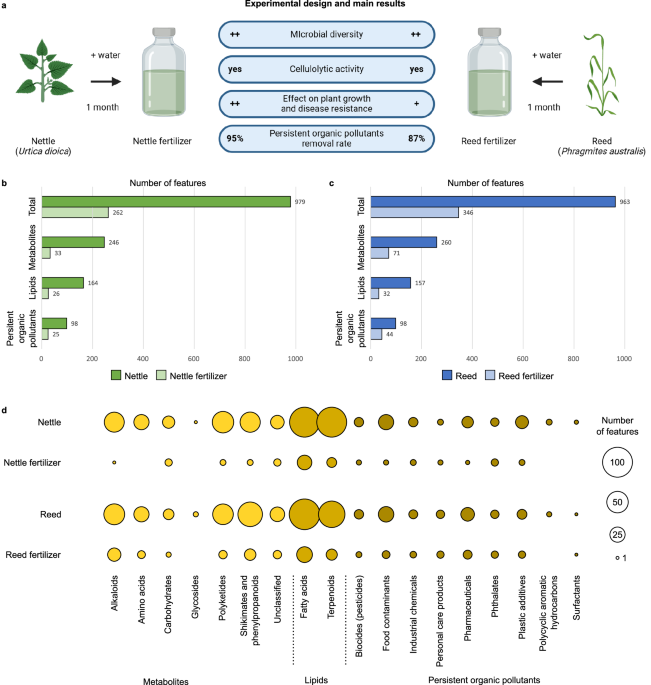

Solutions come from nature, in this case the reuse of polluted plants to produce non-polluted liquid fertilizers that are compatible with agriculture.
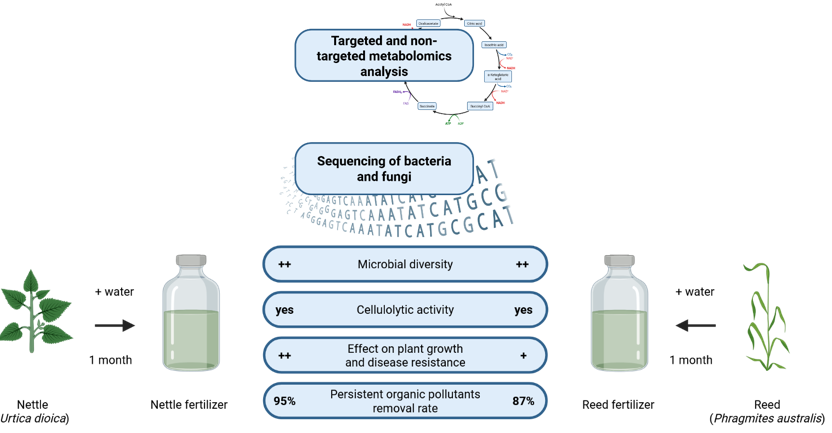
Polluted plants from constructed wetlands are considered unsubale waste. The authors present a cost-effective, sustainable, scalable, nature-based method that eliminates micropollutants and transforms this waste into phytoprotective and biostimulant liquid fertilizers for agriculture.
They used a multi-omics approach to uncover specific microbial consortia, which are able to dismantle plant tissues through cellulolytic acitivity. The consortia are also able to thrive despite pollutants being released from the polluted plant tissues. Further pollutants degradation (including drugs, pesticides, PAHs, PFAS...) is performed by the microbes, removing 87-95% of the pollutants originally contained in the plant tissues.
Moreover, the fertilizer resulting from this microbial degradation of plant tissues displays phytoprotective and biostimulating activities. This is explained by the production of plant growth/defense-promoting molecules by the microbial consortia during plant tissue degradation and pollutants removal.
Follow the Topic
-
Nature Communications
An open access, multidisciplinary journal dedicated to publishing high-quality research in all areas of the biological, health, physical, chemical and Earth sciences.

Related Collections
With Collections, you can get published faster and increase your visibility.
Women's Health
Publishing Model: Hybrid
Deadline: Ongoing
Tumor Microenvironment Crosstalk and Therapeutic Implications
Publishing Model: Hybrid
Deadline: Nov 02, 2026