Prokaryotic-virus-encoded auxiliary metabolic genes throughout the global oceans
Published in Earth & Environment, Ecology & Evolution, and Microbiology

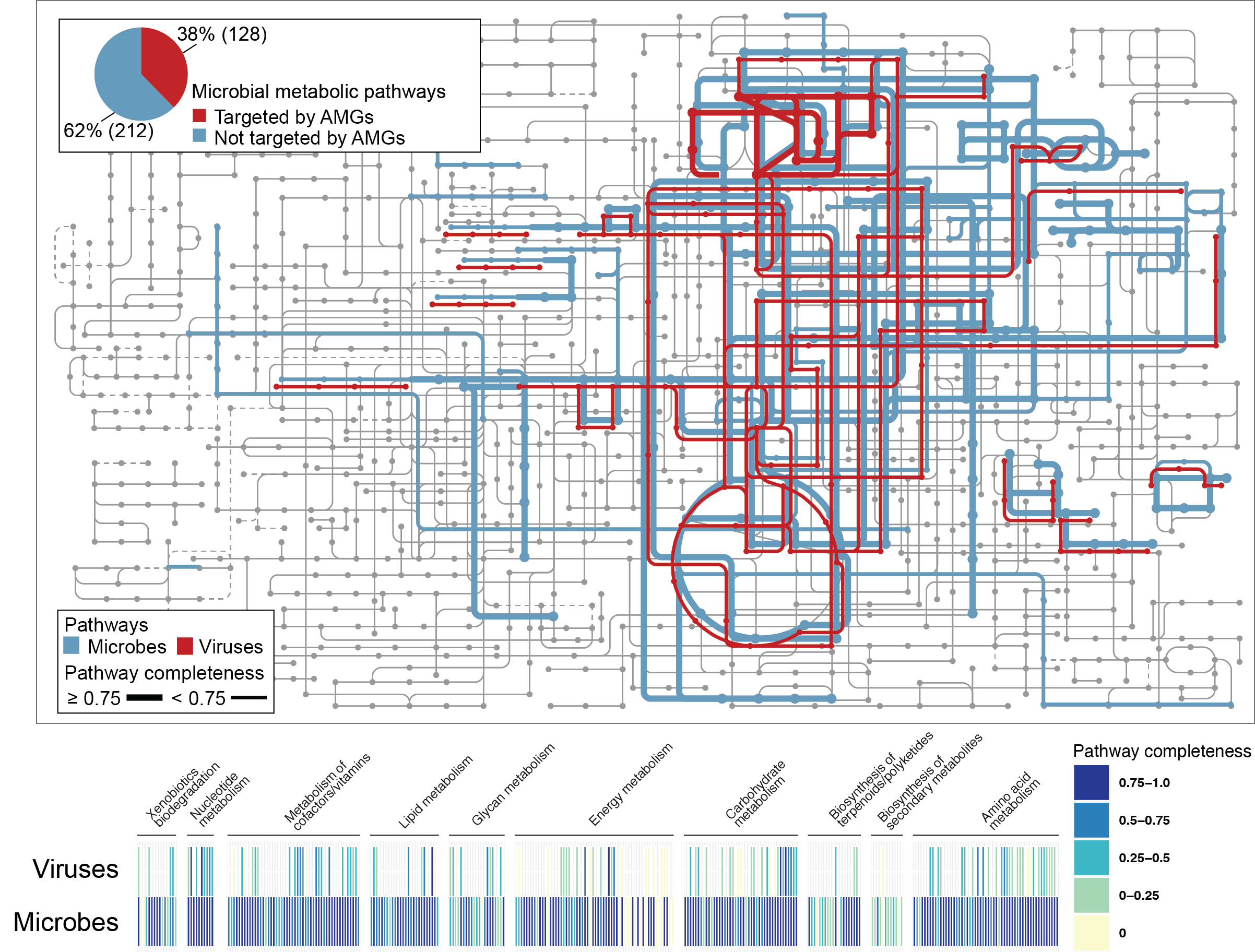
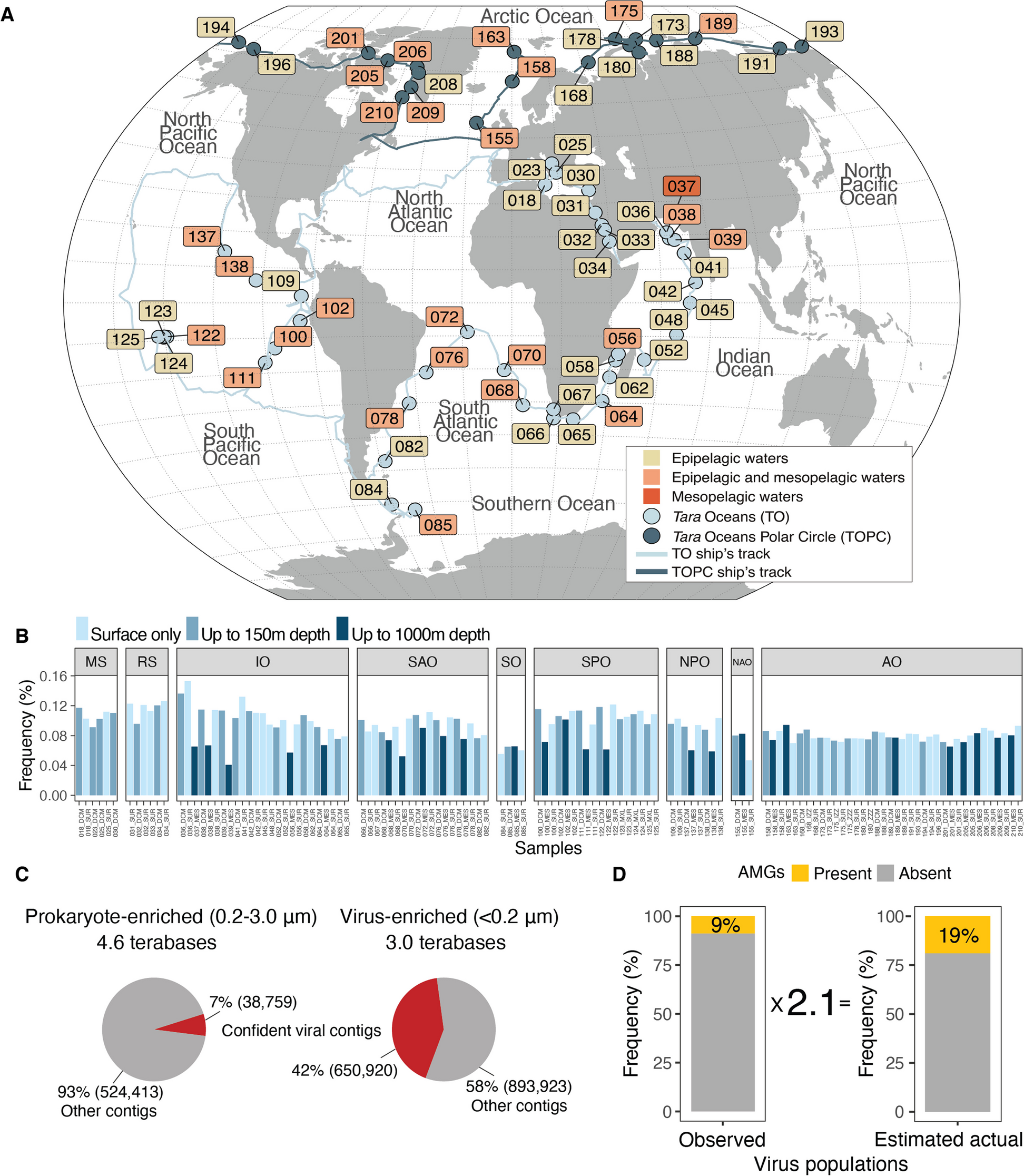

In the decades since sequencing technology and analytic advances have driven a surge in AMG studies across various ecosystems. Yet the lack of a systematically curated AMG catalog remained, thus hindering the integration of viruses into models to quantitatively assess their metabolic and biogeochemical impacts. Fortunately, five years prior to this study, global dsDNA catalog papers began to be published5,6,7, resulting in the identification of over 190,000 dsDNA viruses across the global oceans. For the first time, this presented a global ocean dataset that was deeply sequenced and curated for dsDNA viruses. It was against this backdrop that Funing Tian, then a PhD student in Microbiology who had received a University Fellowship from The Ohio State University, and James Wainaina, having just completed his graduate studies at the University of Western Australia (UWA), began working on this project.
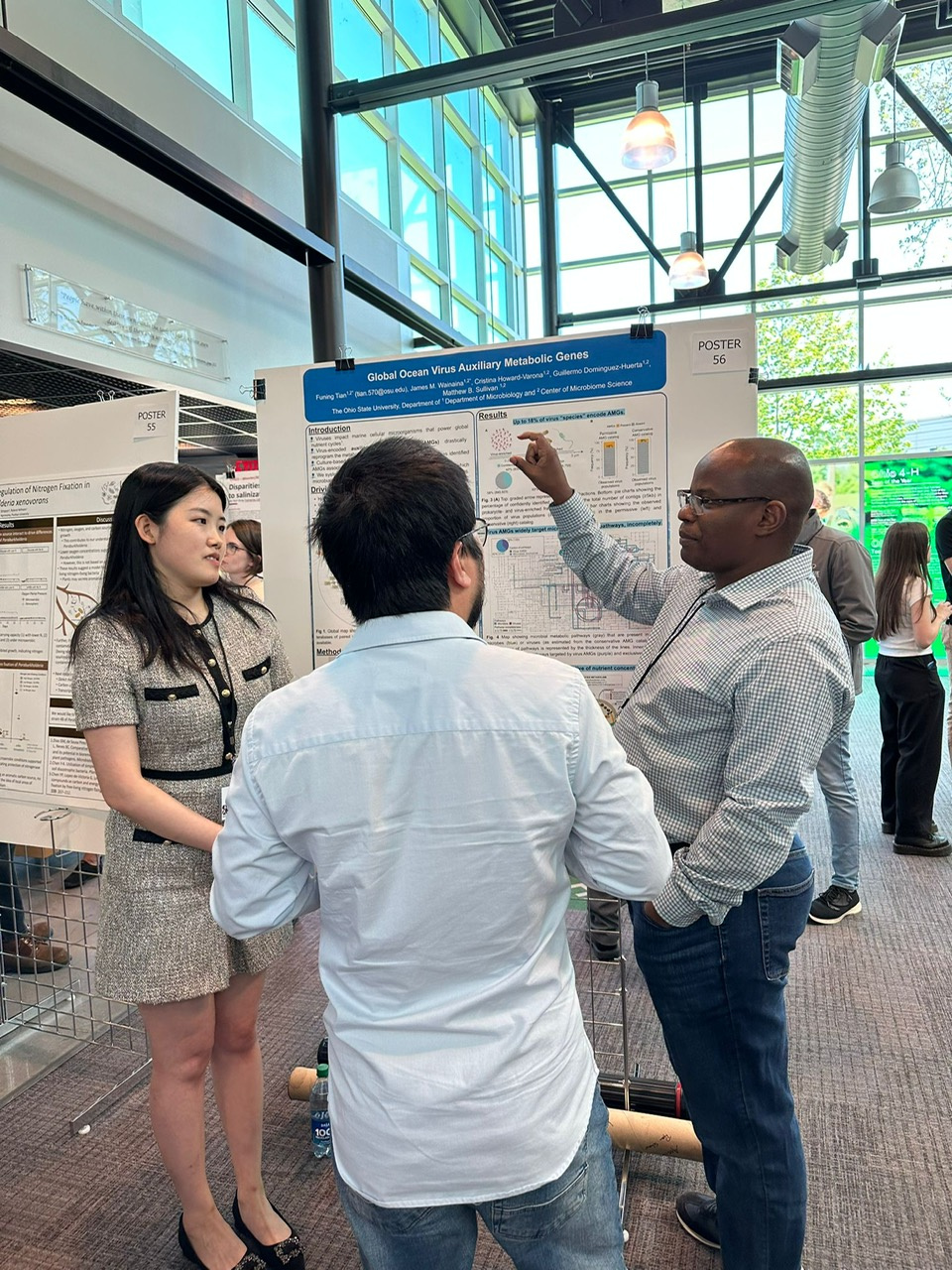
Funing Tian (Left), Zhiping Zhong (Center), and James Wainaina (Right) during a poster presentation of the global AMG catalog work at the Center of Microbiome Science (CoMS) MidWest Conference May 2022
The Ocean AMG project faced numerous challenges. First, despite the increase in AMG studies, the lack of standards for what constitutes a 'bona fide' AMG has prevented cross-study comparisons. This necessitated the development of standards for what could be 'conservatively' assigned as AMGs, a process that took almost a year and was further aided by new analytical tools by Kelly Wrighton lab8. After identifying ~22,000 AMG gene clusters, the second challenge was determining how to narrow down to the most biogeochemical important AMGs,
There are several take-home messages from this paper. Firstly, given the avalanche of data from large consortia such as the Tara Ocean Expedition, it is crucial to have a systematic and scalable approach for analyzing the data and enabling cross-study comparisons. Secondly, reliable, updated, and maintained viral ecogenomics tools will be essential for continuously exploring and advancing omic data sets, especially within the marine ecosystem. Finally, this study would not have been possible without cross-disciplinary collaboration, teamwork, dogged determination despite scientific challenges, and an unwavering spirit; this was particularly important as it took over four years to get this work to publication.
What does the future hold for us, Funing Tian, now Dr. Tian is currently a Bioinformatician at the University of Chicago, where she focuses on bioinformatics analysis of single-cell multi-omics sequencing for asthma research. James has started his research group at the Woods Hole Oceanographic Institution Biology Department, where he continues exploring the ecology and evolution of marine viruses with a particular focus on corals.
1. Sullivan, M. B. et al. Prevalence and Evolution of Core Photosystem II Genes in Marine Cyanobacterial Viruses and Their Hosts. PLoS Biol. 4, e234 (2006).
2. Lindell, D. et al. Transfer of photosynthesis genes to and from Prochlorococcus viruses. Proc. Natl. Acad. Sci. U. S. A. 101, 11013–11018 (2004).
3. Lindell, D., Jaffe, J. D., Johnson, Z. I., Church, G. M. & Chisholm, S. W. Photosynthesis genes in marine viruses yield proteins during host infection. Nature 438, 86–89 (2005).
4. Bragg, J. G. & Chisholm, S. W. Modeling the fitness consequences of a cyanophage-encoded photosynthesis gene. PLoS One 3, 1–9 (2008).
5. Brum, J. R. et al. Ocean Viral Communities. Science (80-. ). 348, 1261498-1–11 (2015).
6. Roux, S. et al. Ecogenomics and potential biogeochemical impacts of globally abundant ocean viruses. Nature 537, 689–693 (2016).
7. Gregory, A. C. et al. Marine DNA Viral Macro- and Microdiversity from Pole to Pole. Cell 177, 1109-1123.e14 (2019).
8. Shaffer, M. et al. DRAM for distilling microbial metabolism to automate the curation of microbiome function. Nucleic Acids Res. 48, 8883–8900 (2020).
Follow the Topic
-
Microbiome
This journal hopes to integrate researchers with common scientific objectives across a broad cross-section of sub-disciplines within microbial ecology. It covers studies of microbiomes colonizing humans, animals, plants or the environment, both built and natural or manipulated, as in agriculture.

Related Collections
With Collections, you can get published faster and increase your visibility.
Oncobiome
This collection of papers delves into the burgeoning field of oncobiome research, exploring the intricate relationship between cancer and the microbiome. The oncobiome encompasses the diverse microbial communities residing in and on the human body, which influence cancer development, progression, and treatment responses. By examining these interactions, our aim is to unravel the complex mechanisms through which the microbiome impacts oncogenesis and therapeutic outcomes.
This compilation highlights cutting-edge research, offering insights into potential diagnostic markers and novel therapeutic strategies, thereby advancing our understanding of cancer biology and paving the way for innovative, microbiome-targeted cancer treatments.
This is a cross-journal collection between:
Experimental Hematology and Oncology
Articles will undergo the standard peer-review process of the journal to which they are submitted and are subject to either the BMC editorial policies or those of BJC Reports. Articles will be added to the Collection as they are published. The Editors have no competing interests with the submissions which they handle through the peer review process. The peer review of any submissions for which the Editors have competing interests is handled by another Editorial Board Member who has no competing interests.
Publishing Model: Open Access
Deadline: Ongoing
Microbiome and Reproductive Health
Microbiome is calling for submissions to our Collection on Microbiome and Reproductive Health.
Our understanding of the intricate relationship between the microbiome and reproductive health holds profound translational implications for fertility, pregnancy, and reproductive disorders. To truly advance this field, it is essential to move beyond descriptive and associative studies and focus on mechanistic research that uncovers the functional underpinnings of the host–microbiome interface. Such studies can reveal how microbial communities influence reproductive physiology, including hormonal regulation, immune responses, and overall reproductive health.
Recent advances have highlighted the role of specific bacterial populations in both male and female fertility, as well as their impact on pregnancy outcomes. For example, the vaginal microbiome has been linked to preterm birth, while emerging evidence suggests that gut microbiota may modulate reproductive hormone levels. These insights underscore the need for research that explores how and why these microbial influences occur.
Looking ahead, the potential for breakthroughs is immense. Mechanistic studies have the power to drive the development of microbiome-based therapies that address infertility, improve pregnancy outcomes, and reduce the risk of reproductive diseases. Incorporating microbiome analysis into reproductive health assessments could transform clinical practice and, by deepening our understanding of host–microbiome mechanisms, lay the groundwork for personalized medicine in gynecology and obstetrics.
We invite researchers to contribute to this Special Collection on Microbiome and Reproductive Health. Submissions should emphasize functional and mechanistic insights into the host–microbiome relationship. Topics of interest include, but are not limited to:
- Microbiome and infertility
- Vaginal microbiome and pregnancy outcomes
- Gut microbiota and reproductive hormones
- Microbial influences on menstrual health
- Live biotherapeutics and reproductive health interventions
- Microbiome alterations as drivers of reproductive disorders
- Environmental factors shaping the microbiome
- Intergenerational microbiome transmission
This Collection supports and amplifies research related to SDG 3, Good Health and Well-Being.
All submissions in this collection undergo the journal’s standard peer review process. As an open access publication, this journal levies an article processing fee (details here). We recognize that many key stakeholders may not have access to such resources and are committed to supporting participation in this issue wherever resources are a barrier. For more information about what support may be available, please visit OA funding and support, or email OAfundingpolicy@springernature.com or the Editor-in-Chief.
Publishing Model: Open Access
Deadline: Oct 31, 2026