RECORD: A novel behavioral task battery to study complex decision-making in rodents
Published in Neuroscience


Performed repeatedly in daily life, decision-making is complex and context dependent. Understanding the intricacies of decision-making in rodents has always been a significant challenge for neuroscientists. With typical decision-making, specific behavioral features are common. When these features shift or become altered, decision-making has become abnormal. Notably, abnormal decision making can be induced by states or contexts, defined as internal or external factors that bias reward and/or cost valuation. For example, this bias can relate to a hyper-valuation of rewards resulting in risky behavior or hyper-valuation in cost resulting in overly cautious behavior. Importantly, these factors can shift decision making in a much more convoluted ways than described here, particularly when attempting cross-species validation.
To study this, behavioral task batteries have been developed for rodents where the animal's preference of location and offer are evaluated under various states. Yet, the naturalistic components are often lacking in these tasks. Invovlvement of food deprivation to induce offer acceptance is one such example of the incorporation of stressful conditions into behavioral tasks, thereby skewing results. Moreover, known behavioral tasks have significant limitations in the number of reward/cost offers presented, which is not conducive to natural, open field like decision-making. The added complexity of failing to adapt behavioral tasks to ethological decision-making in rodents results in the reduced translatability of such work. Moreover, the acquirement of such behavioral tasks relies on significant financial resource availability thus limiting academic discourse.
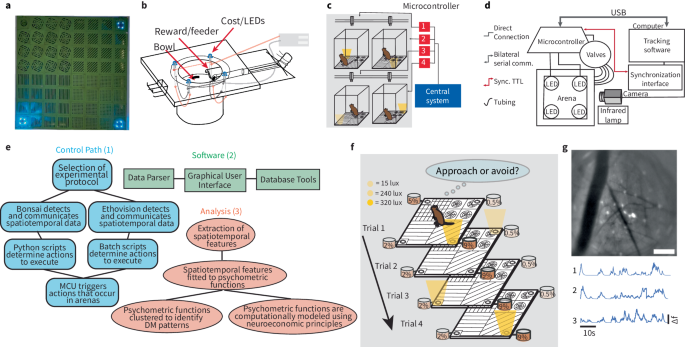
To fill this gap in knowledge, we developed a REward-COst Rodent Decision-Making (RECORD) system comprised of 3D printed parts, custom hardware and software, and behavioral procedures. This system is highly adaptable, does not rely on food deprivation, and is easily reproduced with low financial strain. This dexterous and easily trainable system can offer multiple reward-cost offers with a greater range than currently available tasks. This key aspect allows for open-filed like decision-making, an ethologically accurate model. Additionally, this tradeoff aspect gives further insight into the subtleties of decision-making by following the impacts of multiple reward or cost valuations on offer preference. Because this system is multifaceted, it can be adapted to multiple behavioral tasks resulting in a task battery based on the same central ideas. The use of RECORD as a task battery will prove instrumental in the analysis of context related behavior and thus, give further insight into the physiological mechanisms that underscore behavioral decision-making.
A compelling facet of the RECORD system is its ability to be applied across many contexts or states, thus broadening our understanding of how context can alter decision-making. Validated in this manuscript through oxycodone and alcohol studies, RECORD can track changes in over five behavioral parameters in a condition-dependent and offer-dependent manner. However, RECORD is not limited to the study of substance abuse, instead its applications can be widely applied to alternative contexts such as social interaction or hormone regulation. These contexts can be additionally utilized to determine sex differences, as seen in this manuscript, across multiple behavioral features. This insight provides foundational understanding for how physiological differences, due to sex, affect context dependent decision making. The plasticity of this system is crucial for studying how environmental and contextual factors impact decision-making.
A major finding facilitated by RECORD is the identification of discrete behavioral clusters, representing heterogeneric decision-making strategies. Like motor primitives, these clusters underline individual variability within decision-making. This allows researchers to not only compare decision-making within a singular subject and across subjects, but also paves way for comparison across species. Additionally, using oxycodone self-administration and alcohol-consumption as test cases, we reveal how analytic approaches that incorporate behavioral heterogeneity are sensitive to detecting alterations in decision-making. Thus, utilizing our framework to evaluate decision-making across various states, while also providing Indvidual analysis will enable future studies to produce robust and highly translatable work.
In sum, to accurately understand behavioral decision-making in rodents, we developed the naturalistic, stress-free, RECORD system. Future work developed from this system could relate to greater insight into reward-cost tradeoff, individual differences, decision-making strategies, and contextual influence. This will result in the spawning of many new studies and papers aiding in the development of theoretical understanding and practical applications. Its innovation and broad applicability allows for the REward-COst Rodent Decision-making (RECORD) system to make significant contributions to rodent decision-making studies. This powerful tool can not only be used to build translatable studies between species but can also be used to develop and modify current biologically and behaviorally relevant treatments for psychiatric disorders.

Follow the Topic
-
Communications Biology
An open access journal from Nature Portfolio publishing high-quality research, reviews and commentary in all areas of the biological sciences, representing significant advances and bringing new biological insight to a specialized area of research.

Related Collections
With Collections, you can get published faster and increase your visibility.
Lifespan changes in the human brain
Publishing Model: Hybrid
Deadline: Feb 01, 2027
Healthy Aging
Publishing Model: Open Access
Deadline: Dec 31, 2026