School Learning Environment to Global Citizenship
Published in Education




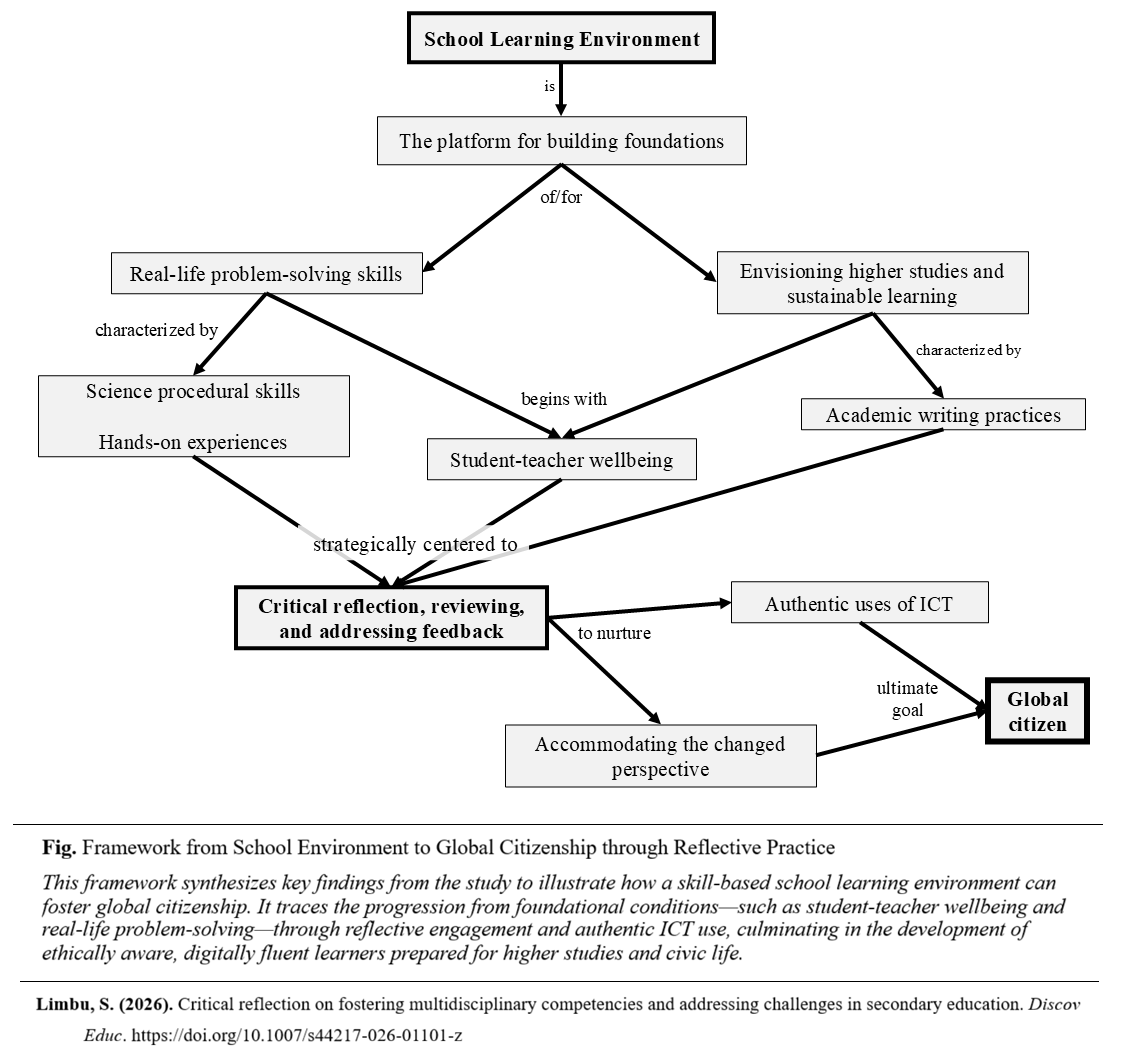
The framework begins by positioning the school learning environment as a platform for foundational development. It is not simply a place for delivering content, but rather a space for cultivating the conditions in which students can grow intellectually, ethically, and emotionally. Within this environment, two key pillars of skill-centric learning emerge.
The first pillar emphasizes real-life problem-solving skills. Students are encouraged to engage with scientific methods—observing, hypothesizing, experimenting, and analyzing—while also participating in hands-on experiences that make learning tactile and experiential. These practices help learners apply concepts to real-world contexts, preparing them to navigate challenges beyond the classroom.
The second pillar focuses on envisioning higher studies and sustainable learning. Through academic writing practices, students develop the ability to express ideas, reflect critically, and engage with scholarly discourse. This nurtures habits of sustained inquiry and prepares them for advanced education as well as lifelong learning.
Crucially, the framework highlights that this journey begins with student-teacher wellbeing. A nurturing and respectful environment is essential for reflection and growth, and wellbeing is strategically centered to support deeper learning. At the heart of the framework lies reflective practice, which functions as the engine driving transformation. Through critical reflection, reviewing, and addressing feedback, students learn to accommodate changed perspectives, revise assumptions, and embrace new viewpoints. They also learn to use ICT authentically, treating technology as a tool for inquiry, collaboration, and expression rather than distraction.
All of these elements converge toward the ultimate goal: the development of global citizens. Such learners are ethically aware, digitally fluent, resilient, and reflective, prepared to engage with complex societal and global issues. This framework is not merely theoretical; it offers a practical roadmap for educators and institutions. It calls for a shift from exam-centric to skill-centric pedagogy, the integration of reflective writing and ICT into daily practice, the prioritization of wellbeing and feedback culture, and a commitment to multidisciplinary, future-ready learning.
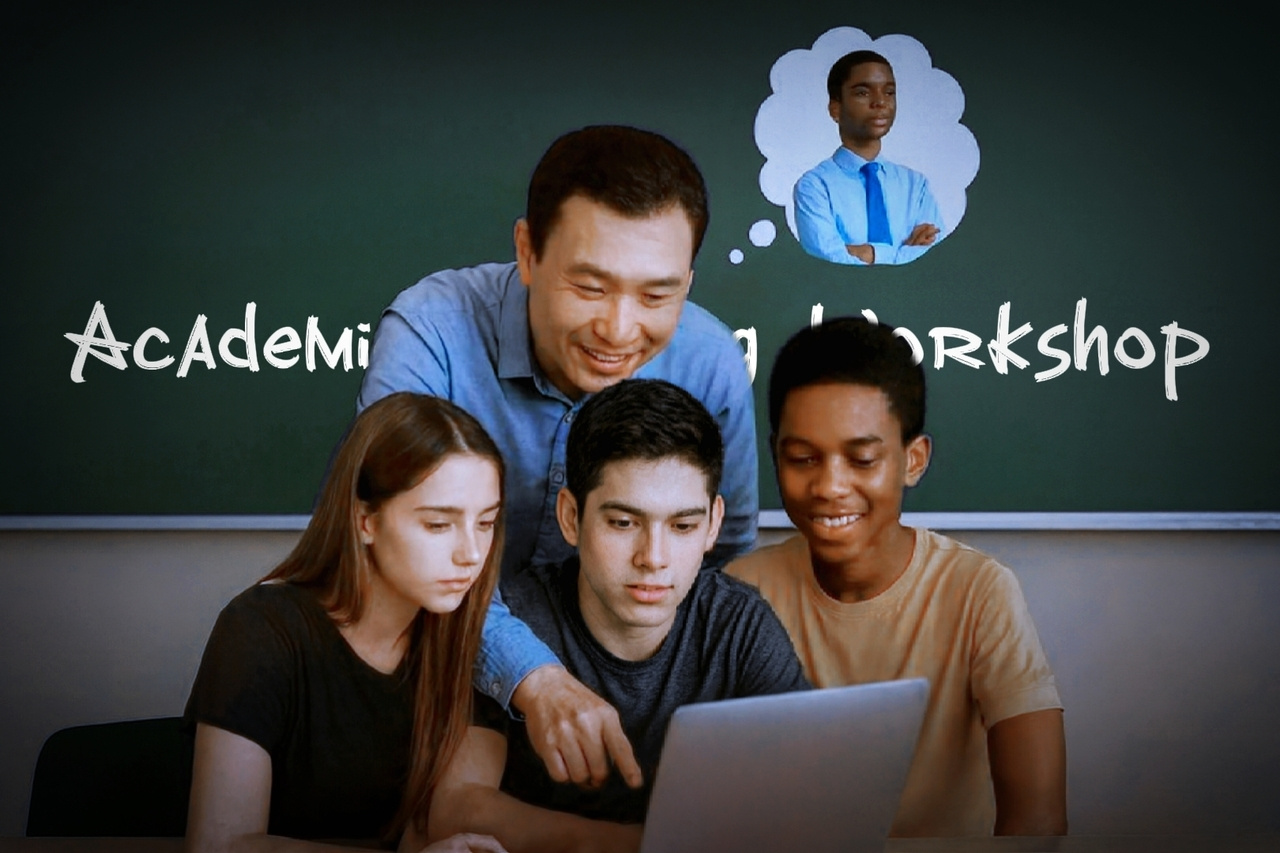
Disclosure: The poster image is AI-generated and edited in the Piscart app. The flowchart figure within the content is sourced from Limbu (2026).
Reference:
Limbu, S. Critical reflection on fostering multidisciplinary competencies and addressing challenges in secondary education. Discov Educ (2026). https://doi.org/10.1007/s44217-026-01101-z

Follow the Topic
-
Discover Education

An international, peer-reviewed open access journal that publishes original work in all areas of education, serving the community as a broad-scope journal for academic trends and future developments in the field.
Related Collections
With Collections, you can get published faster and increase your visibility.
Empowering Education through AI: Opportunities, Challenges and Risk Governance
Artificial Intelligence (AI) is reshaping the landscape of education as a double-edged sword. On one hand, it holds great promise for empowering teaching, learning, assessment, and educational management by making them more efficient, accurate, adaptive, and responsive. On the other hand, the increasing integration of AI in education elicits significant pedagogical, ethical, social, and policy concerns, such as reduced learner agency, algorithmic control, academic misconduct, and exacerbated educational disparities. Without proper risk governance, the AI technologies intended to empower education may end up disrupting the educational processes and wreaking chaos on educational development. This calls for coordinated efforts from policymakers, researchers, and practitioners worldwide to ensure the legitimate, appropriate, responsible, and ethical use of AI in education.
Against this backdrop, this Collection aims to promote critical inquiry into the intricate and multifaceted features of AI use in education. We particularly welcome interdisciplinary perspectives that explicate how policymakers, researchers, educators, and learners can participate in and collaborate to leverage the transformative power of AI while mitigating the potential risks within different educational scenarios and across diversified cultural contexts. Potential topics include (but are not limited to):
1. Social, ethical, cognitive, emotional, and behavioural terrains of AI use in education
2. Human-AI collaboration in teaching, learning, assessment, and educational management
3. Learner agency, self-regulation, and AI-empowered learning
4. Teacher professional development in AI-empowered education
5. AI literacy for educators and learners
6. Educational equity and academic integrity in the AI era
7. Policy innovation and risk governance for AI use in various educational settings
8. Cross-cultural perspectives on AI use and governance in education
This Collection supports and amplifies research related to SDG 4
Keywords: Artificial Intelligence (AI); Human-AI collaboration; AI-empowered education; policy innovation; risk governance; educational equity; academic integrity
Publishing Model: Open Access
Deadline: Feb 26, 2026
Empowering Education: Interdisciplinary Convergence and Skill Ecosystem Reconstruction for a Sustainable Future
In an era of unprecedented environmental and societal challenges, education systems must transform to empower students as catalysts for sustainable futures. This Collection advances sustainability education beyond environmental awareness, focusing on developing critical competencies—systems thinking, ethical decision-making, and innovative problem-solving—essential for building resilient societies.
We call for systemic reimagining of education across all levels and disciplines, particularly highlighting:
• Cross-curricular integration of sustainability principles in STEM and vocational training
• Pedagogical innovations that bridge theory-practice gaps
• Industry-education synergies for green skills development
• Digital transformation of sustainability learning
Key Research Domains
Contributions should address critical intersections of sustainability and education, including but not limited to:
• Curriculum innovation for actionable sustainability knowledge
• Evidence-based pedagogical strategies fostering sustainability literacy
• Vocational education redesign for green economy readiness
• Industry partnerships enhancing real-world learning
• Digital technologies (AI, data analytics) in sustainability education
• Assessment frameworks for sustainability competencies
• Teacher professional development models
• Global citizenship and ethical responsibility cultivation
Transformative Objectives
By examining how curricula, teaching strategies, and learning environments can embed sustainability principles, this Special Issue aims to:
• Equip learners with values-driven leadership capabilities
• Develop scalable solutions for environmental, social, and economic challenges
• Catalyze education’s role in achieving global sustainability goals
We invite submissions offering actionable insights and transformative frameworks to prepare students for thriving in a rapidly evolving world.
Publishing Model: Open Access
Deadline: May 31, 2026
Please sign in or register for FREE
If you are a registered user on Research Communities by Springer Nature, please sign in