Secrets in the museum drawers: revealing hidden species in the Choricotyle chrysophryi-like (Platyhelminthes) species complex
Published in Ecology & Evolution, Protocols & Methods, and Zoology & Veterinary Science


The Puzzle of Choricotyle chrysophryi Van Beneden & Hesse, 1863 (Platyhelminthes, Monogenea)
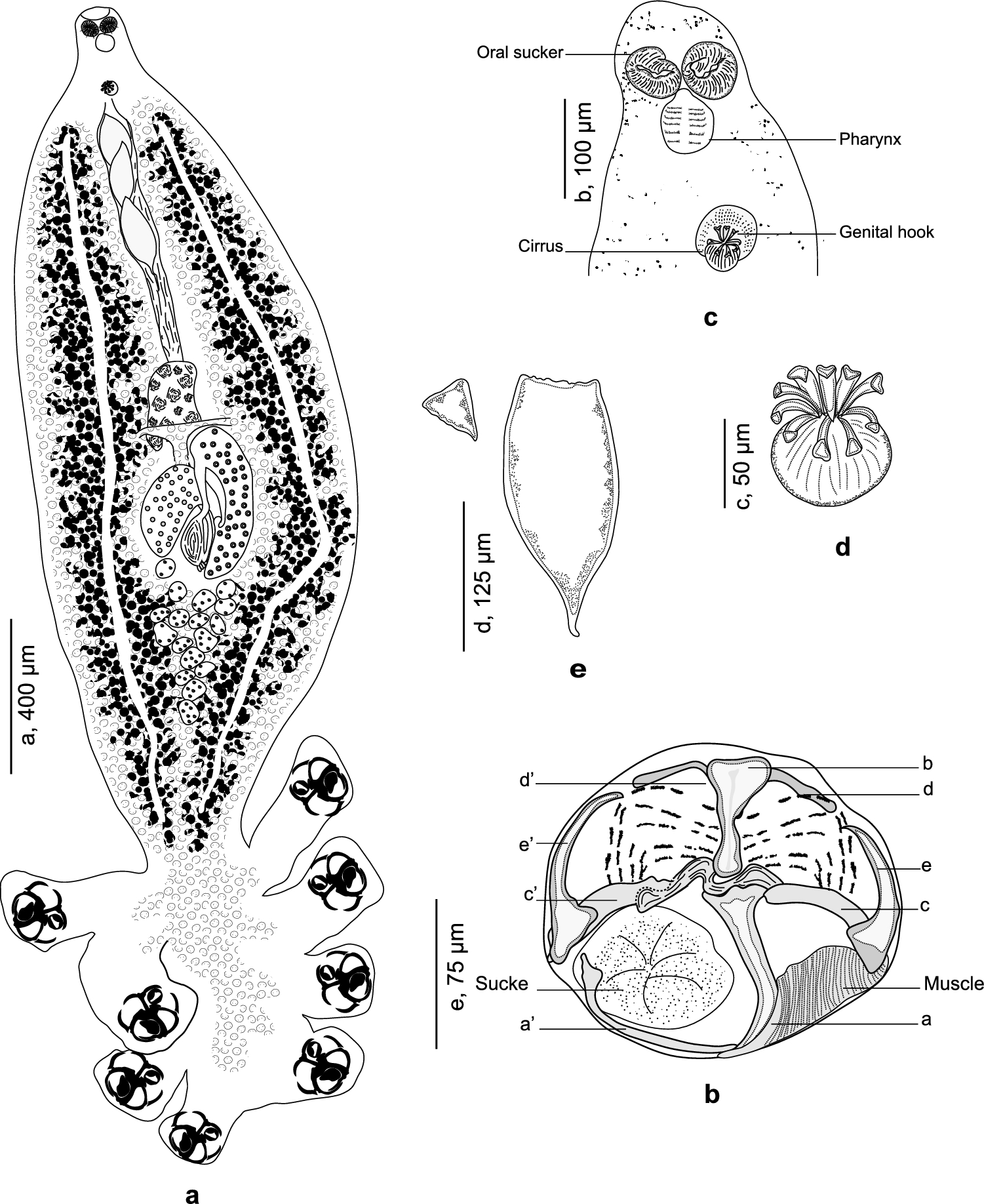
For decades, parasitologists believed that the monogenean parasite Choricotyle chrysophryi Van Beneden & Hesse, 1863 was a single species parasitizing sparid fishes across European waters. But when I began examining specimens under the microscope, the picture became less clear. Tiny but consistent differences in the hooks, the haptor, and the reproductive organs raised a question that kept nagging me: were we really dealing with just one species, or had multiple species been hiding under the same name all along?
Hidden Clues in the Museum
To search for answers, I went back in time, through the historical collections of the Muséum National d’Histoire Naturelle in Paris. These specimens, collected long ago from the sparid fish, the the axillary seabream Pagellus acarne, held details that modern eyes could reinterpret. As I studied the slides, I realized that the inconsistencies I had noticed were not random; they were patterns pointing to distinct species. The museum drawers, quietly holding their secrets for decades, were beginning to tell a new story.
Morphology Meets Molecules
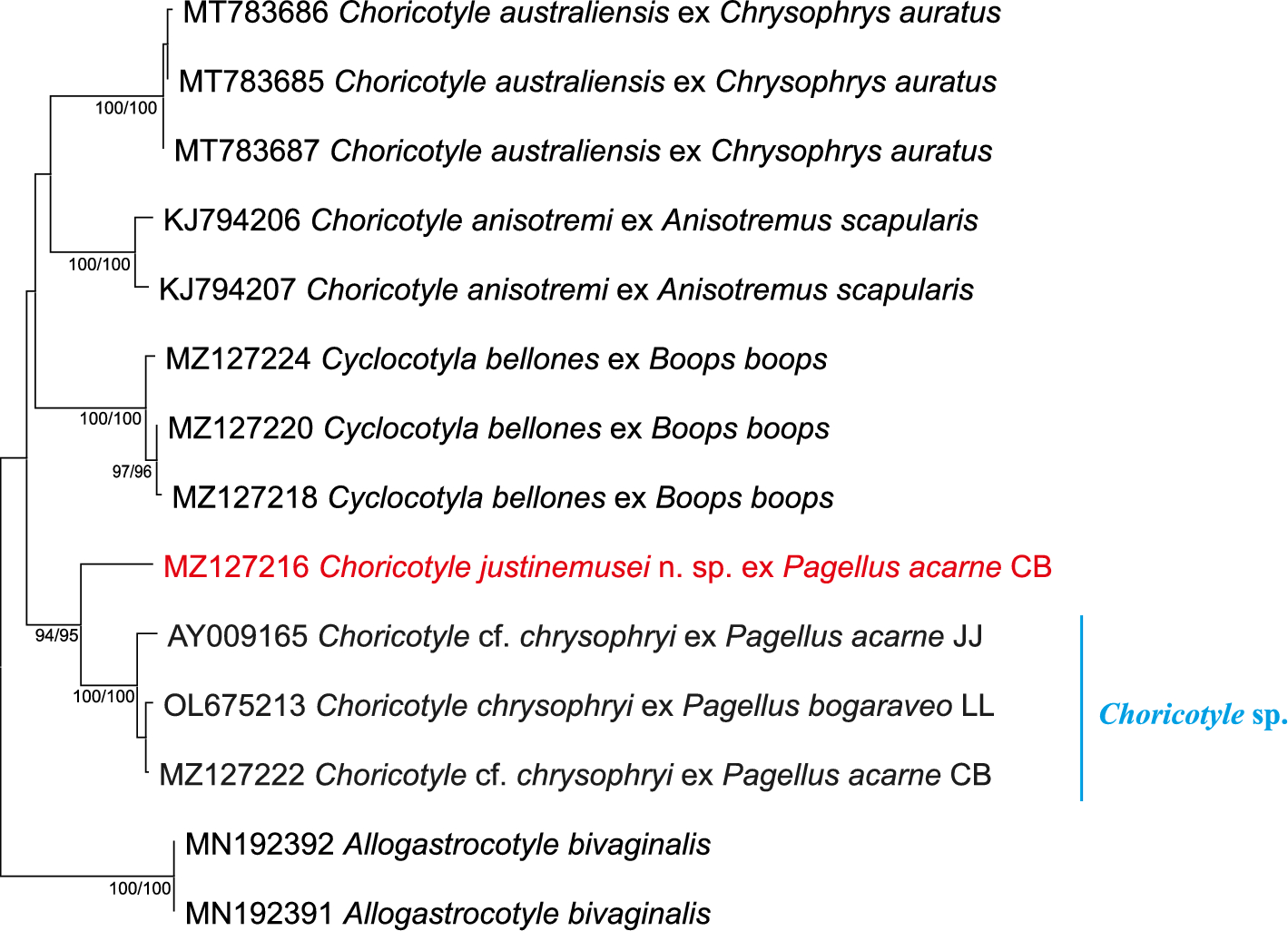
Still, I knew that morphology alone might not convince everyone. To build a stronger case, I combined these observations with molecular data, focusing on cox1 sequences. Together, the classical and modern approaches formed a powerful partnership. What the microscope suggested, the DNA confirmed: the specimens represented more than one species. The so-called C. chrysophryi was not a single entity, but a complex.
A New Name Emerges
Among these findings was a parasite that had never been formally described. Recognizing it as new to science was both exciting and humbling. We named it Choricotyle justinemusei Bouguerche, 2025, in honor of Professor Jean-Lou Justine, whose dedication to monogenean taxonomy and to safeguarding the MNHN helminth collections has inspired so many of us. Alongside this discovery, the study also reinstated C. pagelli and C. marionis as valid species and corrected several long-standing misidentifications.
Why It Matters
Beyond adding another name to the list of parasites, this work sheds light on host–parasite specificity and clarifies the true diversity of Choricotyle. It also illustrates the enduring value of museum collections: specimens collected in the past, when paired with modern methods, can still reveal new species and reshape our understanding of biodiversity.
Looking Ahead
For me, this paper is a reminder that science is not only built on curiosity, careful observation, and modern techniques, but also on the invaluable treasures preserved in museum collections. Specimens collected decades (or even centuries) ago continue to hold secrets that can reshape our understanding of biodiversity. In the drawers and cabinets of institutions like the Muséum National d’Histoire Naturelle, I found specimens that quietly told stories waiting to be uncovered, bridging the past and present. These collections allow us to revisit old questions with new tools, uncover hidden diversity, and make discoveries that would otherwise be impossible. This work has reinforced for me the enduring importance of museums as both repositories of knowledge and catalysts for ongoing scientific discovery.
Follow the Topic
-
Acta Parasitologica
This is an international, peer-reviewed journal, publishing original research on all aspects of parasitology and host-parasite relationships.