Seed longevity is controlled by metacaspases
Published in Cell & Molecular Biology and Plant Science

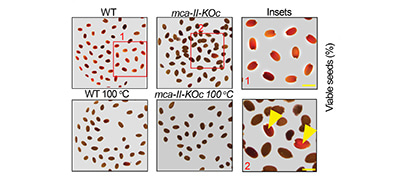

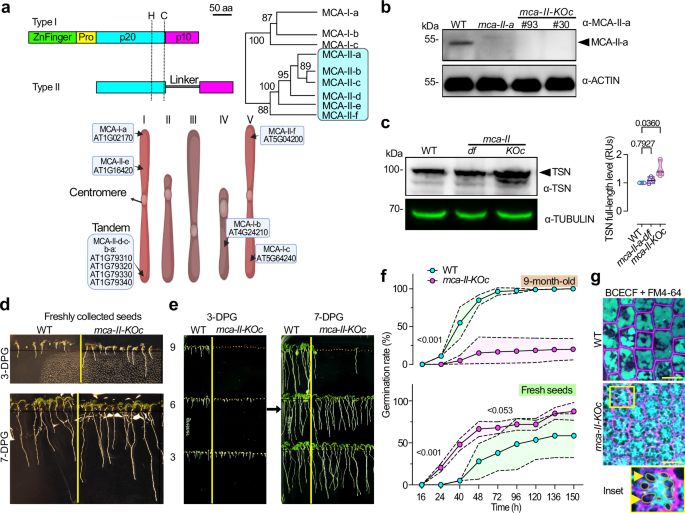

In the quest to understand how seeds can survive extreme desiccation and remain viable for millennia, researchers at IMBB have uncovered the crucial role of type II metacaspases (MCA-IIs), in maintaining seed longevity. Seeds usually remain dry in an idle state by accumulating protective proteins and lipids, but until now, the molecular mechanisms controlling this process were unclear.
The study recently published in Nature Communications reveals that in Arabidopsis, the absence of MCA-II proteases leads to a disruption in the balance of protein production, folding, and degradation. MCA-II mutant seeds struggle to manage misfolded proteins because they cannot properly regulate the clearing of defective proteins at the endoplasmic reticulum (ER). This failure in protein proteostasis compromises seed viability over time.
The researchers further studied the molecular mechanism of how MCA-II proteases regulate CDC48. They found that MCA-II proteases cleave the CDC48 adaptor protein PUX10. This cleavage is vital as it allows CDC48 to shuttle between lipid droplets and the ER, supporting the dynamic balance needed to maintain protein homeostasis and lipid droplet function. When this balance is disturbed, as seen in MCA-II mutants, seeds age rapidly and their germination rate declines significantly.
Overall, this research uncovers a novel proteolytic pathway that is crucial for seed physiology. This pathway not only impacts seed storage but also can have broader ecological and agricultural implications, considering that seeds are used for the dispersal of species. Furthermore, by understanding these molecular mechanisms, scientists can potentially enhance seed longevity, which is crucial for food security and biodiversity conservation.
Plant biologist with an interest in protein and RNA forms and phases. Mainly focused on cell biology, development, and plant physiology.
Follow the Topic
-
Nature Communications
An open access, multidisciplinary journal dedicated to publishing high-quality research in all areas of the biological, health, physical, chemical and Earth sciences.

Related Collections
With Collections, you can get published faster and increase your visibility.
Women's Health
Publishing Model: Hybrid
Deadline: Ongoing
Tumor Microenvironment Crosstalk and Therapeutic Implications
Publishing Model: Hybrid
Deadline: Nov 02, 2026