Stress-eating corals: understanding past soft tissue thickness dynamics in corals
Published in Earth & Environment and Ecology & Evolution
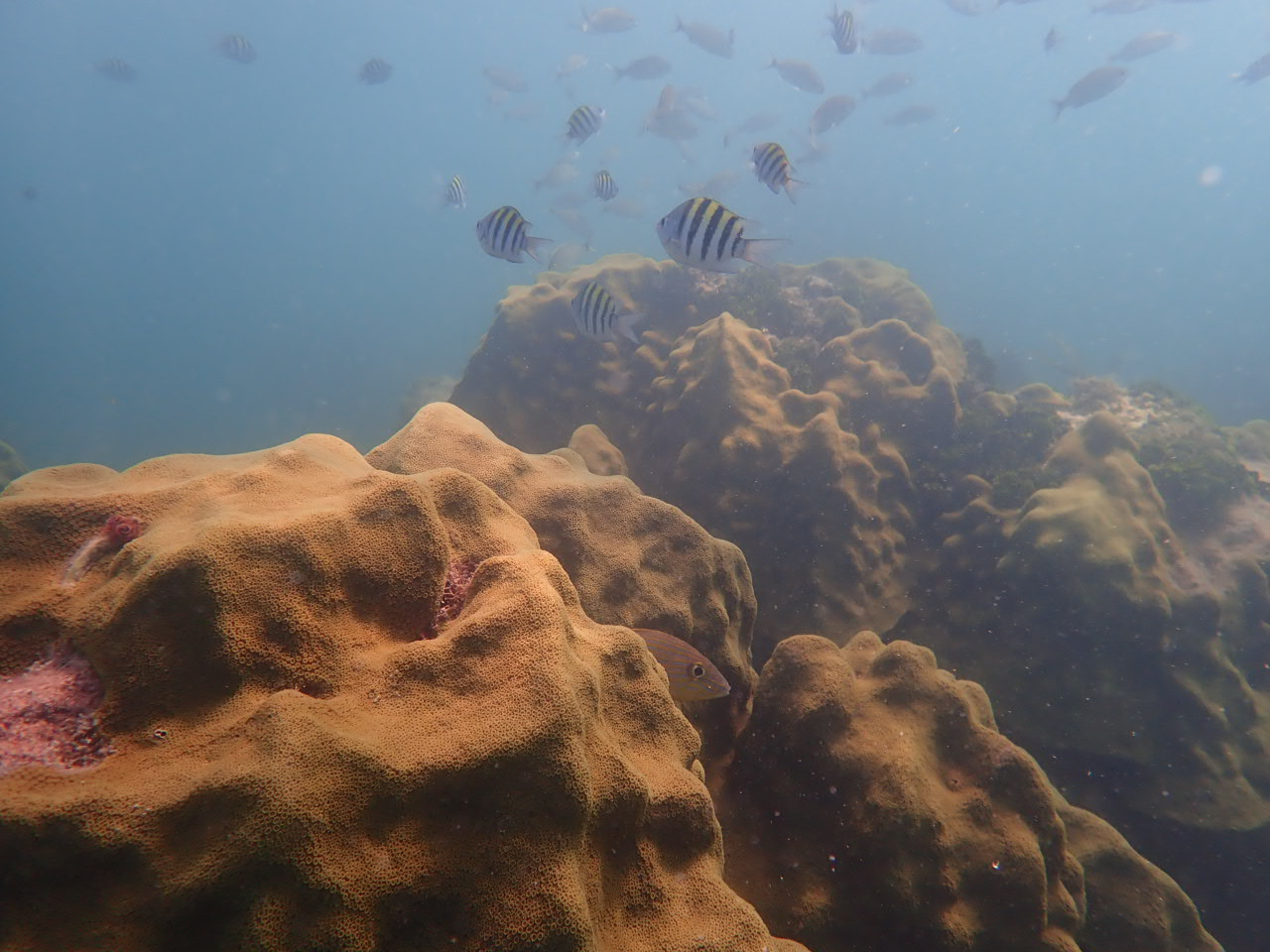


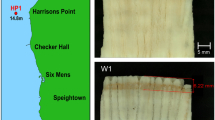

As a coral grows it precipitates a skeleton, which through different geochemical elements is able to record environmental changes. Cyclical changes in these geochemical elements within the coral skeleton are related to seasonal variations in seawater conditions. Coral physiology is also sensitive to seasonal environmental change which is reflected by cyclical variations in which creates banding patterns (similar to tree rings/dendrology). Our first step was to spatially synchronise seasonal geochemical cycles with seasonal growth cycles to constrain coral growth timelines and to identify the 2021 eruption of La Soufrière. To our surprise, the seasonal records did not match even though they represent the same seasonally driven signal.
We began to investigate possible reasons for why these seasonal signals were offset. We had recently published an article (Vincent & Sheldrake, 2025) which showed that seasonal signals in the skeleton are formed within an interval in coral soft tissues. Literature shows that coral soft tissue thickness varies seasonally in response to stress, and so we temporally synchronised NOAA degree heating week data, a thermal stress indicator, to our data and observed an inverse relationship. We have interpreted the relationship between offset (i.e., tissue thickness) and thermal stress to therefore represent changes in coral physiology. Under stressful conditions, corals consume fats in soft tissues which reduces soft tissue thickness whilst under favourable conditions, extra energy is stored. Hence, corals consume energy reserves under stress, which is the premise for the title of this blog post.

Follow the Topic
-
Communications Earth & Environment
An open access journal from Nature Portfolio that publishes high-quality research, reviews and commentary in the Earth, environmental and planetary sciences.

Related Collections
With Collections, you can get published faster and increase your visibility.
Ecological resistance and resilience under global change
Publishing Model: Open Access
Deadline: Apr 07, 2027
Hazards in Mountain Regions
Publishing Model: Open Access
Deadline: Nov 02, 2026