Systematic review of mental health problems and migration stressors among Kurdish migrants in western host countrie
Published in Behavioural Sciences & Psychology



Why we wrote this
Kurds are one of the world’s largest stateless peoples. Many have faced war, persecution, and repeated displacement. Yet their mental-health needs in Western host countries are rarely synthesized in one place. Our goal was simple: bring together what the research shows so services and policymakers can respond better.
What the research says in plain language
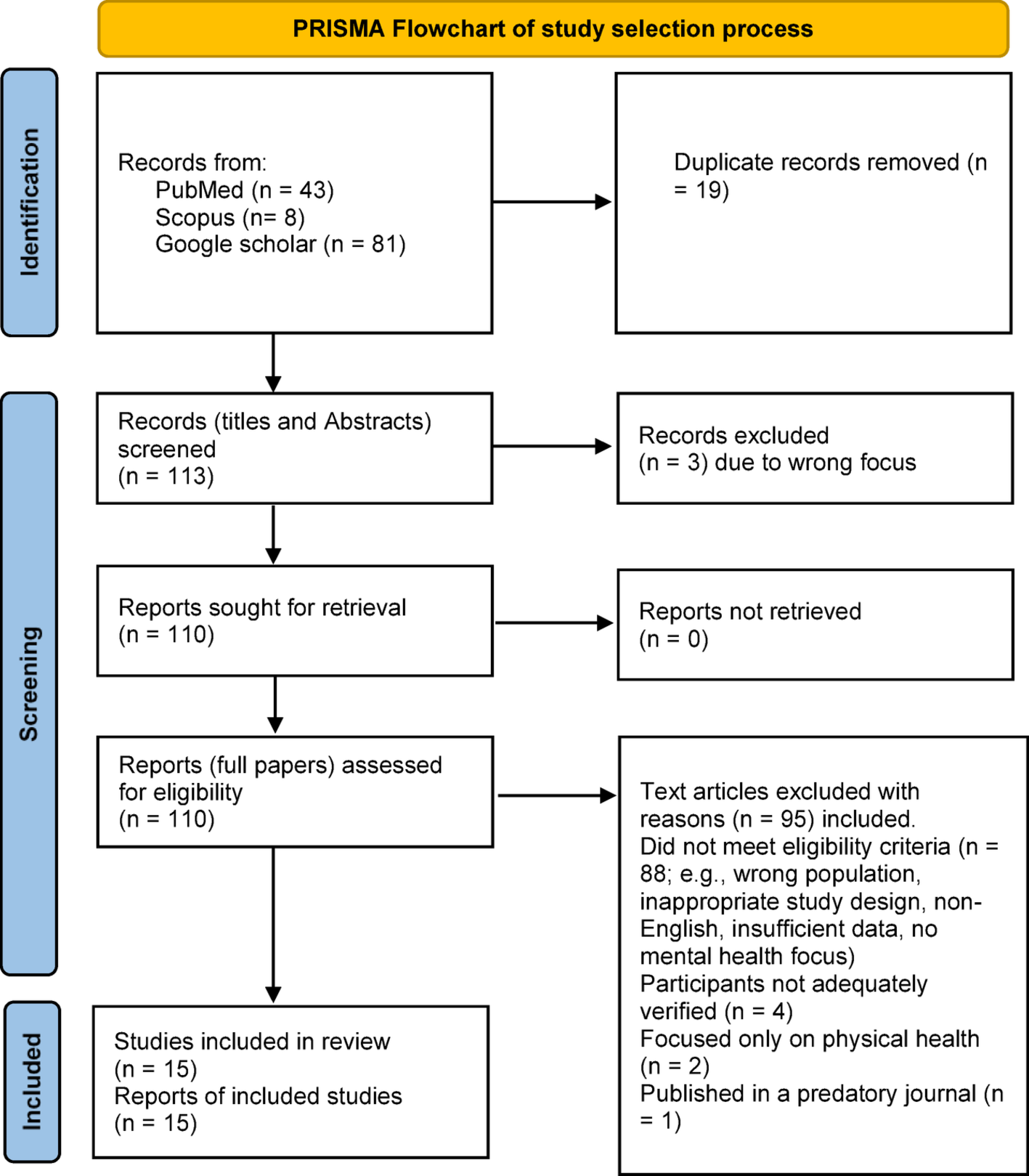
Across the studies we reviewed, totaling 5,319 participants, Kurdish migrants commonly experience substantial psychological distress after resettlement. Reported rates were about 37% for PTSD, 36% for depression, and 28% for anxiety alongside insomnia, fatigue, and, in some cases, suicidal thoughts. These levels reflect both past trauma and new stressors after arrival.
Before migration
Most people left because of war and political oppression, violence and persecution, and economic hardship. These are not abstract labels; they translate into lived experiences of fear, loss, and disruption that shape mental health for years.
After migration
Trauma doesn’t end at the border. Many face discrimination, isolation and loneliness, family separation, economic difficulties, and fear of deportation. These chronic stressors can sustain or worsen mental-health problems if left unaddressed.
What needs to change
-
Care that fits culture and context. Kurdish-language support, trusted community spaces, and services co-designed with Kurdish organizations can reduce stigma and improve engagement.
-
Legal and social help alongside clinical care. Link mental-health services with legal aid, housing, employment, and family-reunification pathways; these determinants strongly influence recovery.
-
Continuity when status is uncertain. For those facing return, plans for continuity of care and cross-border referrals are essential.
What surprised us
Despite different host-country policies, high distress appeared consistently. Legal uncertainty especially fear of deportation was a recurring theme linked to anxiety and sleep problems.
Where we go from here
We need longitudinal studies, better measurement of post-migration stressors, and interventions that integrate mental-health care with settlement services. Most importantly, Kurdish communities should be partners not just participants in designing solutions.

Follow the Topic
-
Discover Mental Health
This is an international, open access journal that publishes research across the transdisciplinary field of mental health research.

Related Collections
With Collections, you can get published faster and increase your visibility.
Gender and Psychosocial Factors in Mental Health: Rethinking Determinants, Experiences, and Outcomes
This collection examines the complex interplay between gender and psychosocial factors in shaping mental health across diverse populations. Giving equal attention to both domains, it brings together empirical and theoretical contributions from psychology, psychiatry, public health, and the social sciences to analyze how gender norms, identities, roles, and inequalities intersect with psychosocial dimensions such as social support, stigma, stress, violence, work and family conditions, and broader structural determinants. Adopting intersectional perspectives and context-sensitive methodologies, the contributions seek not only to document how gendered arrangements and psychosocial contexts jointly contribute to mental health disparities, but also to identify protective processes and promising avenues for prevention and intervention. In doing so, this collection aims to advance a more integrated and nuanced understanding of how gender and psychosocial factors influence mental health experiences and to inform policies and practices that promote equity and well-being.
Submissions are welcome on mental health in relation to gender and/or psychosocial factors across diverse populations and settings. We particularly encourage contributions that adopt a gender perspective, an intersectional approach, or other critical frameworks that illuminate how social positions, identities, and contexts shape mental health outcomes, access to care, and experiences of distress and well-being. Empirical, theoretical, and methodological articles that advance understanding of these issues or offer innovative insights with clear implications for research, practice, or policy will be considered especially relevant for this Collection.
These are some suggested, though by no means exhaustive, thematic lines and study designs for contributions. Submissions may, for example, address: (1) gender norms, roles, and systemic imbalances in relation to common psychological problems and health; (2) how gender interacts with other social locations such as sexual orientation, ethnicity/race, disability, migration, and chronic illness; (3) psychosocial processes including stigma, social support, caregiving, work–family balance, discrimination, and stress/trauma; and (4) implications for prevention, clinical practice, and policy (e.g., gender-transformative interventions, workplace or educational policies, etc.). We particularly welcome longitudinal and cross-sectional empirical studies, qualitative and mixed-methods research, intervention or implementation studies, and theoretical or model papers that address a wide range of determinants (e.g., gendered labor, caregiving, stigma, minority stress, chronic illness, body image, sexuality, etc.). However, other innovative and relevant proposals that fall within the broader scope of gender and mental health are also highly encouraged.
Keywords:
Gender; Mental Health; Psychosocial Factors; Well-being
Publishing Model: Open Access
Deadline: Dec 31, 2026
Mental Health Inequities and Disparities: Behavioral Pathways, Intervention Targets, and Global Policy Implications
This collection seeks to advance understanding of mental health inequities by explicitly focusing on behavioral pathways that link structural, social, and economic inequities to mental health outcomes. Rather than addressing social determinants in broad terms, the Collection emphasizes how inequities rooted in socioeconomic status, race and ethnicity, gender, geography, and disability shape health-related behaviors (e.g., substance use, diet, physical activity, sleep, and help-seeking), and how these behaviors constitute modifiable targets for intervention, service design, and policy action.
Health inequities are systematic, avoidable, and unjust differences in health that both contribute to and result from mental health problems. These inequities often operate through behavioral and psychosocial mechanisms that exacerbate mental and physical health disparities across the life course. The Collection welcomes large-scale epidemiological and cohort studies, registry-based analyses, qualitative and mixed-methods research with marginalized populations, implementation and dissemination studies, natural experiments and policy evaluations, as well as digital, community-based, and behavioral interventions grounded in behavioral science and health psychology.
By integrating perspectives from public health, epidemiology, behavioral science, health psychology, and intervention research, this interdisciplinary Collection aims to generate evidence that is directly relevant for translating research into policies and practices that promote mental health equity in diverse global contexts.
Keywords:
Mental health disparities; Health inequities; Social determinants of mental health; Health behavior; Structural inequity; Psychosocial stress; Health equity interventions; Global mental health; Socioeconomic status; SDG 3 (Good Health and Well-being); Behavioral science; Health psychology; Behavioral interventions; Policy translation
Publishing Model: Open Access
Deadline: Oct 21, 2026