Targeting the Endoplasmic Reticulum to Battle Multiple Myeloma
Published in Cancer, Chemistry, and Cell & Molecular Biology



Explore the Research
 Nature
Targeting proteostasis in multiple myeloma through inhibition of LTK - Leukemia
Leukemia - Targeting proteostasis in multiple myeloma through inhibition of LTK
Multiple myeloma is a cancer that affects plasma cells, which are essential components of our immune system responsible for producing antibodies. In the case of myeloma, these malignant plasma cells produce a monoclonal antibody known as M-proteins. The synthesis of proteins predominantly occurs in the endoplasmic reticulum (ER), which functions as the cell’s manufacturing site where proteins are created and properly processed before reaching their final destinations inside the cells or being secreted. This is especially critical for plasma cells, given their role in producing large quantities of antibodies.
LTK and Its Connection to the Endoplasmic Reticulum
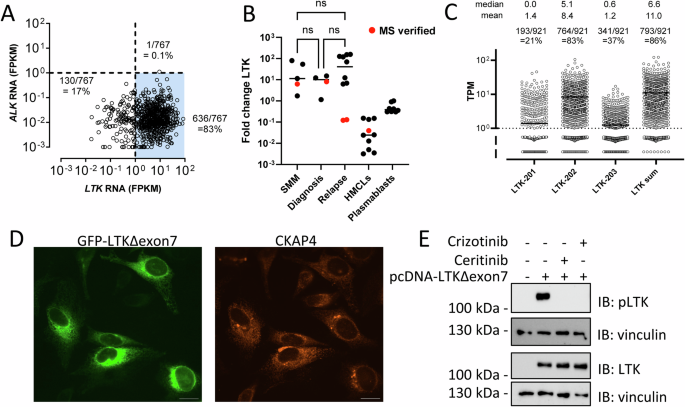
In 2019, the group of Hesso Farhan discovered that LTK (Leukocyte Tyrosine Kinase) is a receptor tyrosine kinase that localizes significantly to the ER. LTK plays an important role in regulating the exit of proteins from the ER. Because LTK is a tyrosine kinase, it offered to be a druggable target to regulate secretory trafficking from the ER. Notably, LTK shares over 80% homology with ALK (Anaplastic Lymphoma Kinase), which opens up avenues for inhibiting its function by repurposing existing ALK inhibitors.
In Våtsveen et al. we found that LTK is expressed in 83% of myeloma patients in the CoMMpass study, while its closely related counterpart, ALK, is rarely expressed. When existing ALK inhibitors were tested on myeloma cells, we discovered that inhibiting LTK led to a retention of M-proteins within the cells, causing stress and ultimately leading to cell death. This suggests LTK is a promising drug target for the treatments in multiple myeloma.
Targeting LTK: A Game Changer?
Both production and degradation of proteins are an important function in all cells. We refer to this intricate balance between protein production and degradation as proteostasis. In a cell with high protein production, like the myeloma cell, the dependency on these processes is greater than in other cells that does not exhibit a high protein production burden. The high protein turnover explains the great success of the proteosome inhibitors, like bortezomib, in myeloma treatment. While effective, most patients eventually become refractory to these therapies. This is where targeting LTK presents a novel strategy where the protein secretion is inhibited. Targeting LTK could offer a new treatment pathway for patients who no longer respond to existing therapies. In laboratory tests, different LTK inhibitors showed effectiveness in reducing cell viability in various myeloma cell lines and samples from patients, regardless of their prior treatment history.
What’s Next?
The endoplasmic reticulum is not just a factory for protein production; it is a critical player in maintaining cellular health, especially in conditions like multiple myeloma. While these laboratory findings are exciting, they open the possibility for clinical trials where ALK inhibitors, repurposed as LTK inhibitors can be tested in patients. If successful, this could lead to new, effective treatments for multiple myeloma and potentially other diseases characterized by excessive protein production. As myeloma is a cancer typically treated with multiple drug combinations, LTK inhibitors could be combined with current therapies to create a more comprehensive treatment strategy. For instance, pairing LTK inhibitors with proteasome inhibitors might provide a dual attack on the malignant cells, targeting the proteostasis as a whole, with both the retention of proteins and suppressing the orderly removal of damaged proteins from the cells.

Follow the Topic
-
Leukemia
This journal publishes high quality, peer reviewed research that covers all aspects of the research and treatment of leukemia and allied diseases. Topics of interest include oncogenes, growth factors, stem cells, leukemia genomics, cell cycle, signal transduction and molecular targets for therapy.