The bat-borne H9N2 influenza A virus exhibits concerning zoonotic features
Published in Microbiology, General & Internal Medicine, and Public Health

In 2017, a bat-borne H9N2 influenza A virus (IAV) was isolated from Egyptian fruit bats in the Nile Delta. Unlike the South American bat IAVs H17N10 and H18N11, which use MHC-II molecules to infect cells, bat H9N2 binds the canonical IAV receptor, sialic acid, for host cell entry. In a previous study, phylogenetic analysis revealed that the bat H9N2 shares strong genetic similarities with the surface glycoproteins hemagglutinin (HA) and neuraminidase (NA) of avian H9N2 viruses and likely emerged as a reassortant of an avian H9N2 IAV with an Old-World bat-adapted IAV-backbone about a century ago. Because outbreaks of avian H9N2 IAVs in mink farms and single spill-over infections of avian H9N2 IAVs in humans are frequently reported, we here sought to determine the zoonotic potential of the bat H9N2 IAVs.
Our objectives were defined by the following questions:
- Can bat H9N2 cross inter-species barriers and replicate in other mammalian or avian species?
- Can bat H9N2 replicate in human lung explants?
- Can bat H9N2 evade innate immune restriction by human MxA?
- Can seasonal IAV vaccines elicit cross-reactive antibodies to bat H9N2 in humans?
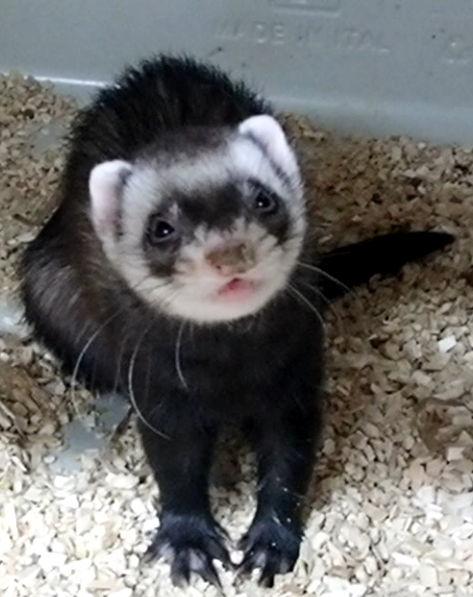
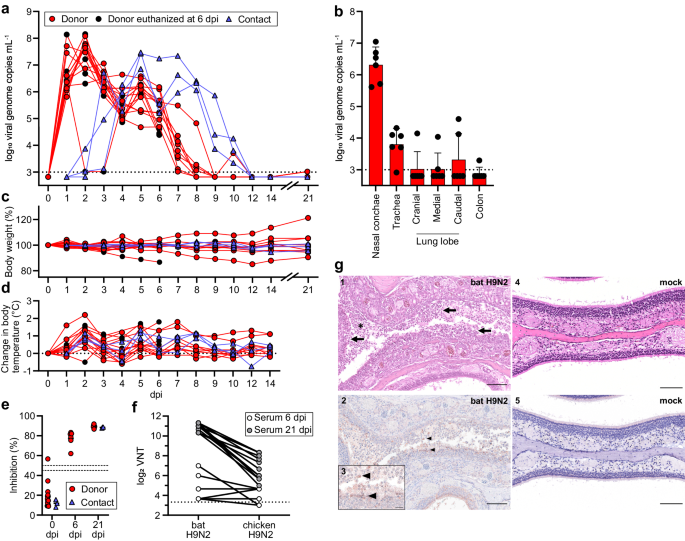
In our study, we show that experimental bat H9N2 infection of ferrets, the best available animal model for human IAV infection, led to efficient viral replication, particularly in the upper respiratory tract, and rapid transmission of bat H9N2 to contact animals. Importantly, infected ferrets exhibited only mild clinical signs and seroconverted after bat H9N2 infection. In addition to ferrets, bat H9N2 had limited replication properties in one day old chickens, but replicated efficiently in one day old turkeys, demonstrating that bat H9N2 is well adapted to mammalian species but has still clear cross-species spillover potential to some avian species.
Infection of human lung explants showed that bat H9N2 replicated better than an avian H9N2 isolate and as efficiently as a seasonal human H3N2 IAV, suggesting that bat H9N2 is adapted to the human alveolar tissue.
Viral growth of zoonotic IAV is strongly restricted by the human antiviral innate immune factor MxA. Thus, all currently known pandemic IAVs have characteristic adaptations in their nucleoprotein (NP) that allow efficient escape from the antiviral restriction of MxA. Bat H9N2 lacks any of these known adaptive sites in NP. Consequently, viral replication of bat H9N2 was potently restricted in MxA-overexpressing cells. However, in MxA-transgenic mice, bat H9N2 surprisingly evaded MxA-mediated restriction by suppressing MxA induction.
Finally, we determined whether human individuals vaccinated with a seasonal IAV vaccine (containing seasonal H3N2) would generate a cross-reactive humoral immunity to the bat N2 NA protein. Our results show that vaccination does not result in antibodies that recognize bat H9N2, suggesting that that the human population is immunologically naïve in the event of zoonotic spill-over.
In conclusion, our study demonstrates that bat H9N2 exhibits set of unexpected pre-pandemic features, which urges the need for continued and reinforced surveillance in order to receive more information about its geographical circulation, its host range and also to detect possible spill-over infections to humans or animals.
This work is the result of a great collaboration of many different locations throughout the world (Germany, USA, etc.) showing a tremendous effort with highly diverse, but very important contributions. We hope you enjoy reading this article and look forward to your feedback.

Follow the Topic
-
Nature Communications
An open access, multidisciplinary journal dedicated to publishing high-quality research in all areas of the biological, health, physical, chemical and Earth sciences.

Related Collections
With Collections, you can get published faster and increase your visibility.
Women's Health
Publishing Model: Hybrid
Deadline: Ongoing
Tumor Microenvironment Crosstalk and Therapeutic Implications
Publishing Model: Hybrid
Deadline: Nov 02, 2026