The Billion-Dollar Bin: How Bhadran’s PGST is Turning Medical Waste into Financial Gain
Published in Earth & Environment, Economics, and Law, Politics & International Studies
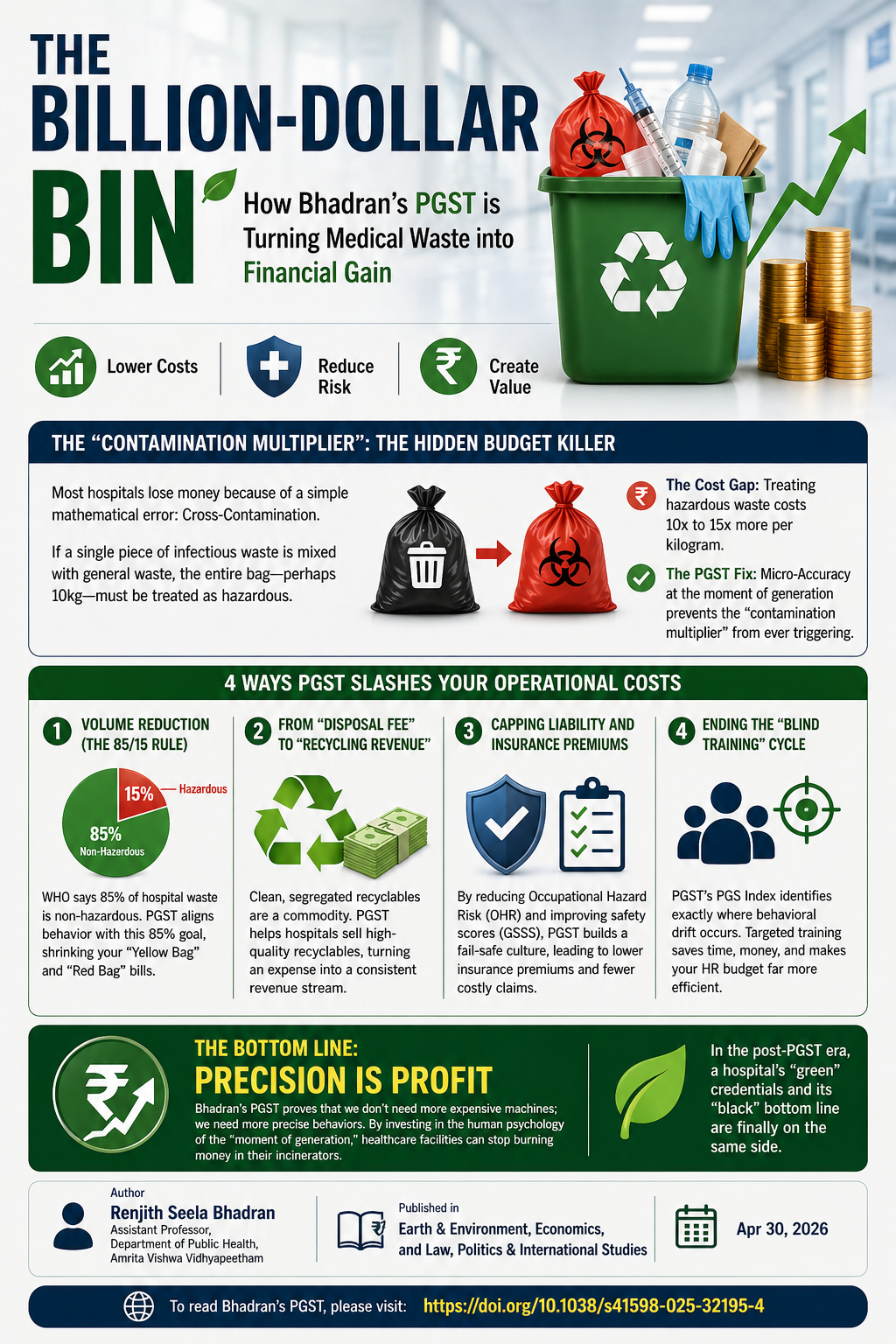

The "Contamination Multiplier": The Hidden Budget Killer
- The Cost Gap: In many regions, treating hazardous waste costs 10x to 15x more per kilogram than disposing of general waste.
- The PGST Fix: PGST introduces Micro-Accuracy. By ensuring 99.9% behavioral precision at the exact moment waste leaves the hand, PGST prevents that "contamination multiplier" from ever triggering.
4 Ways PGST Slashes Your Operational Costs
The Bottom Line: Precision is Profit

Dr. Renjith Seela Bhadran is an Indian academic, public health researcher, and developer of Bhadran's Point-of-Generation Segregation Theory (PGST). His research integrates behavioural science, public health, environmental health, implementation science, and systems thinking to address complex challenges in healthcare waste management, environmental exposure prevention, and precision public health. He is an Assistant Professor in the Department of Public Health, Amrita School of Medicine, Amrita Vishwa Vidyapeetham, Kochi, India, where he primarily teaches Social and Behavioral Science to healthcare students.
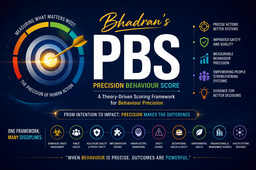
Dr. Bhadran completed his Doctor of Philosophy (PhD) at Amrita School of Medicine, Amrita Vishwa Vidyapeetham, where his doctoral research led to the development of Bhadran's Point-of-Generation Segregation Theory (PGST), a behavioural systems framework that conceptualises biomedical waste segregation as a precision-dependent behavioural process occurring at the moment of waste generation. The theory introduces analytical constructs such as the Precision Behaviour Score (PBS; Bhadran's Score) and Moment-Based Precision Behavioural Fidelity (MBPBF) to evaluate behavioural precision during critical waste segregation tasks, together with the Behavioural Drift concept to monitor system performance and support continuous quality improvement over time.
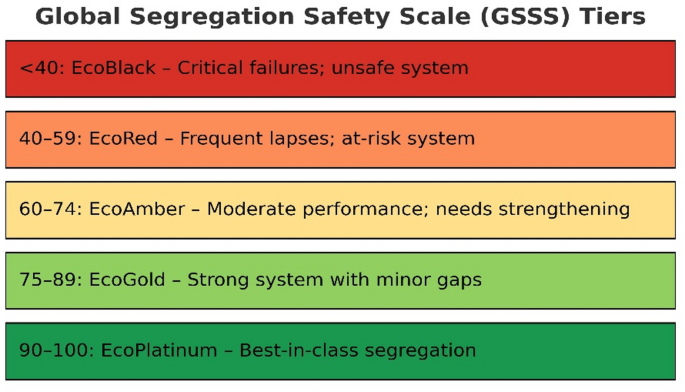
Building upon PGST, Dr. Bhadran further developed the Global Segregation Safety Scale (GSSS; Bhadran's Scale), a structured benchmarking framework designed to classify institutional segregation performance and facilitate international comparisons in biomedical waste management practices. By reframing biomedical waste segregation as a behavioural decision-making process rather than solely an operational activity, PGST provides a novel interdisciplinary perspective linking healthcare worker behaviour, environmental sustainability, occupational safety, and public health protection.
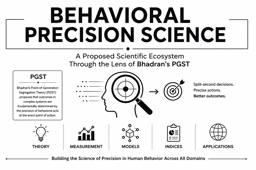
Dr. Bhadran's research has subsequently evolved into the PGST Scientific Ecosystem, an integrated body of interconnected theories, behavioural metrics, conceptual frameworks, and systems-level constructs centred on Bhadran's Point-of-Generation Segregation Theory (PGST). This ecosystem includes the Precision Behaviour Score (PBS) as a quantitative behavioural precision metric for identifying split-second execution accuracy during critical operational tasks; the Point-of-Generation Systems Approach (PGSA); the Behavioural Drift concept; the Contamination Multiplier; the Global Segregation Safety Scale (GSSS); the Behavioural Exposome; the Behavioural Precision–Exposure–Disease Continuum; the Point-of-Generation Segregation Theory–Breast Cancer Environmental Exposure Pathway Framework (PGST–BCEEPF); and other complementary theoretical and methodological developments. Collectively, these interconnected contributions establish the scientific foundation for the emerging interdisciplinary field of Precision Behaviour Science, which integrates behavioural science, implementation science, human factors engineering, systems safety, environmental health, exposomics, and precision public health. The PGST Scientific Ecosystem proposes measurable behavioural precision as an upstream determinant of environmental exposure generation, institutional safety, healthcare quality, and disease prevention, with potential applications across healthcare systems, environmental management, biosafety, occupational health, public health, and other safety-critical industries.
Prior to his doctoral research, Dr. Bhadran earned a Master of Science in Public Health (MSc PH) from the University of Bedfordshire and an MBA from the University of Nottingham, United Kingdom. His academic training reflects a multidisciplinary perspective that combines public health systems analysis, behavioural science, environmental sustainability, and management sciences. His early research focused on onsite biomedical waste segregation challenges in healthcare facilities and subsequently expanded to investigate the cognitive, behavioural, and systems-level determinants influencing waste segregation practices at the point of generation.
Through his research, Dr. Bhadran continues to advance the integration of behavioural systems science with environmental health and precision public health, with the long-term objective of establishing Precision Behaviour Science as a transformative interdisciplinary research domain for improving behavioural reliability, reducing environmental exposure, strengthening institutional safety, and informing evidence-based public health policy.
Follow the Topic
-
Scientific Reports
An open access journal publishing original research from across all areas of the natural sciences, psychology, medicine and engineering.

Related Collections
With Collections, you can get published faster and increase your visibility.
Cancer Prevention and Control
Publishing Model: Hybrid
Deadline: Feb 19, 2027
Healthy Aging
Publishing Model: Open Access
Deadline: Dec 31, 2026