The race to stay cool: Butterflies are climbing mountains instead of adapting to climate change
Published in Earth & Environment and Zoology & Veterinary Science





Climate change is an ever growing, quietly looming threat to global biodiversity. There is an urgent need to understand how species will respond so that we can enact effective and evidence-led conservation efforts before species are lost forever. However, something often ignored is the capacity of species to change. There is often an assumption that what we observe today will hold true into the future. But species are not static objects, they are capable of responding to the world around them through plasticity or evolution. This made me wonder, what traits of species are capable of change, and what are not, and how might impact their responses to climate change?
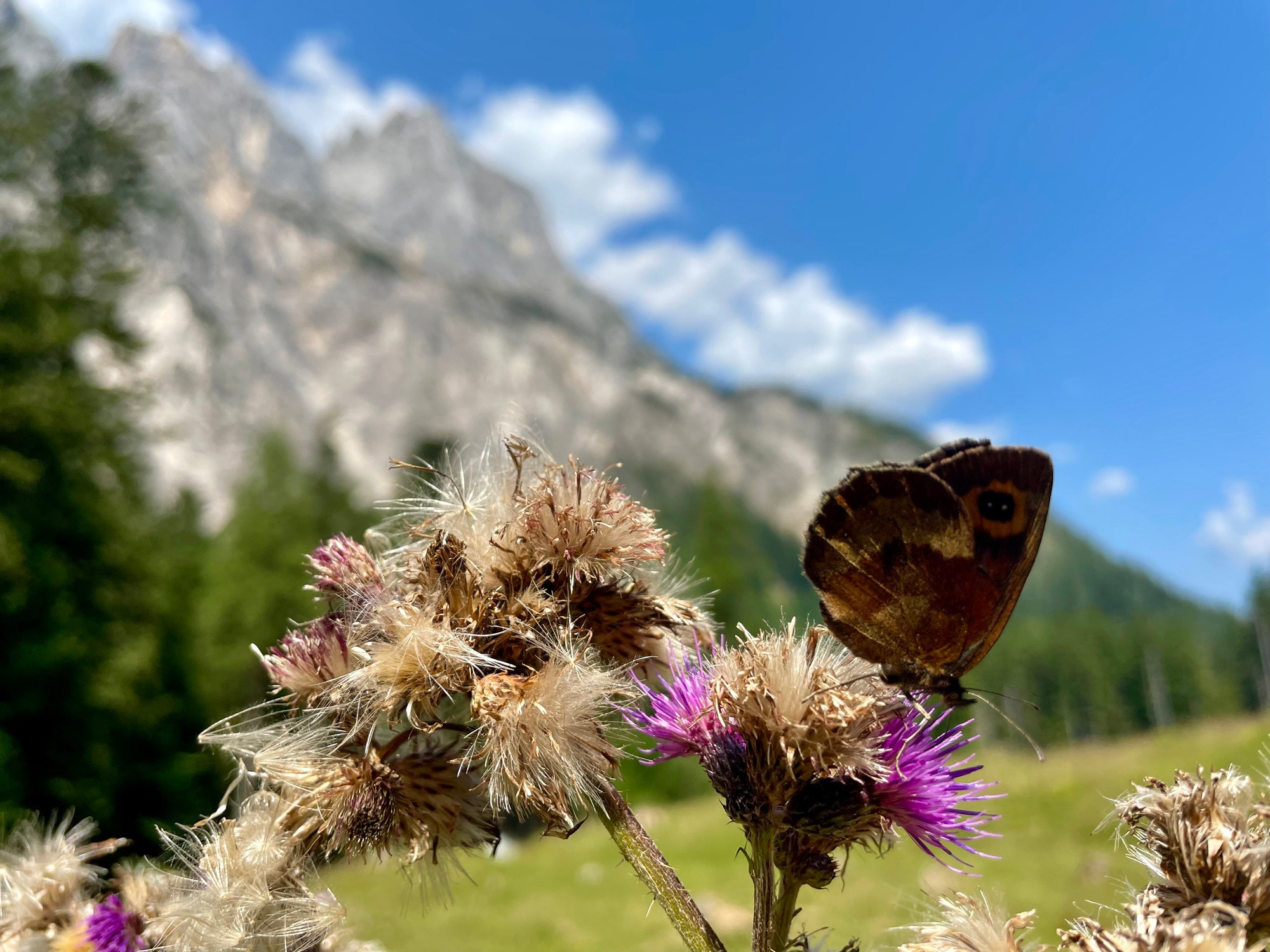
This took me to the central European Alps, where I wanted to test this theory on butterflies. Butterflies make for wonderful study organisms; they are sensitive to environmental change, they are highly abundant (especially in alpine meadows), and easy to observe. I spent a month last summer catching 600 butterflies and testing my theory, trying to find evidence that these butterflies were adapting to their local environments. I wanted to find evidence that butterflies were able to change how they experienced, buffered, or tolerated temperatures across a thermal gradient (comparing warmer lowland butterfly communities to those nearly 2000 m up). I focused on how they thermoregulated, and their upper thermal tolerance limits.
What I found was that, to my surprise, I found no evidence that butterflies were capable of changing how they interacted with temperature across the elevational gradient. It seemed that their thermoregulation and thermal limits were fixed traits, intrinsic properties of these species, that at least in this system, showed no evidence of a capacity to change. This had me worried, it would mean that species that performed badly today would perform worse in the future under climate change.
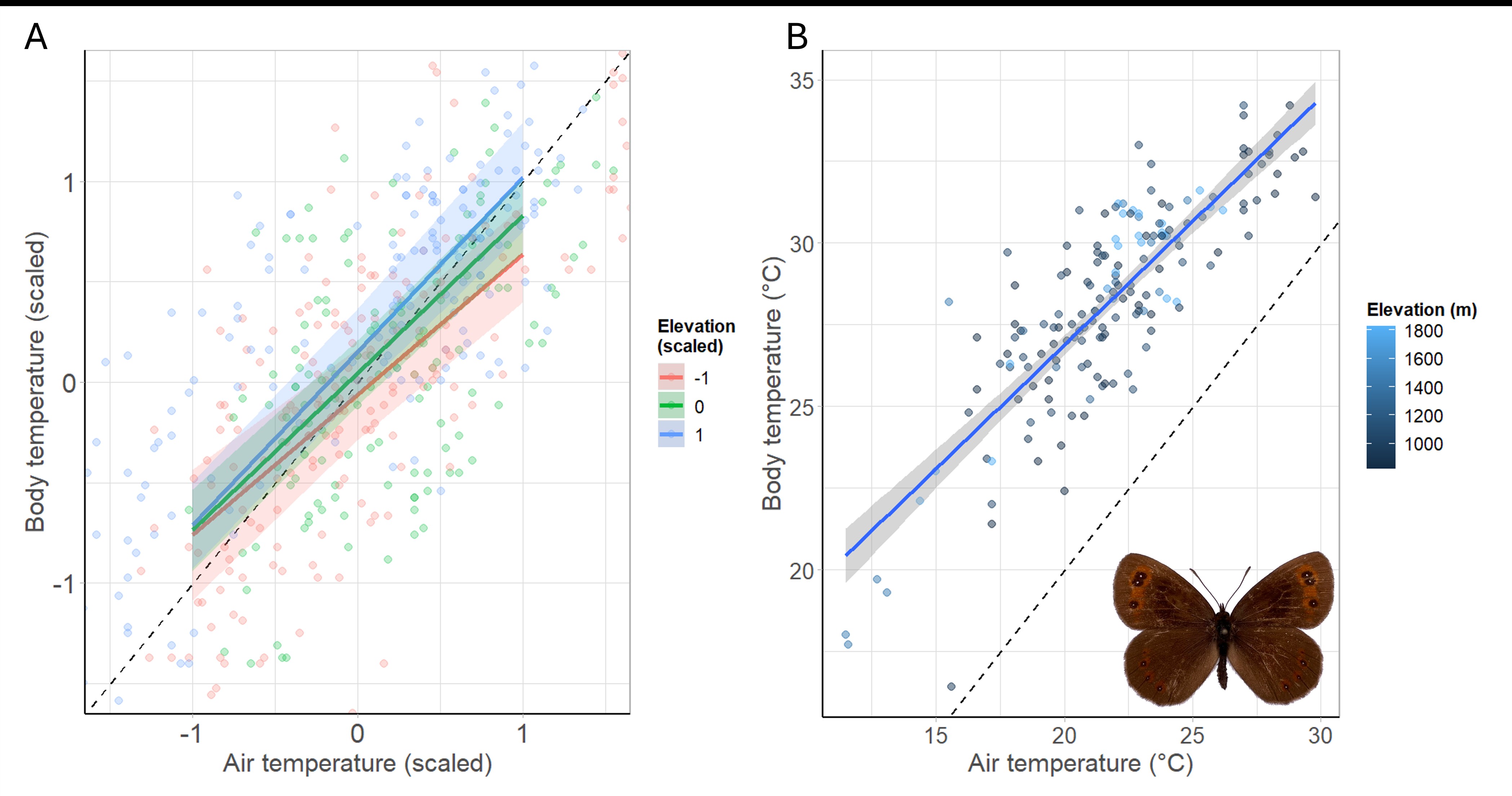
However, though the species themselves were not responding, I found that communities of butterflies changed across the elevational gradient to match the pattern of improved thermoregulation that I expected to see within species.This means that as I walked down the mountain, into increasingly warm conditions, butterflies that were small and dark started to disappear, and instead be replaced by large and pale butterflies. These large and pale species were better able to avoid high body temperatures, and so appeared to be better suited to these warmer conditions. Instead of species responded, entire communities responded to changes in environmental temperature.
I was struck by how the size and colour of the butterflies impacted how they performed. For example, small butterflies showed very little response to the elevational gradient. These are small insects living in big open sunny meadows, with short wings and tiny bodies. There is probably very little a tiny insect can do to change their rate of heat exchange with their environment. They seem at the mercy of the laws of thermodynamics, with little behaviours that could prevent them from reaching high body temperatures. This means that small butterflies may be particularly sensitive to climate change, but could potentially be supported by improving vegetation complexity; allowing a few trees to grow within grasslands to create shade, and give them a place to rest and avoid high heat.
I also observed a similar pattern depending on the colour of the butterfly. This time, pale butterflies didn’t seem to respond to the elevational gradient, but I don’t think it was because they couldn’t respond. I think this was because they were already performing very well across a range of climatic conditions. Pale butterflies can use a different basking strategy to thermoregulate. They can use their wings like mirrors to reflect light from the sun directly onto the body to warm up, and then when it starts to get hot, they can close their pale wings and reflect light away from the body without absorbing it. From what I observed, this seems to be a highly effective strategy for butterflies across a range of different climatic conditions. Why fix what isn’t broken? In contrast, it was the dark butterflies that were responding to the elevational gradient. In this case, I observed dark species being replaced by other better performing dark species at low elevations, but ultimately, they never outperformed the pale species. I think this may just be the consequence of their dark colouration meaning they absorb solar radiation constantly, whether they are basking, or holding their wings closed, or also flying around looking for flowers and mates. In these sunny grasslands, it seems there is little they can do to change their thermodynamic properties and avoid high body temperatures. Again, creating shade in grasslands may provide refugia to avoid high body temperatures, but the future doesn’t look bright for small or dark butterflies. If the trend I walking down the mountain were to reflect walking into a climate change impacted future, we may expect to see less small and dark species, and more tolerant large and pale species.
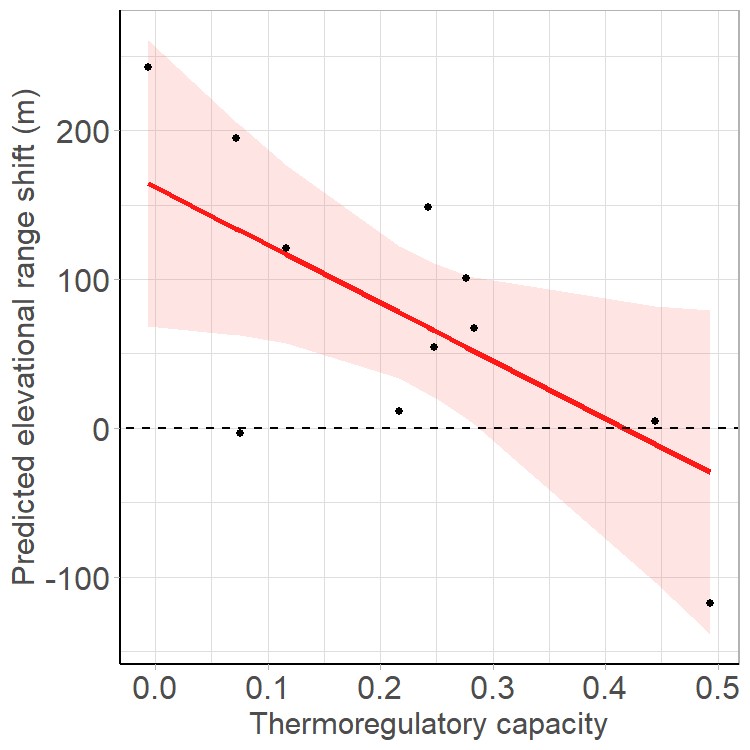
However, species may not just simply disappear under climate change. As conditions get increasingly hot, species may instead move up the mountains to track colder conditions. Luckily for me, a colleague had recently published a paper on this exact topic on the same butterfly species in the same mountain range! I was very excited; this gave me a rare opportunity to directly compare my data with direct evidence of species responses to recent climate change, of evidence not of extinctions but redistributions. And that is exactly what I found, I found a link between species that were worse at thermoregulating and the species that had moved further up the mountain. This means that the ability to thermoregulate in insects is particularly important for determining whether they can continue to exist where they currently are, or if they must move to survive. To support these species, alpine areas will need to maintain high quality and well-connected alpine meadow habitats to allow species to move up the mountains to track suitable temperatures. Translocations should be considered where this is not possible, particularly between mountains. Conservation practitioners should expect changes in butterfly communities, with species being replaced by more thermally robust species as the climate warms. Our battle is not to maintain species where they are, but to instead facilitate their redistribution. But without the capacity to change how they experience, buffer, or tolerate novel thermal environment being created by climate change, the future of alpine butterflies is uncertain.

Follow the Topic
-
Communications Biology
An open access journal from Nature Portfolio publishing high-quality research, reviews and commentary in all areas of the biological sciences, representing significant advances and bringing new biological insight to a specialized area of research.

Related Collections
With Collections, you can get published faster and increase your visibility.
Healthy Aging
Publishing Model: Open Access
Deadline: Dec 31, 2026
DNA repair and human disease
Publishing Model: Hybrid
Deadline: Oct 31, 2026