The Southern Agulhas Leakage: a source of iron for the Southern Ocean
Published in Earth & Environment

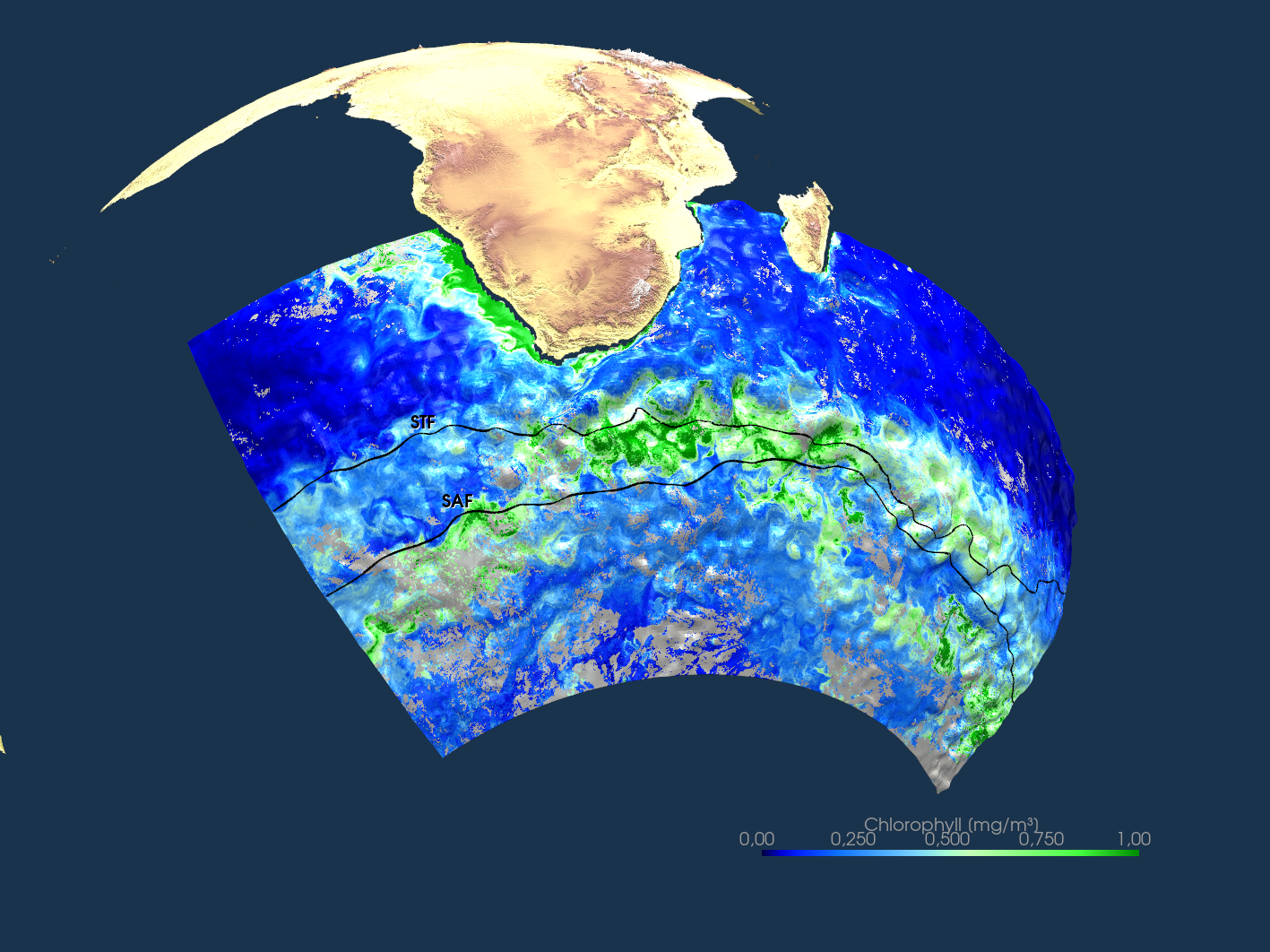
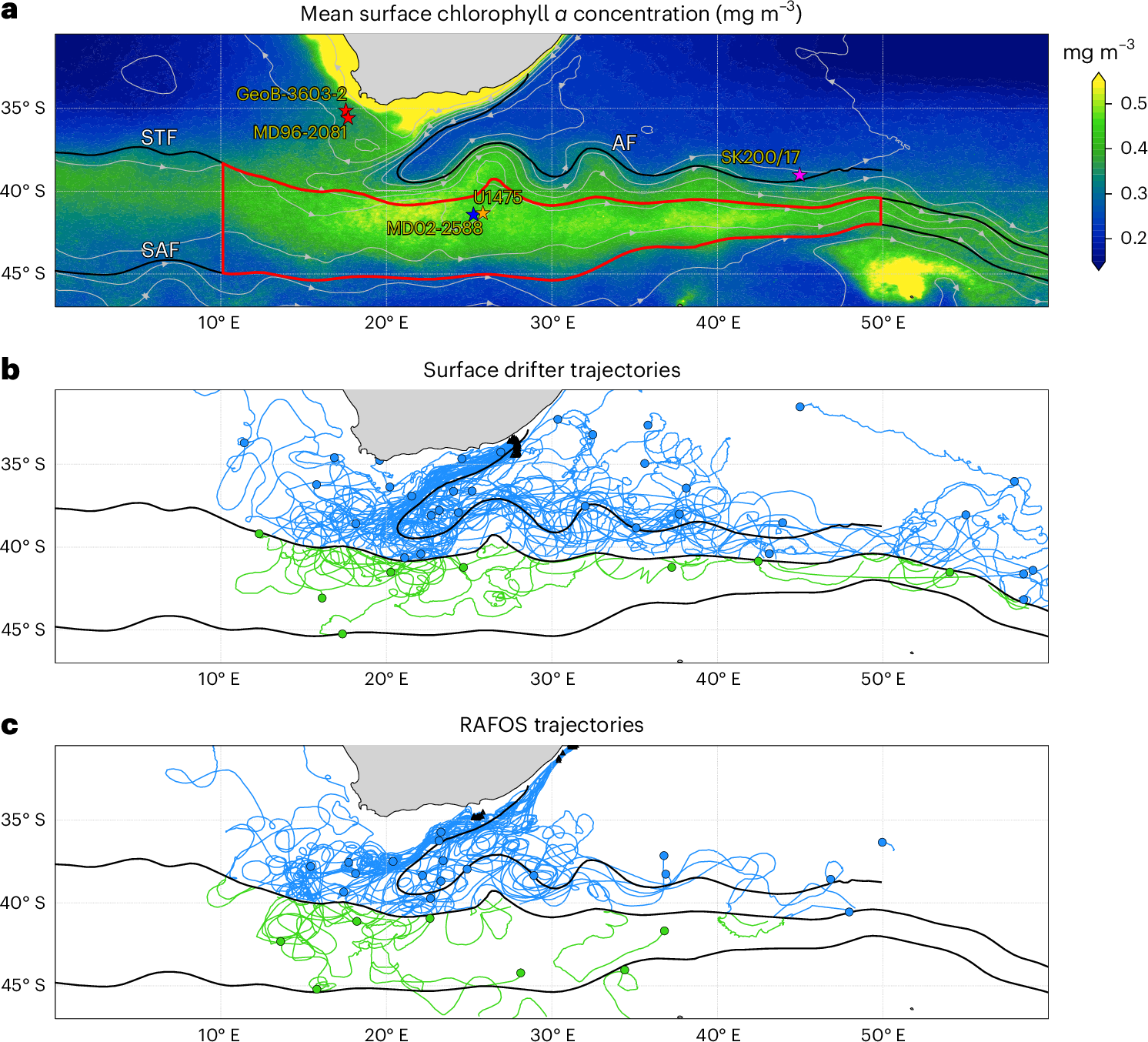
South of Africa, the Agulhas Current - one of the most powerful and turbulent ocean currents on Earth - meets the Antarctic Circumpolar Current, the largest oceanic system on the planet. In this dynamic region, vast phytoplankton blooms regularly appear, stretching over thousands of kilometers and potentially influencing Earth's carbon pump - the process that regulates how carbon moves between the atmosphere and the ocean.
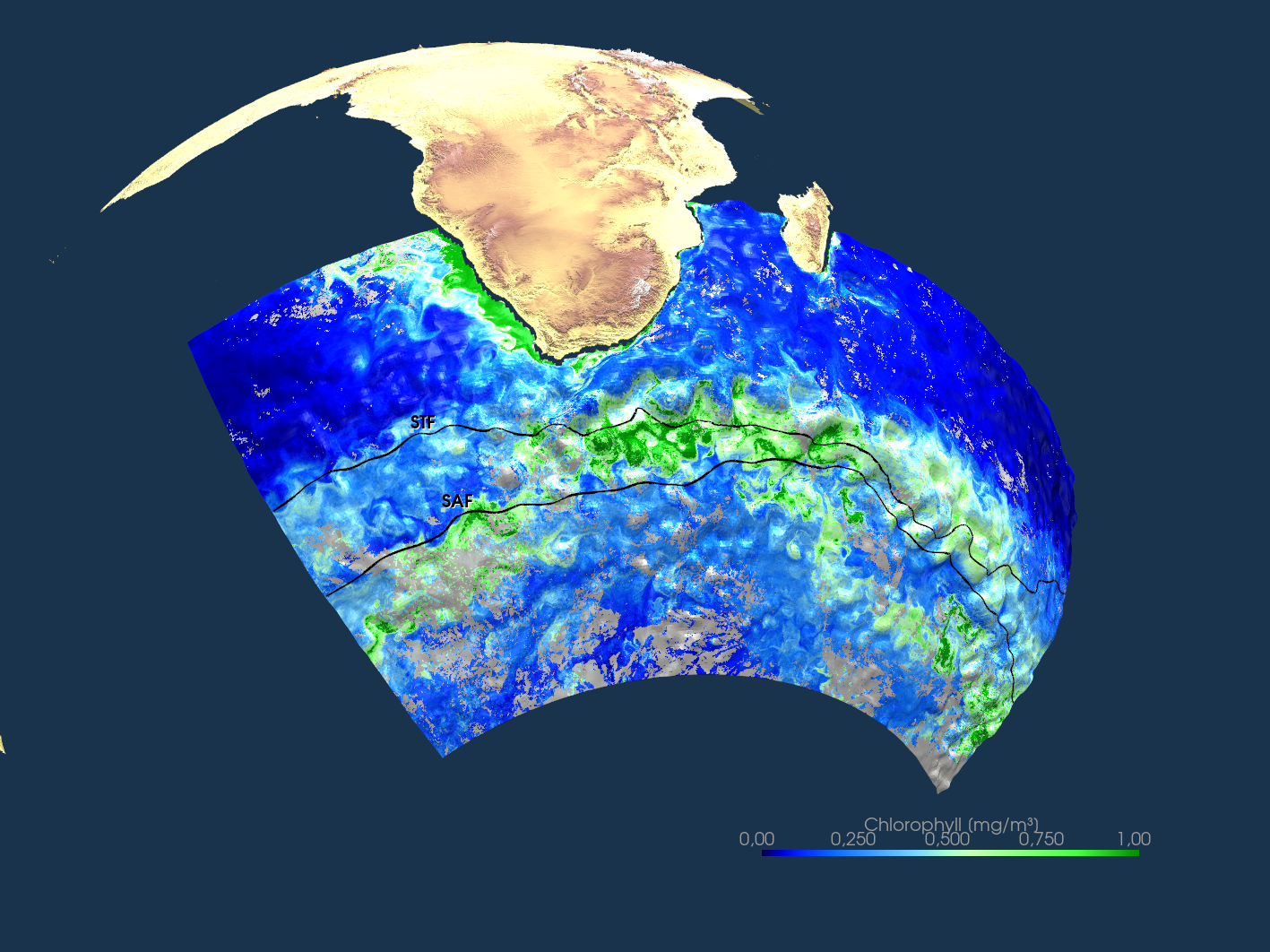
There's a question here: the Southern Ocean is known to be extremely poor in iron, a vital micronutrient that phytoplankton need to grow. So how does enough iron reach these remote waters to sustain such blooms?
As oceanographers in physics and biogeochemistry, we explored this question by looking at the Agulhas system - the complex interplay of currents surrounding the tip of Africa. We knew that a portion of Agulhas waters escapes into the South Atlantic through what's called the Agulhas Leakage, a process that has been attributed to influence past climate by altering the transfer of heat and salt into the Atlantic.
However, most Agulhas waters don't enter the Atlantic. Instead, they flow back into the Indian Ocean as the Agulhas Return Current, after traveling along the African coast and collecting chemical elements from continental sources. We proposed that a "Southern Agulhas Leakage" could carry iron-rich waters across the southern fronts, with eddies acting as natural transporters that deliver iron into the Southern Ocean, where it can fertilize phytoplankton growth.
Because iron is extremely difficult to measure in seawater, direct observations are scarce. To test our hypothesis, we used data from past float experiments to estimate how a Southern Agulhas Leakage might occur, and we assigned a mean iron concentration to get a first approximation.
Fortunately, with the advent of high-resolution ocean models that can simulate the fine-scale motion of eddies, we were able to quantify the role of iron transported by the Agulhas Current. These models are complex and computationally demanding - we had to wait patiently for results. But patience paid off: Dr. Stéphane Pous produced beautiful simulations that proved instrumental in assessing the Agulhas Current's role in delivering iron to the Southern Ocean.
One of the advantages of numerical models is that they allow us to "experiment" with the system. When we turned off the sedimentary iron source in the Agulhas Current within the model, the simulations showed that the Southern Agulhas Leakage supplies about half of the dissolved iron in the western Indian subantarctic zone. The model also revealed that this iron source supports around one quarter of the region's annual primary production and carbon export - directly linking the Agulhas system to the global carbon cycle, and ultimately, to climate regulation.
Building on these results, we revisited paleoproductivity records from three sites influenced by the Agulhas Return Current. These records suggest that over the past 130,000 years, a strengthening of the Agulhas Return Current may have increased iron supply and biological productivity in the Indian subantarctic zone, potentially enhancing the drawdown of atmospheric CO2 during that time.
This research was made possible by combining new diagnostics from high-resolution models with datasets from satellites, ocean drifters, trace-metal observations, and paleoclimate records - all freely shared by the scientific community. We sincerely thank all the colleagues who collected and shared these invaluable data: without their work, this study would not have been possible.
Our findings highlight that the Agulhas system is not only a conveyor of heat and salt, but also a bridge for nutrients and trace metals between the Indian and Southern Oceans. We hope this study encourages further collaboration among physical oceanographers, marine biogeochemists, and paleoceanographers, and inspires new exploration of this truly fascinating "Lord of the Rings" of ocean currents.
Follow the Topic
-
Nature Geoscience
A monthly multi-disciplinary journal aimed at bringing together top-quality research across the entire spectrum of the Earth Sciences along with relevant work in related areas.

Related Collections
With Collections, you can get published faster and increase your visibility.
Soil microbiomes and carbon sequestration under global change
Publishing Model: Hybrid
Deadline: Mar 18, 2027