The 103-Hectare Millennial Super-Organism: A Herbaceous Common Cattail (Typha latifolia) Clone Surviving Since China’s Han Dynasty


At first glance, each cattail stem appears to be an individual plant. But many wetland plants grow through underground rhizomes, producing new shoots that may remain genetically connected to the same original individual. Over years, decades, or even centuries, one plant can spread outward and form a large clonal colony. Our central question was simple but extraordinary: could the vast cattail stand at Ganhaizi be not just a population, but a single ancient clone?
This question eventually led us through six years of fieldwork, failed DNA extractions, genome assembly, mutation validation, and sediment coring. What we uncovered was a 103.2-hectare herbaceous clone that has likely survived for nearly two thousand years, quietly persisting in the same alpine wetland since around the time of China’s Han Dynasty.
2016: A puzzle hidden in common cattail
Our story began not with an ancient clone, but with a puzzling pattern in ordinary-looking cattails.
Around 2016, we were surveying Chinese populations of Typha, a group of wetland plants familiar to many people as common cattails. These plants often grow in dense stands along lakes, ponds, and marshes. Our early population surveys revealed a paradox. Genetic differentiation among populations was strikingly low, suggesting that clonal reproduction might be widespread. Yet these plants had not abandoned sexual reproduction. They still produced flowers and large numbers of seeds, although many seeds were infertile.
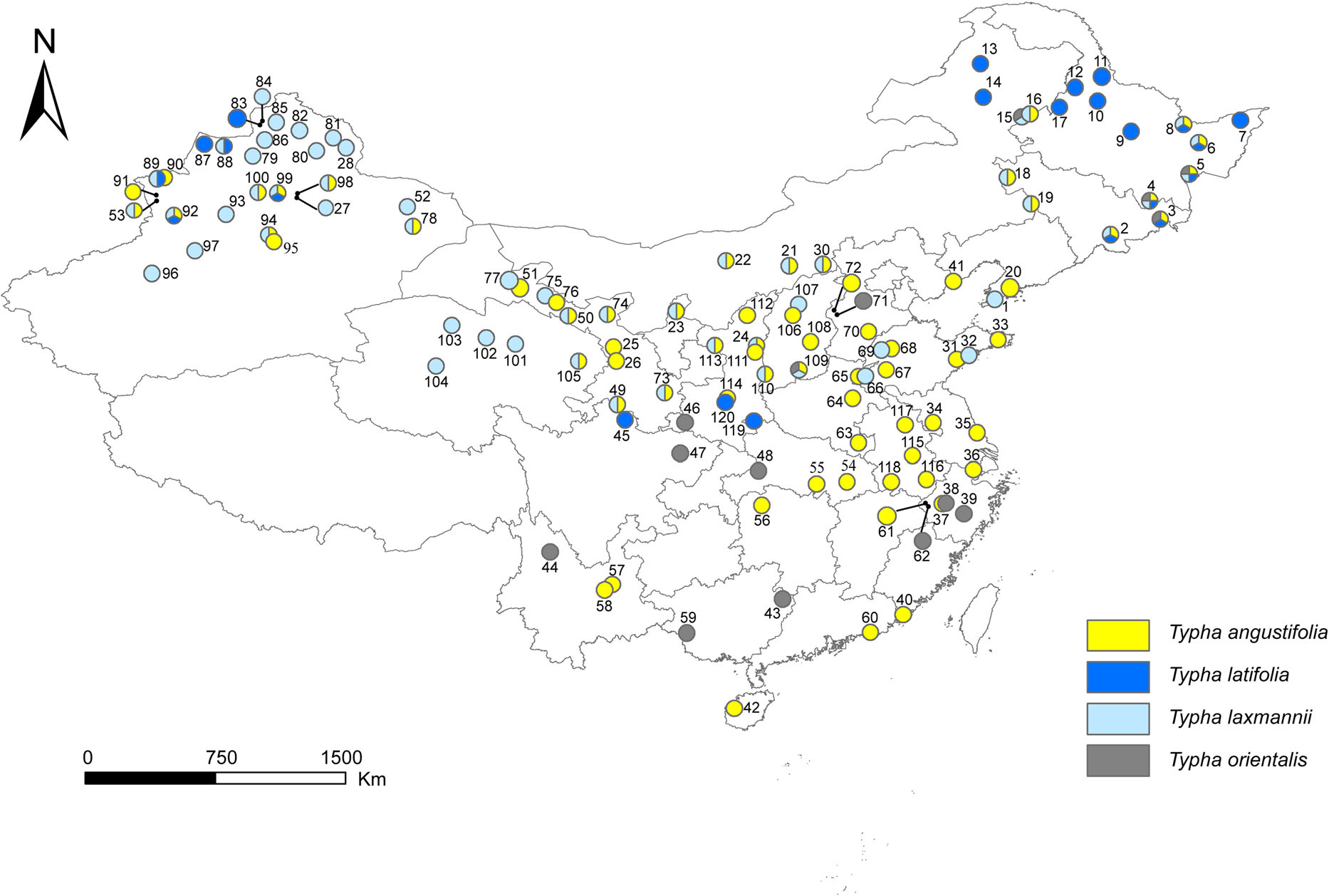
This combination left us with a simple but important question: how much of a cattail wetland is maintained by sexual reproduction, and how much by clonal growth?
At the time, we did not know that this question would eventually lead us to Ganhaizi, an alpine wetland in Jiuzhaigou, Southwest China, and to one of the most surprising organisms we had ever studied.
2021: A signal from the southern edge
By 2021, whole-genome sequencing had become central to our plan. Traditional molecular markers could hint at clonality, but they could not fully resolve the spatial and temporal history of large wetland stands. We needed to look across the genome.
We focused on several Typha latifolia populations from different regions of China. Ganhaizi was especially interesting because it lies near the southern edge of the species’ East Asian distribution. Range-edge environments are often challenging. When sexual reproduction becomes unreliable, clonal growth may allow a plant to persist by repeatedly producing new shoots from established rhizomes.
When the first population genomic data came back, most sites showed patterns consistent with sexual reproduction. Ganhaizi was the exception. It showed unusually high shared heterozygosity, low genetic diversity, and an allele-frequency pattern strongly suggestive of extensive clonality. It was the kind of signal that makes you pause: perhaps this was not just a large population, but something much more unusual.
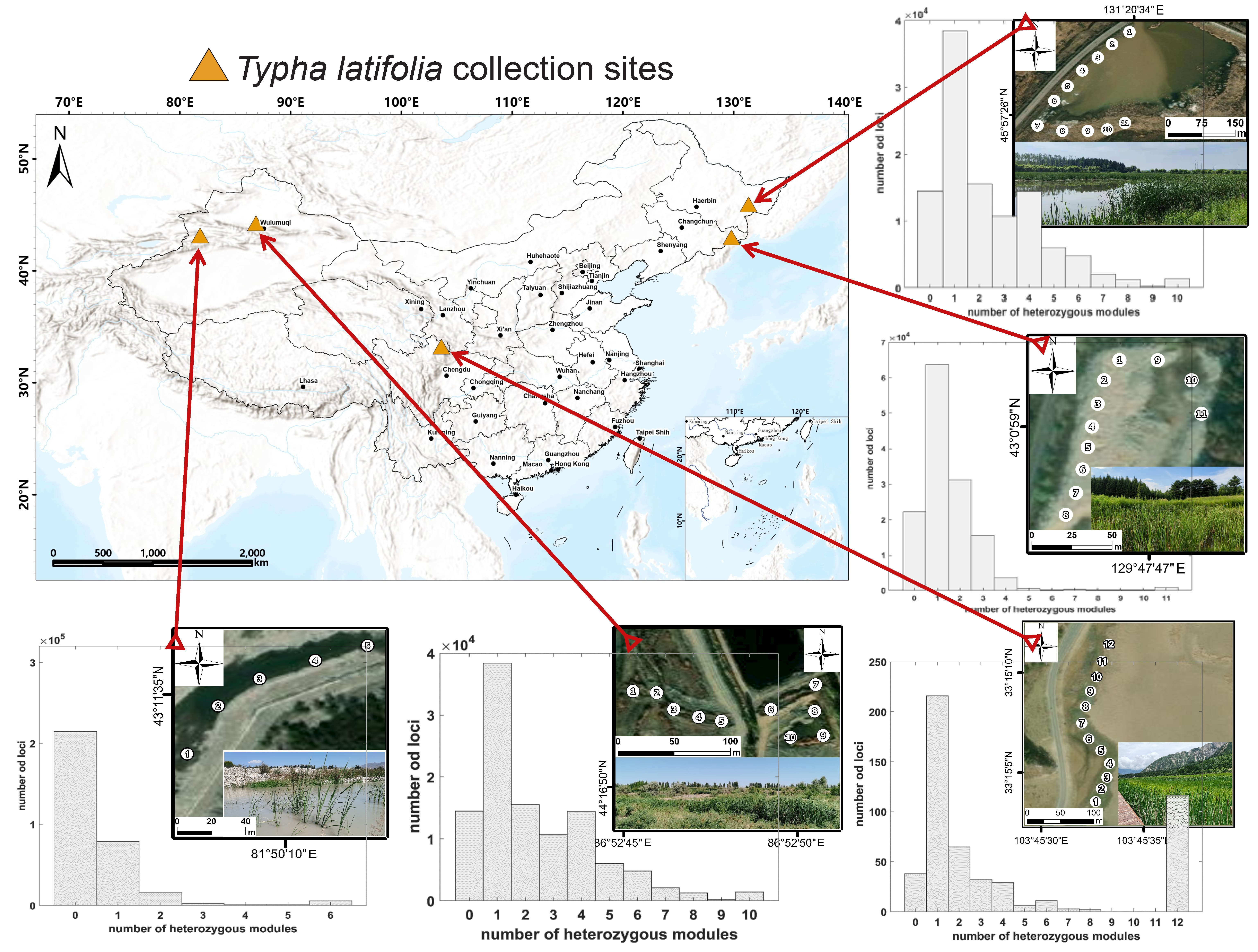
But there was a problem. To prove that the stand was a single clone, we needed a high-quality reference genome. Our first attempt used PacBio HiFi sequencing, but Typha tissues are rich in secondary metabolites, which interfered with high-quality DNA extraction. The libraries were not good enough, sequencing output was insufficient, and the resulting assembly lacked the resolution we needed. We had found an exciting biological signal, but the technical route forward had collapsed.
Summer 2022: Into the wetland
In July and August 2022, we returned to Ganhaizi with a clearer goal: to map the cattail stand, collect better samples, and build the genome we needed.
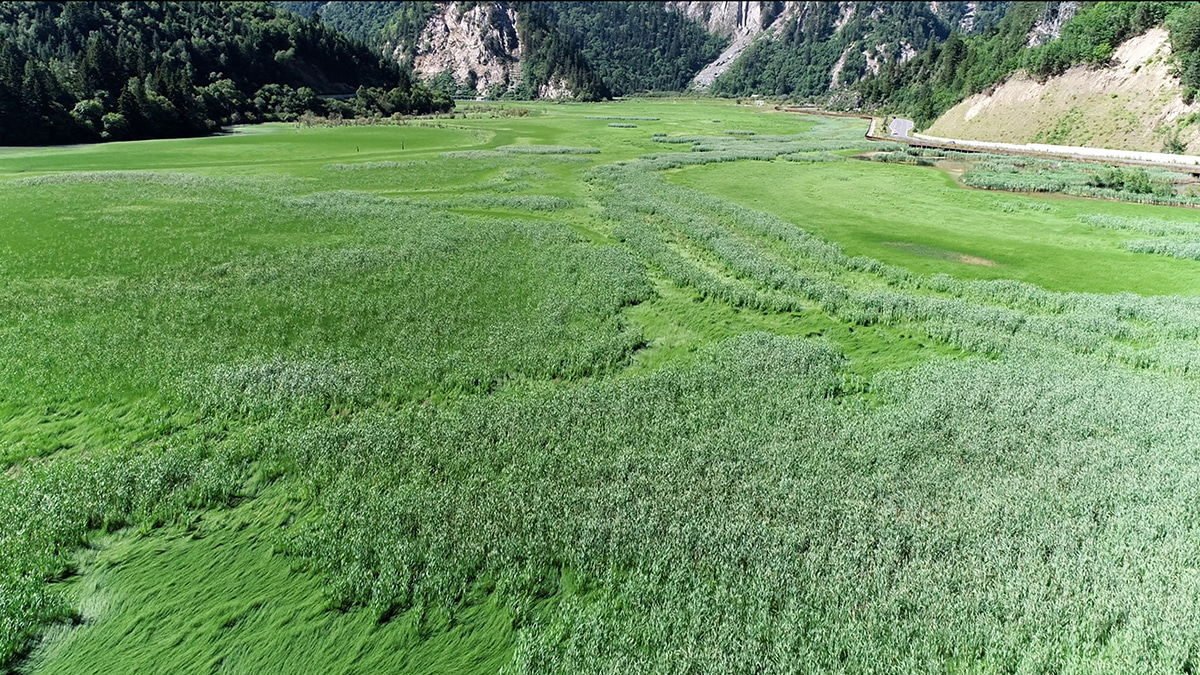
Standing at the edge of Ganhaizi, the scale of the task became obvious. The cattail canopy covered about 103.2 hectares, forming a dense green expanse across the alpine wetland. To most visitors, it was a beautiful landscape. To us, it was a field site, a safety challenge, and possibly a living time machine.
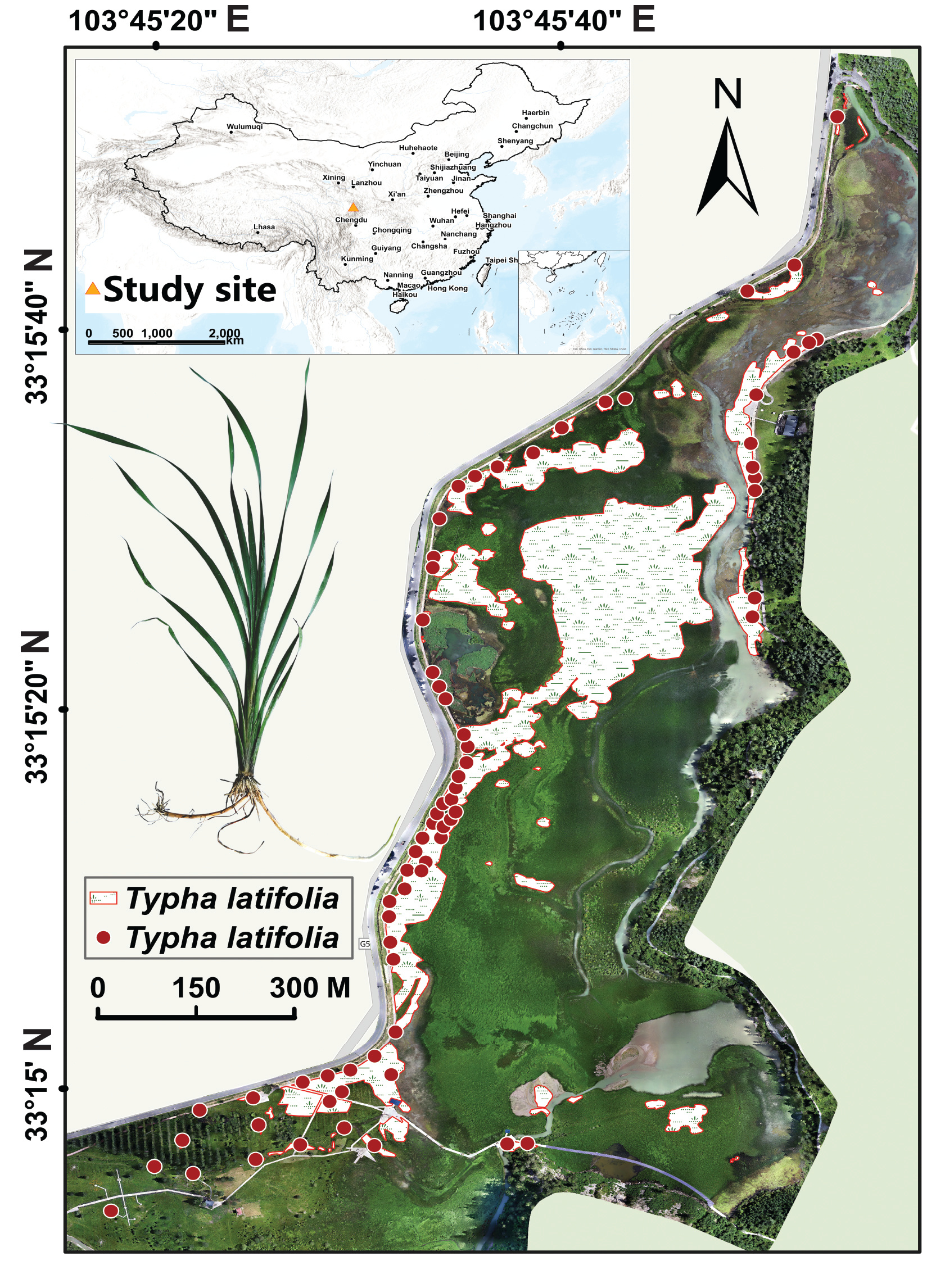
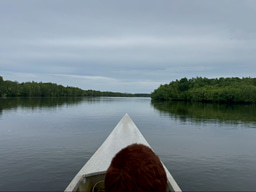
We initially tried to reach the interior using inflatable boats and chest waders. That plan quickly became risky. The mud was unstable, the water depth changed unpredictably, and moving through the dense cattail stand was far harder than expected. After several dangerous moments, we changed strategy. Instead of forcing our way into the deepest parts, we sampled systematically along accessible margins and collected intact living plants for high-quality DNA extraction back in the laboratory.
This field adjustment was important. It reminded us that good science is not always about following the original plan; sometimes it depends on knowing when to change the plan safely.
Late 2022: The genome finally opens
Back in the lab, we also changed our sequencing strategy. Rather than repeating a standard approach, we turned to Oxford Nanopore long-read sequencing and pushed the sequencing depth to an unusually high level, approximately 150× coverage. This was a gamble, but it paid off.
The ultra-deep long-read data allowed us to assemble a gap-free, chromosome-level reference genome. With this genome, we could finally map our population data with the accuracy required to test the clone hypothesis. The result was striking: samples from across the Ganhaizi stand were genetically consistent with a single massive clone.
In other words, what appeared aboveground to be a wetland full of individual cattail stems was, genetically, one enormous herbaceous individual spreading through underground rhizomes.
2023: Reading time from tiny mutations
Once we knew we were dealing with a single clone, the next question was even more exciting: how old was it?
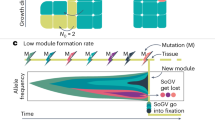
To answer this, we turned to somatic mutations. These are small genetic changes that arise as cells divide during growth. In a long-lived clone, different parts of the plant may gradually accumulate different mutations. If those mutations can be identified accurately, they can act as a molecular clock.
This was one of the most technically delicate parts of the project. The number of somatic mutations was extremely small, so even a few false positives could distort the age estimate. Standard variant-calling pipelines were not reliable enough under these ultra-low signal conditions. We therefore built a much stricter workflow, combining multiple somatic variant callers and retaining only mutations supported by at least two independent methods. We also validated candidate mutations using Sanger sequencing, which confirmed that the key signals were real.
November 2023: Asking the mud for evidence
Even with strong genomic evidence, we wanted an independent test. Could Typha really have occupied this wetland continuously for nearly two millennia?
In November 2023, just before the wetland froze, we returned to Ganhaizi to collect sediment cores. This was another race against time and weather. Wetland sediments accumulate layer by layer, preserving ecological traces from the past, including pollen grains. If cattails had been present continuously, their pollen should be recorded in the mud.
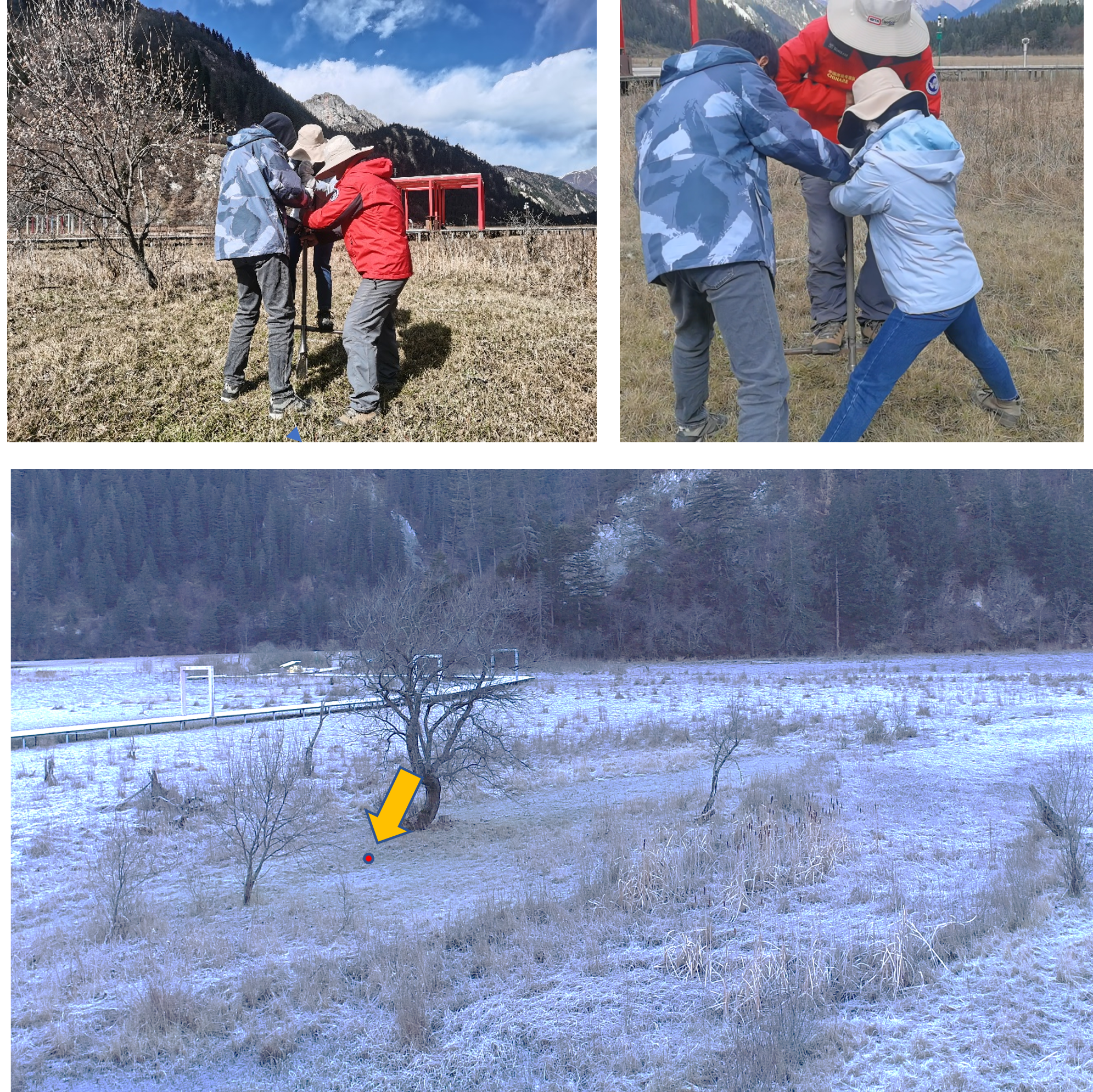
The sediment record gave us the confirmation we hoped for. Radiocarbon dating and palynological analysis revealed a continuous presence of Typha pollen from approximately 1940 years ago to the present. Remarkably, this independent ecological timeline matched the genomic age estimate. The mud, in a sense, confirmed the molecular clock.
What this clone taught us
This project was built through trial, error, and persistence. A population-level puzzle in 2016 led to a striking genomic signal in 2021; pilot sampling in 2022 helped us refine our field and laboratory strategies; high-quality sequencing in summer 2022 finally opened the genome; and sediment cores collected in late 2023 provided an independent ecological timeline.
Together, these results revealed that the Ganhaizi cattail stand is not merely a wetland population, but a single herbaceous clone that has survived for nearly two thousand years. Its longevity is hidden belowground, in rhizomes that connect shoots across space and time.
The discovery changed how we see familiar wetlands. Cattails may look ordinary, but in Ganhaizi they record an extraordinary history of persistence. Some of the longest-lived organisms on Earth may not tower above us as ancient trees; they may grow quietly beneath the mud, surviving in plain sight.
Follow the Topic
-
Communications Biology
An open access journal from Nature Portfolio publishing high-quality research, reviews and commentary in all areas of the biological sciences, representing significant advances and bringing new biological insight to a specialized area of research.

Related Collections
With Collections, you can get published faster and increase your visibility.
Healthy Aging
Publishing Model: Open Access
Deadline: Dec 31, 2026
DNA repair and human disease
Publishing Model: Hybrid
Deadline: Oct 31, 2026