Timing Matters More Than Duration: What Our New Study Adds to the Screen Time–Autism Debate
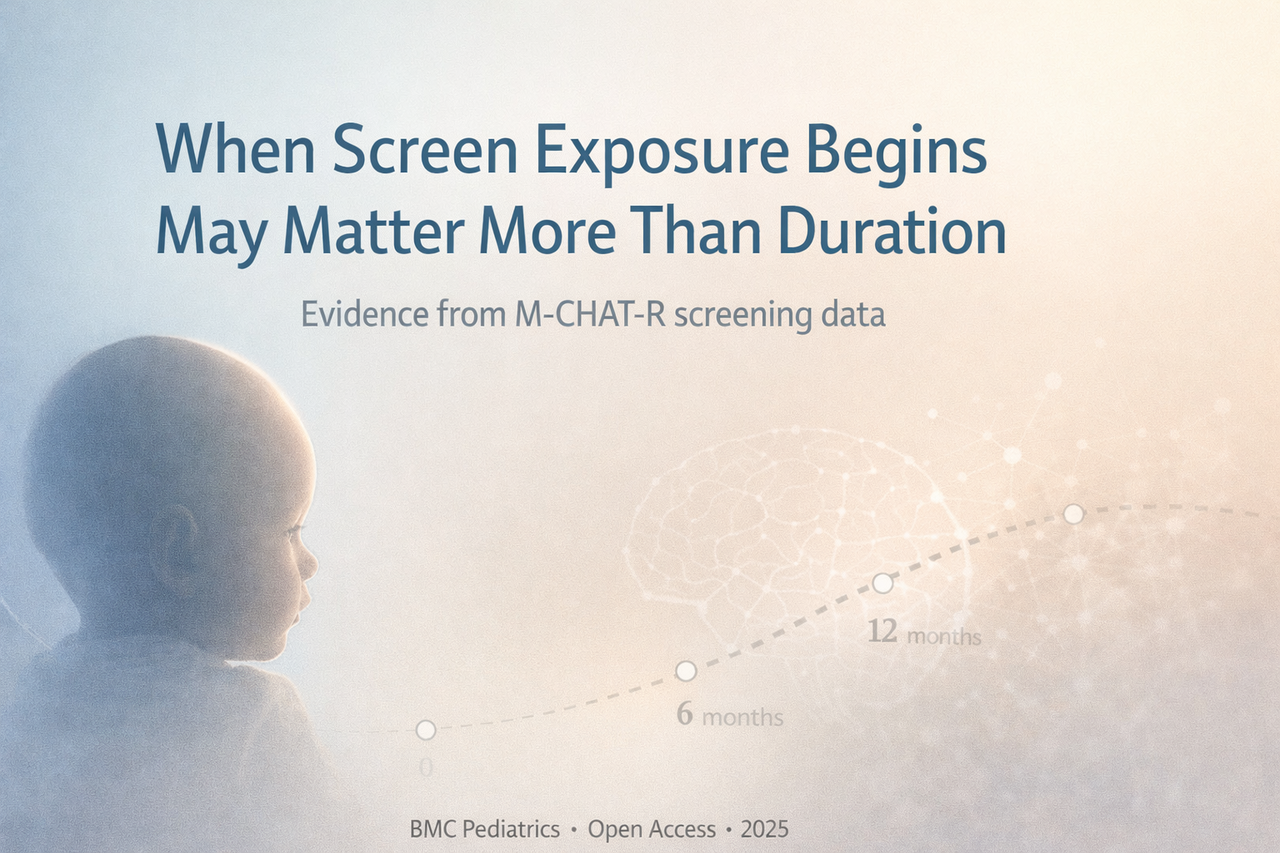



Screen time in early childhood has become one of the most debated topics in developmental research. While guidelines from the World Health Organization and the American Academy of Pediatrics recommend avoiding screens in infancy, real-world adherence remains low, and the scientific evidence has often been inconsistent or limited by small samples and methodological constraints.
In our recently accepted open-access article in BMC Pediatrics, we sought to clarify a specific and often overlooked question:
Does the timing of initial screen exposure matter more than the total amount of screen time when it comes to autism screening outcomes?
Study overview
We conducted an observational cohort study including 646 children aged 16–30 months, recruited from three large pediatric clinics in Tbilisi, Georgia. Autism risk was assessed using the official Georgian version of the M-CHAT-R/F, and parents reported: average daily active screen time, and the age at which screen exposure first began (including early background exposure).
What we found
Two findings stood out.
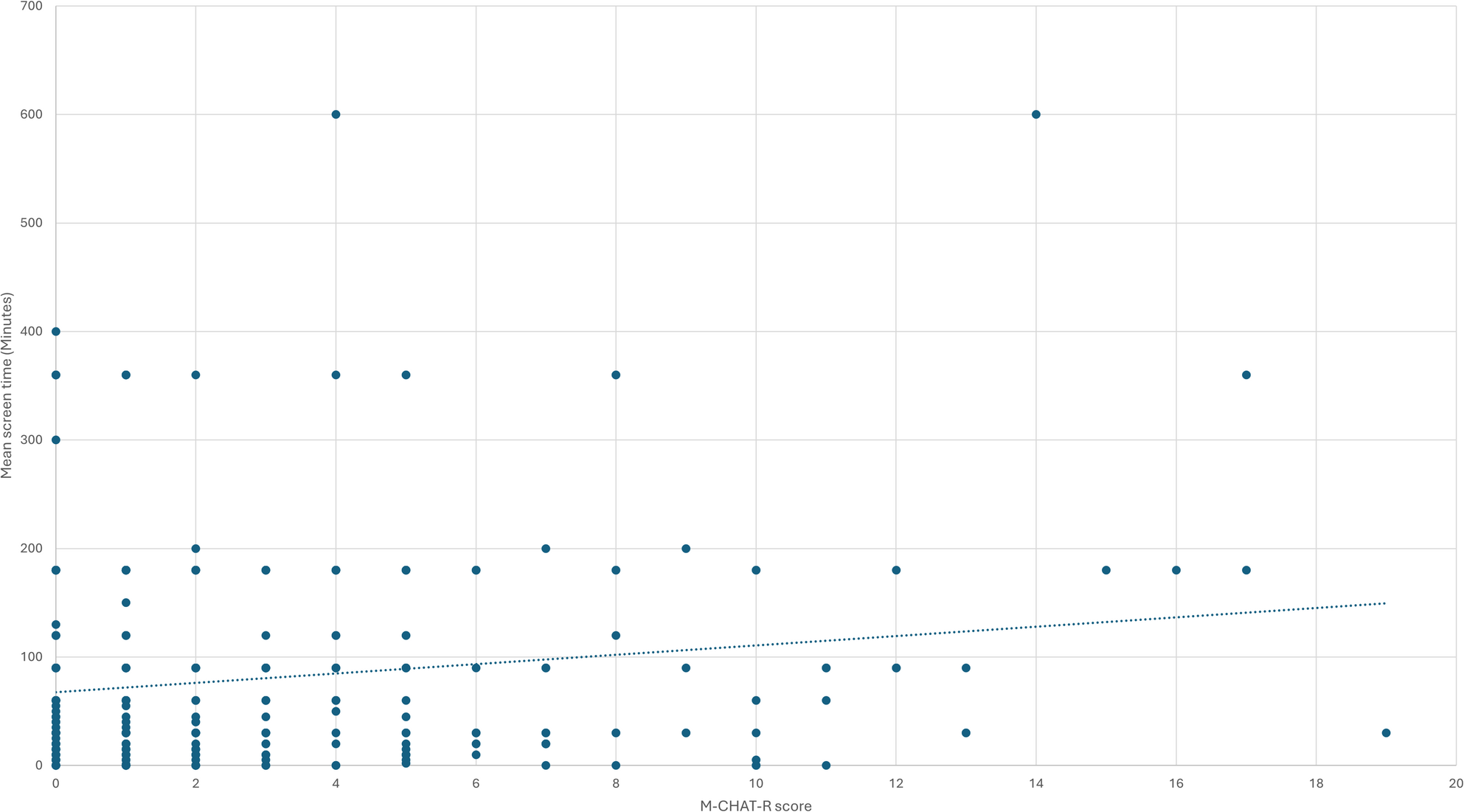
First, average daily screen time was associated with M-CHAT-R scores, but the effect size was small. Although statistically significant, screen duration explained only 2.3% of the variance in screening scores. This aligns with recent meta-analytic work suggesting that duration alone is a weak predictor and may be easily overinterpreted if effect sizes are ignored.
Second—screen exposure before 6 months of age showed a much stronger association. Children exposed to screens before six months were nearly three times more likely to fall into the high-risk M-CHAT-R category (≥8 points) compared with children who were not exposed this early.
This pattern persisted even in multivariable models, suggesting that timing of exposure may be more developmentally relevant than cumulative duration.
What this does not mean
It is critical to emphasize that: 1. M-CHAT-R is a screening tool, not a diagnostic instrument. 2. Our findings do not establish causality or imply that early screen exposure causes autism. 3. Reverse causation and unmeasured confounding remain possible.
These results should be interpreted as identifying a risk-associated behavioral pattern that warrants further investigation.
Why timing might matter
From a neurodevelopmental perspective, the first six months of life represent a period of rapid synaptic organization, sensory integration, and social brain network development. Several neuroimaging and longitudinal studies suggest that early sensory overstimulation and reduced caregiver–infant interaction during this window could plausibly influence later screening outcomes—though mechanisms remain speculative and unproven.
Our data suggest that when exposure begins may be more informative than how much exposure occurs later, a distinction that is often blurred in screen time research.
Limitations and future directions
As with most observational studies, limitations apply: screen time was parent-reported,, socioeconomic status and content quality were not measured, and the cross-sectional design limits causal inference.
Future research should prioritize prospective longitudinal designs, integrate content and context of screen use, and explicitly model parent–child interaction quality alongside digital exposure.
Practical implications
Until stronger causal evidence emerges, the most defensible recommendation remains adherence to existing guidelines: avoid screen exposure in infancy whenever possible, and focus on responsive, human interaction during the earliest developmental window.
Final thoughts
Our hope is that this study contributes nuance to a polarized discussion. Screen time is neither uniformly harmful nor irrelevant—but timing matters, and early infancy may be a particularly sensitive period that deserves careful attention in both research and practice.

Follow the Topic
-
BMC Pediatrics

This is an open access journal publishing peer-reviewed research articles in all aspects of health care in neonates, children and adolescents, as well as related molecular genetics, pathophysiology, and epidemiology.
Related Collections
With Collections, you can get published faster and increase your visibility.
Emerging environmental threats to children’s well-being
BMC Pediatrics is calling for submissions to our Collection, Emerging environmental threats to children’s well-being. The well-being of children is increasingly threatened by a myriad of environmental factors, including air and water pollution, exposure to toxic substances, and climate change. Children—from infants to adolescents—are particularly vulnerable to these hazards, which can cause various diseases, endocrine disorders, developmental delays, and behavioral issues. These hazards may have acute and lasting effects on their physical, biological, and mental health. Understanding the implications of environmental threats, especially emerging ones, on children's overall health is essential for developing effective prevention strategies and interventions.
This Collection aims to highlight emerging threats that arise from our changing environment and how these factors interact with children's health and development. We welcome submissions from various disciplines, including endocrinology, epidemiology, psychology and psychiatry, and public health. Key topics of interest include, but are not limited to:
Children's exposure to emerging environmental hazards at different stages and the acute and/or long-term effect on the health outcomes
New findings on the impact of various environmental pollutants on pediatric health
Advanced understanding of environmental stressors and factors affecting children's overall health
Impact of climate change on child development and the tailored strategies to address these challenges
Policy interventions for reducing environmental risks to children in different settings
This Collection supports and amplifies research related to SDG 3: Good Health and Well-being, SDG 6: Clean Water and Sanitation, SDG11: Sustainable Cities and Communities, SDG 13: Climate Action, and SDG 15: Life on Land.
All manuscripts submitted to this journal, including those submitted to collections and special issues, are assessed in line with our editorial policies and the journal’s peer review process. Reviewers and editors are required to declare competing interests and can be excluded from the peer review process if a competing interest exists.
Publishing Model: Open Access
Deadline: Jun 26, 2026
Advanced childhood cancer treatment and management
BMC Pediatrics is calling for submissions to our Collection, Advanced childhood cancer treatment and management. Childhood cancer remains a critical area of concern, affecting thousands of children and their families each year. Advances in pediatric oncology have led to improved survival rates and treatment protocols, yet challenges persist. The complexity of cancer in children, combined with their unique physiological and developmental needs, necessitates ongoing research into innovative treatment strategies, supportive care, and long-term management. This Collection seeks to explore the latest findings and advancements in the field, focusing on effective approaches to treating pediatric cancer and enhancing the quality of life for young patients.
The significance of research in this domain is underscored by the evolving landscape of cancer therapies, including targeted treatments, immunotherapies, and precision medicine. Recent breakthroughs have transformed cancer prognosis for many pediatric patients, leading to increased survival rates. However, disparities in access to care and the long-term effects of treatment continue to pose challenges. By fostering collaboration among researchers, clinicians, and healthcare providers, we can work towards optimizing cancer management strategies and addressing the multifaceted needs of children with cancer.
We welcome contributions on topics including, but not limited to:
Advanced childhood cancers screening and diagnosis
Innovative treatment strategies for pediatric cancer
Approaches for improved cancer prognosis in children
Mental and physical health challenges, and support for childhood cancer survivors and their families
Solutions addressing disparities in pediatric cancer care and management
This Collection supports and amplifies research related to SDG 3: Good Health and Well-being.
All manuscripts submitted to this journal, including those submitted to collections and special issues, are assessed in line with our editorial policies and the journal’s peer review process. Reviewers and editors are required to declare competing interests and can be excluded from the peer review process if a competing interest exists.
Publishing Model: Open Access
Deadline: Jun 30, 2026


Please sign in or register for FREE
If you are a registered user on Research Communities by Springer Nature, please sign in