Understanding Wing Dams and Their Role in Flood Risk
Published in Earth & Environment and Civil Engineering


A dynamic river system
Rivers are dynamic systems, continuously shaped by the interplay of flow and sediment transport. Water movement interacts with the riverbed and banks, redistributing sediment, altering channel geometry, and influencing how the river responds to both natural events and human interventions. Understanding these processes is essential for predicting water levels, managing flood risk, and designing sustainable engineering solutions. One practical question arises within this context: do wing dams—structures built to improve navigation—affect flood risk, and if so, how?
A more complex reality
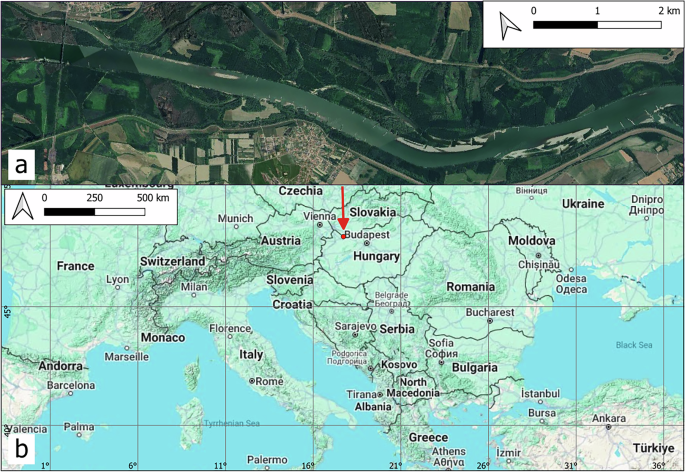
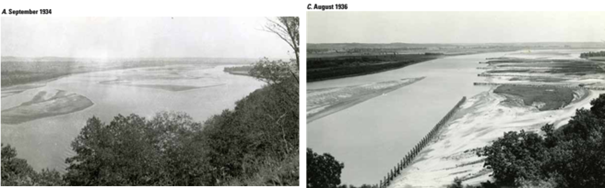
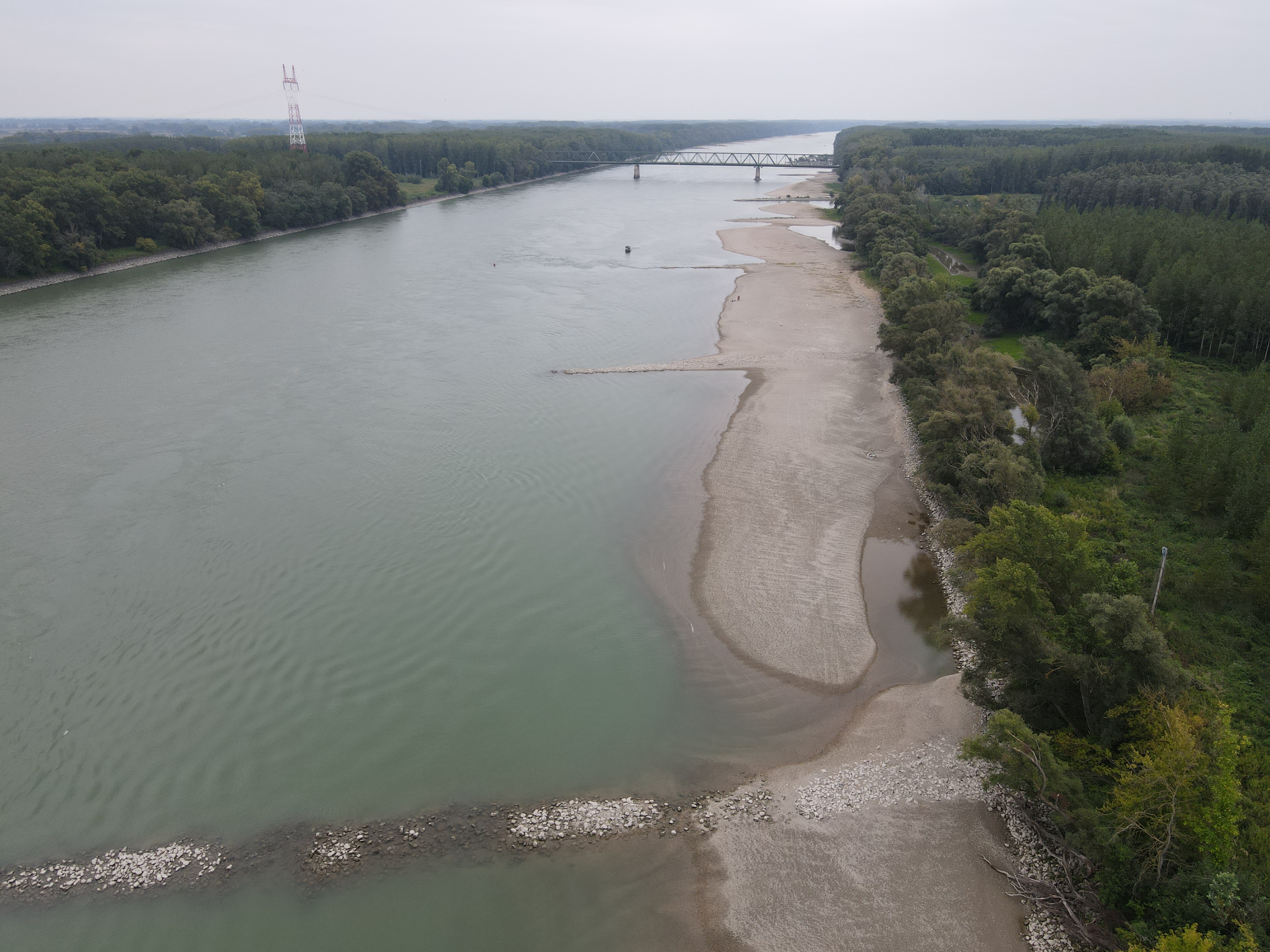
The Mississippi River provides a striking example. The Great Flood of 1993, which crested at St. Louis at a record 49.58 feet, caused unprecedented damage and raised questions about the role of river engineering structures. Did wing dams contribute to rising water levels, or did they help manage the flood? Similar questions arise along Hungary’s Upper Danube, which is densely lined with wing dams. Here, the riverbed material—gravel and sand versus mostly sand in the Mississippi—responds differently to erosion and deposition, creating a unique set of challenges.
A collaborative perspective
For my part, I have spent the last 15 years exploring the 3D intricacies of riverbeds through 3D morphodynamic modeling. Gary Parker, in contrast, is a world-renowned expert in large-scale, long-term 1D river modeling. The questions surrounding wing dams in both the Mississippi and the Danube presented an ideal opportunity to combine our complementary skills. By integrating detailed 3D insights with 1D large-scale simulations, we achieved a highly successful contribution that bridged local processes with regional and temporal river behavior.
What we found
Rivers with mixed gravel-sand beds, like the Danube, tend to experience long-term water level increases due to the formation of armored riverbeds behind wing dams. In contrast, rivers with uniform sand beds, like the Mississippi, often show an initial water level rise followed by gradual adjustment as the river reaches a new equilibrium. Even temporary water level changes can last decades, underscoring the slow but persistent nature of morphodynamic adjustment. For the Mississippi, our results suggest that wing dams raise water levels above the original state for roughly 6–8 decades, after which levels may gradually fall below the initial baseline.
Why it matters
This hybrid approach allows scientists and engineers to predict river behavior more reliably, guiding flood risk management, navigation planning, and sustainable river engineering. The study demonstrates that intuition alone is insufficient: understanding localized morphodynamics and how they scale across space and time is essential for designing interventions that safely and effectively interact with river systems.
References
[1] J. S. Alexander, R. C. Wilson; W. R. Green: “A Brief History and Summary of the Effects of River Engineering and Dams on the Mississippi River System and Delta”, U.S. Geological Survey, Reston, Virginia, 2012

Follow the Topic
-
Communications Earth & Environment

An open access journal from Nature Portfolio that publishes high-quality research, reviews and commentary in the Earth, environmental and planetary sciences.
Related Collections
With Collections, you can get published faster and increase your visibility.
Archaeology & Environment
Publishing Model: Hybrid
Deadline: Mar 31, 2026
Drought
Publishing Model: Hybrid
Deadline: Mar 31, 2026


Please sign in or register for FREE
If you are a registered user on Research Communities by Springer Nature, please sign in