Uniting for Rare Diseases: When Alignment Accelerates Progress

Rare Disease Day 2026* is approaching, and this post is a tribute to everyone who works tirelessly to drive research and innovation within the rare diseases community. Their efforts support patients and their families, addressing a problem that affects up to 300 million people worldwide.
Uniting for Rare Diseases: When Alignment Accelerates Progress
Like

Share this post

Choose a social network to share with, or copy the URL to share elsewhere

This is a representation of how your post may appear on social media. The actual post will vary between social networks

Explore the Research

SpringerLink
SpringerLink SpringerLink

Integrative research and innovation strategy for rare diseases. Insights from the 5-year European joint programme on rare diseases, including analysis to inform recommendations for future actions - Health Research Policy and Systems

Background The European Joint Programme on Rare Diseases (EJP RD) was an initiative that sought to integrate different rare disease strategies into a research ecosystem. This paper summarizes the work of the dedicated work package on Integrative Research and Innovation Strategy and outlines recommendations to facilitate alignment with National Plans and Strategies for Rare Diseases. Methods We carried out three periodic surveys (in 2020, 2021 and 2023) on the status of national plans and strategies (NP/NS) for rare diseases in EJP RD member countries. Using the feedback from the surveys and other sources, we developed an annual mapping of research and innovation needs and their alignment with the EJP RD programme. A review of the findings and progress from these approaches – including two strategic policy workshops and the development of National Mirror Groups – informed the recommendations to bridge the gap between national efforts and European strategies. Results A total of 34 countries responded to at least one survey. Implementation is uneven: 76% of countries have had their NP/NS approved at some point, but renewals are irregular. For EU13 countries, the most frequent barrier to developing, improving and translating rare disease (RD) research results was funding. In terms of the Programme’s activities covering mapped needs, we achieved global coverage of 65.8%, with greater coverage of needs for both the diagnostic pathway and the treatment pathway (71%). Four National Mirror Groups were developed during the Programme’s first 5 years, and a further seven were established by mid-2024. Conclusions Despite recent progress in establishing a research ecosystem for rare diseases in Europe, several challenges remain and should be addressed. These include availability and accessibility of diagnostics, medicines and medical devices across Europe, inequalities between and within countries, compliance with the FAIR data principles and the lack of a comprehensive policy framework to integrate different rare diseases initiatives. Next actions need to strengthen the coordination and alignment of funding and national policies, innovation in the translation of research results and the reach of a holistic research ecosystem. National Mirror Groups will play an important role in this respect.

When you read the article, one key word stands out in your mind for the rare diseases community: alignment.

This alignment enables all stakeholders in the ecosystem to move forward together: they identify the challenges, design approaches to address them, and drive their effective implementation, including through policies and other non‑scientific areas. Such synergies yield important benefits for rare disease patients. Alignment helps us to learn from each other's positive examples, organise information more effectively, make the most of our human resources, and avoid duplication, all of which benefits patients.

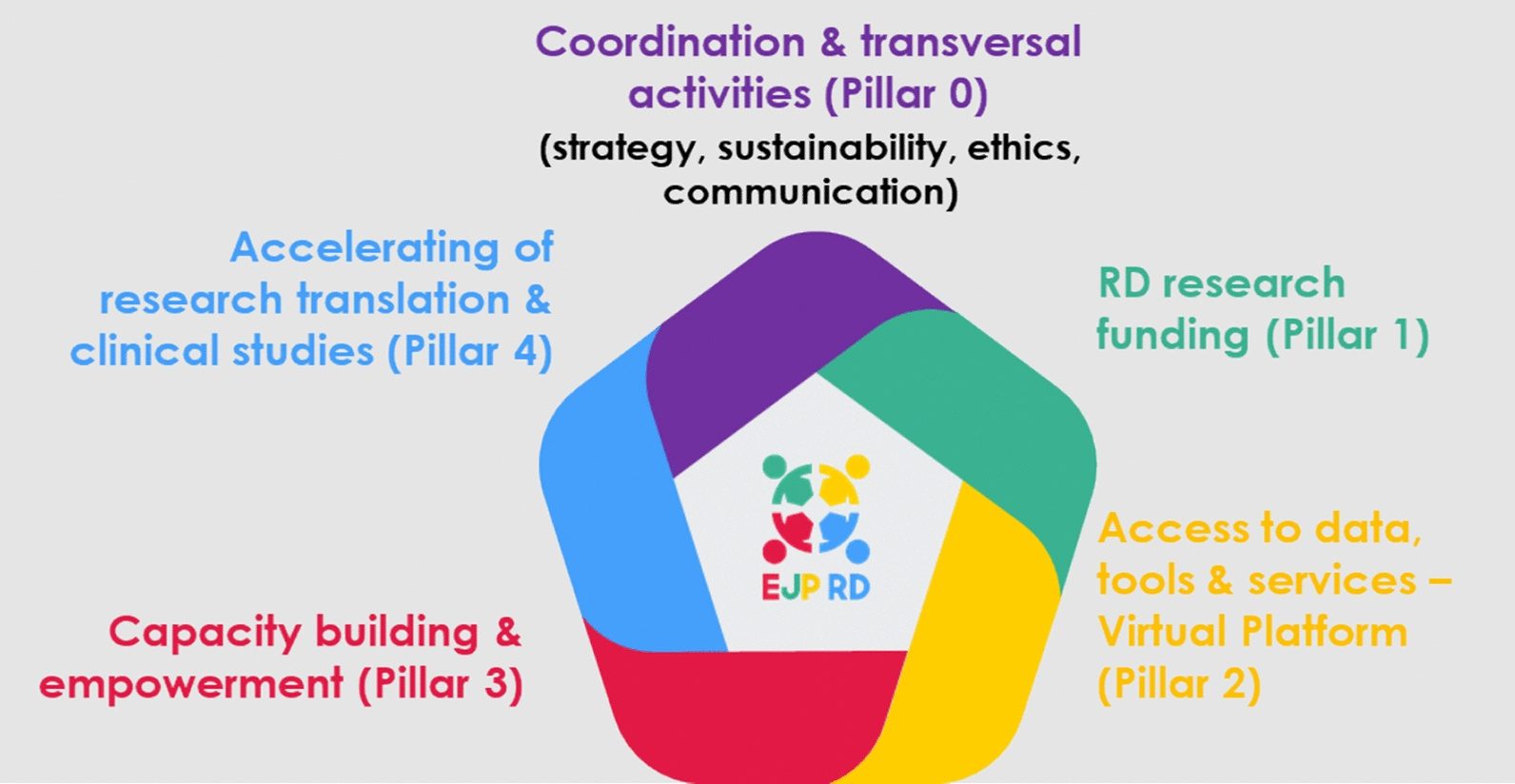
The work presented in the paper, developed over the five years of the European Joint Programme on Rare Diseases (EJP RD), represents a collaborative effort to bring together the research and innovation needs of our ecosystem, the status of national plans and strategies for rare diseases across EJP RD member countries, and discussions on challenges affecting the community, with special focus on those faced by underrepresented countries. The creation of National Mirror Groups was another key pillar within EJP RD’s alignment strategy.

Capturing the landscape of such a rich and challenging environment required multiple methodologies, careful task coordination, data integration, and the collection of sources, needs, discussions, and analyses of the observed outcomes. When we attempted to present all the results and findings on paper, we encountered yet another challenge.

The internal and external information and data we handled were compiled into hundreds of pages of documentation produced over five years. Although some parts of the article could have stood alone as independent papers, when we began designing the manuscript we felt it was essential to integrate all activities, results, and their interconnections to reflect the alignment spirit of the EJP RD framework. We truly wanted to show how each activity was linked and how the outcomes emerged from those connections.

We had to rewrite it several times—restructuring, refining, and condensing the information to make it truly navigable. It was a demanding process, but in the end, we made it happen.

In our results, we observed a clear trend of progress and needs addressed by the program year after year, but there is still a long way to go. Our objectives and goals enter a new chapter with the European Rare Diseases Research Alliance (ERDERA), and we hope to continue tackling the challenges faced by the rare diseases community, with all the previous experience.

M. Sánchez, R. Sarmiento, C. Moreau, E. Bermejo and C.Carta

* Rare Disease Day 2026 is a call for equity, not one-size-fits-all solutions. The campaign, coordinated by EURORDIS – Rare Disease Europe and delivered through 72 national alliances, puts representation and fair access to diagnosis, care and research at the centre.

Please sign in or register for FREE

If you are a registered user on Research Communities by Springer Nature, please sign in

Follow the Topic

Biomedical Research
Life Sciences > Health Sciences > Biomedical Research
International Relations
Humanities and Social Sciences > Politics and International Studies > International Relations
Social Science Matters
Humanities and Social Sciences > Social Science Matters

Introducing: Social Science Matters

Social Science Matters is a campaign from the team at Palgrave Macmillan that aims to increase the visibility and impact of the social sciences

Continue reading announcement

Related Collections

With Collections, you can get published faster and increase your visibility.

Advancing Research Prioritization: Monitoring, Evaluation, and Implementation Strategies

Despite the critical role of research prioritization in optimizing funding allocation and shaping research agendas, there remains a notable gap in the literature on how these processes are assessed and implemented in practice. This special series aims to bridge this gap by bringing together studies that examine the frameworks, methodologies, and real-world applications of monitoring, evaluation, and implementation in research prioritization. We encourage submissions that explore both theoretical and empirical perspectives, with a focus on identifying best practices, challenges, and innovations in priority-setting mechanisms. Contributions may range from methodological discussions to case studies and policy analyses that shed light on how research prioritization efforts are designed, executed, and measured.

All submissions in this collection undergo the journal’s standard peer review process. Similarly, all manuscripts authored by a Guest Editor(s) will be handled by the Editor-in-Chief. As an open access publication, this journal levies an article processing fee (details here). We recognize that many key stakeholders may not have access to such resources and are committed to supporting participation in this issue wherever resources are a barrier. For more information about what support may be available, please visit OA funding and support, or email OAfundingpolicy@springernature.com or the Editor-in-Chief.

Publishing Model: Open Access

Deadline: Jul 08, 2026

Enabling Environments for Learning Health Systems: Capabilities, Cultures, and Conditions for Learning and Transformation

Health systems globally are under pressure to become learning organizations—capable of generating, sharing, and applying knowledge rapidly and equitably. However, the enabling conditions that make this possible remain under-theorized and inconsistently acted upon.

This Collection invites work that advances the science of enabling environments—the structural, cultural and capability-building conditions that support continuous, adaptive learning within health systems. We welcome conceptual, empirical, and practice-based contributions that explore, examine, and evaluate the enabling environment of learning health systems, including those that deepen collective understanding of the workforce capabilities, organizational cultures, and system conditions that sustain learning in health systems.

Suggested Subtopics

• Culture & Leadership

• Building a culture of curiosity, inclusion and psychological safety

• Roles of leadership and champions in advancing learning

• Embedding equity, patient and caregiver participation in learning practices

• Governance & Policy

• Governance models that promote distributed decision-making and learning

• Policies and incentives that enable experimentation and adaptive improvement

• System-level alignment of priorities, ethics review, and accreditation for learning systems

• Data & Digital Infrastructure

• Data literacy, interoperability and real-time analytics for learning

• Leveraging qualitative and experiential data alongside quantitative measures

• Digital tools and dashboards that support feedback loops and knowledge mobilization

• Funding & Investment Models

• Funding strategies tied to learning goals and long-term capacity building

• Models supporting dedicated time, embedded research roles and sustainability

• Aligning investment with community-identified priorities and system learning cycles

• Knowledge & Capacity Building

• Competency frameworks, continuing education and professional development for learning systems

• Research internships, embedded scientist models and mentorship programmes

• International learning collaboratives, communities of practice and peer-exchange networks

• Practice and Case Studies

• Case studies of health systems operationalizing enabling environments

• Implementation narratives from healthcare organizations, networks, or systems

• Evaluations of learning system maturity or embedded improvement practices

• Methodological Innovations

• Tools and measures for assessing learning system maturity

• Participatory methods, realist evaluation, developmental evaluation in learning systems

• Studies of learning ecosystems and co-design approaches

All submissions in this collection undergo the journal’s standard peer review process. Similarly, all manuscripts authored by a Guest Editor(s) will be handled by the Editor-in-Chief. As an open access publication, this journal levies an article processing fee (details here). We recognize that many key stakeholders may not have access to such resources and are committed to supporting participation in this issue wherever resources are a barrier. For more information about what support may be available, please visit OA funding and support, or email OAfundingpolicy@springernature.com or the Editor-in-Chief.

Publishing Model: Open Access

Deadline: Sep 17, 2026