Unlocking the Secrets of the B-ALL Microenvironment: How Stromal Cells Shape Leukemia Progression
Published in Biomedical Research




Acute lymphoblastic leukemia (ALL) is a blood cancer and the most common type of leukemia in children. Thanks to recent advances, many patients can be cured, but some experience relapse, where the disease returns after treatment. One of the reasons for this is the complex environment inside our bones called the bone marrow microenvironment. This specialized niche supports normal blood cell formation but can also protect and sustain leukemia cells.
Our recent research, published in Leukemia, investigates the support cells within the bone marrow and how they may influence leukemia progression and resistance to therapy.
The Role of Stromal Cells in the Bone Marrow
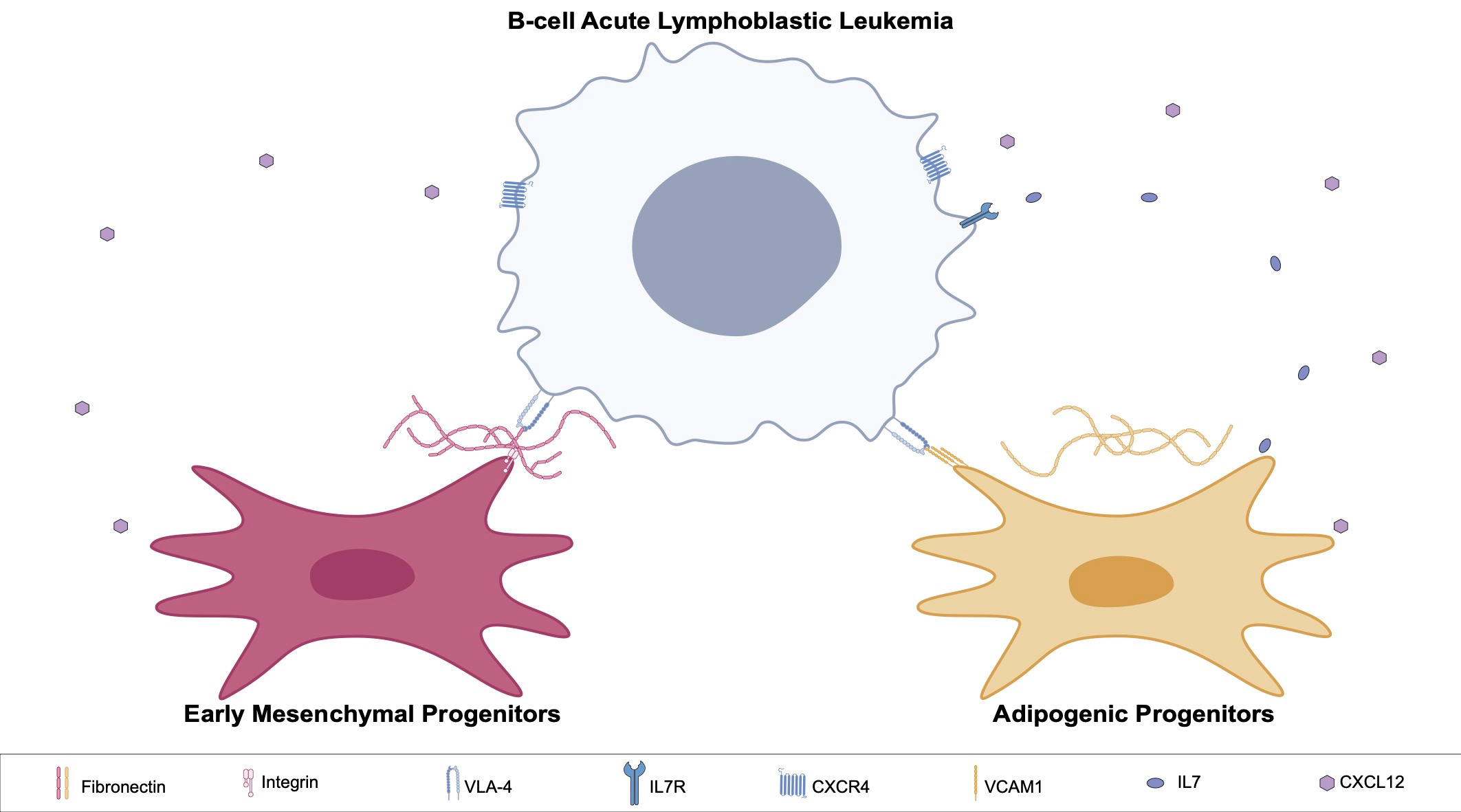
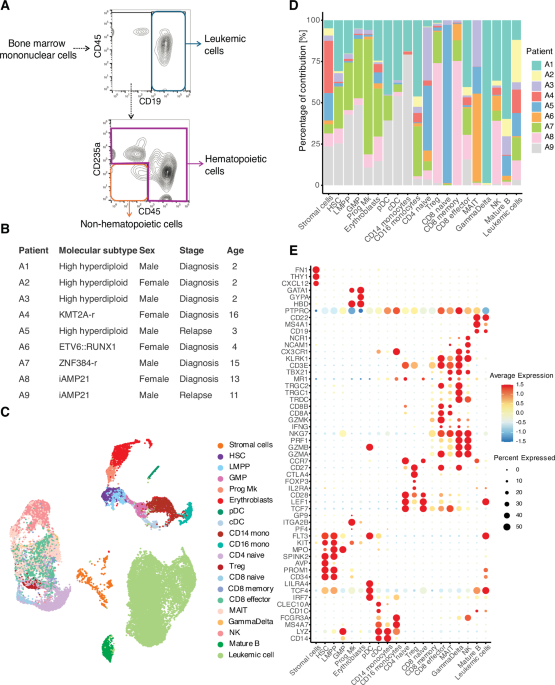
The bone marrow is a dynamic tissue where blood cells develop. Stromal cells are a diverse group of support cells that create the niche in which blood cells mature. In leukemia, these cells can inadvertently aid cancer cell survival. Using advanced single-cell RNA sequencing, we analyzed bone marrow samples from children diagnosed with B-cell ALL. This technique allowed us to examine gene expression in individual stromal cells and revealed two main populations:
- Early mesenchymal progenitors: These are primitive stem-like cells capable of differentiating into various cell types.
- Adipogenic progenitors: These are more committed cells destined to become fat (adipose) tissue.
These cells are located in specific niches within the marrow, along with a third population—osteogenic-lineage cells, involved in bone formation.
How Do These Cells Support Leukemia?
Functional experiments demonstrated that both early mesenchymal progenitors and adipogenic progenitors produce factors that enhance leukemia cell survival and resistance to chemotherapy. Notably both cell types secrete CXCL12, a chemokine that attracts and retains leukemia cells within the bone marrow. They also secrete Osteopontin, a glycoprotein promoting cell adhesion, survival, and chemoresistance. Conversely, adipogenic progenitors support leukemia through signals involving IL-7 and VCAM1, highlighting distinct pathways used by different stromal subtypes.
Stromal Cell Changes in Leukemia
We observed that stromal cells from leukemia patients have an increased capacity to differentiate into fat cells, a process called adipogenesis. Moreover, in experimental co-cultures, leukemia cells can induce healthy stromal cells to become more adipogenic, suggesting an active role of leukemia in remodeling its microenvironment.
Implications for Future Therapies
These findings underscore the complexity of the leukemia-supporting niche. Targeting specific stromal cell populations, particularly adipogenic progenitors and their signaling pathways, could disrupt leukemia’s protective environment.
Potential therapeutic strategies include:
- Blocking key signaling pathways like IL-7 or VCAM1.
- Preventing the adipogenic transformation of stromal cells
Such approaches could aid current treatments, in the future, hopefully contribute to improving patient outcomes.

Follow the Topic
-
Leukemia
This journal publishes high quality, peer reviewed research that covers all aspects of the research and treatment of leukemia and allied diseases. Topics of interest include oncogenes, growth factors, stem cells, leukemia genomics, cell cycle, signal transduction and molecular targets for therapy.