We'll Have the Results by Friday – A Research Team's Journey from Replication to Publication.
Published in Social Sciences and Bioengineering & Biotechnology


Explore the Research
 Nature
Multi-Planar Cervical Motion Dataset: IMU Measurements and Goniometer - Scientific Data
Scientific Data - Multi-Planar Cervical Motion Dataset: IMU Measurements and Goniometer
The Beginning: From Idea to Reality
The project began as a shared interest in the biomechanics of the neck. What began as a simple task of operating and extracting angles from two sensors as we first attempted to follow company instructions and past research ended in an attempt to detangle a web of problems, half-working methods, and a grave understanding that what is out there today just doesn’t work.
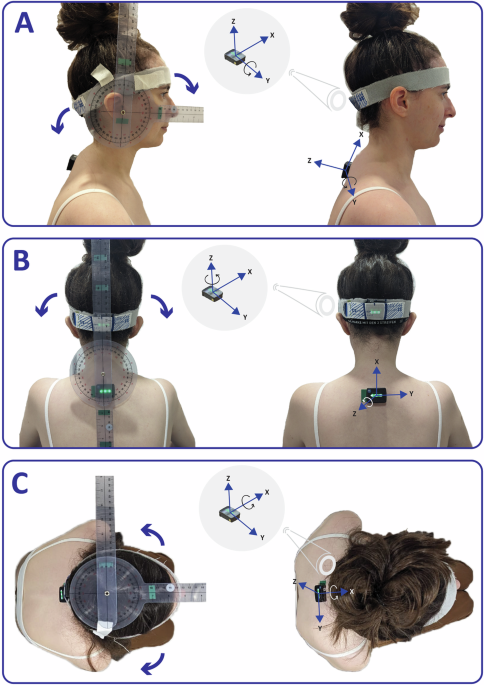
We first learned that our fields of interest were compatible and that we worked well together. Through late-night dates and weekend problem-solving, we discovered how movements could be measured and what this information could reveal about health and rehabilitation. Initial brainstorming sessions were filled with ambitious ideas: could we create a dataset that others could replicate? Could we validate a modern tool—inertial measurement units (IMUs)—against traditional gold standards like the Universal Goniometer (UG)?
The first step was identifying what we wanted to measure. The cervical range of motion (CROM) became the centerpiece of our study. We wanted to explore movements in all the planes the human neck has to offer sagittal (flexion/extension), frontal (side flexion), and horizontal (rotation) planes. Little did we know, this decision would introduce us to the fascinating—and occasionally frustrating—world of IMU technology.
Diving into the Work: Trials and Tribulations
From the outset, it became clear that measuring angles was far more complex than anticipated. Past studies using IMU sensors didn’t appear to work, accelerometer acquisition alone and even with gyroscope integration was just not complying, driving us to make revisions over and over again ultimately turning to rely on quaternion-based orientation analysis. The new solution, though elegant on paper and in practice, also revealed quirks and limitations. A series of known algorithms were used to no avail, including (Kalman, Madgwick, DMP) calibration, and sensor placement options became a daily ritual, careful consideration, and the account for magnetic declination and local field distortions underwent rigorous checking. Sensor drift, lack of accuracy across certain planes, and magnetic interference from nearby electronics and structures were constant nemeses and still remain a work in progress. Despite these challenges, we still remain undeterred. Each setback became an opportunity to learn, refine our methods, work together, and bond over shared frustrations.
One particularly memorable moment occurred during our early validation trials. We had set up a comparative analysis between the IMUs and the UG, expecting smooth sailing. Instead, we encountered baffling discrepancies, particularly in the horizontal plane (left/right rotation). The IMUs often reported “spiked” end ranges that didn’t match the UG measurements. These anomalies sparked spirited debates about potential causes. Was it a sensor issue? A curtain subject’s behavioral oddity? Or is something inherent to the movement itself? Solving these mysteries has become a mini-project within the larger study that we still battle today.
Collaboration and Creativity
As the challenges mounted, so did our reliance on each other’s strengths. One of us excelled at the technical aspects—coding algorithms to process the IMU data and visualize results. The other brought a knack for experiment design and an understanding of anatomy and human movement. Together, we found a rhythm, balancing the technical and human sides of research.
We also learned the importance of staying flexible. When initial methods didn’t work, we pivoted. For instance, we introduced stricter protocols for subject positioning and experimented with different ways to interpret the IMU data. These adaptations weren’t always glamorous, but they were essential for the project’s success.
Key Findings: What We Discovered
The final dataset encompassed 504 cervical movements from 14 participants, analyzed across three planes. Our findings were a mix of triumphs and limitations:
Validity Sagittal Plane (Flexion/Extension): The IMUs demonstrated strong validity (R = 0.828 ± 0.051) compared to the UG. This result was a highlight, confirming that IMUs could reliably measure these movements. Frontal Plane (Side Flexion): Similarly, the IMUs performed well (R = 0.573 ± 0.138), though not as strongly as in the sagittal plane. Still, the results were encouraging. Horizontal Plane (Rotation): Here, the IMUs struggled (R = 0.353 ± 0.122). The spiked end ranges and wide limits of agreement revealed significant limitations. While frustrating, these findings underscored the complexity of measuring rotational movements and the need for further refinement. Reliability, on the other hand, was a consistent bright spot. Across all planes, the IMUs showed high reliability, with intraclass correlation coefficients (ICC) exceeding 0.85 in most cases. This reliability reinforced the potential of IMUs as a tool for biomechanical assessments, even if their validity in certain planes remains a work in progress. You can find the full text at www.nature.com/articles/s41597-024-04351-4
Lessons Learned: Beyond the Data
Reflecting on the journey, we realize that the true value of this project goes beyond the numbers. Yes, we created a replicable dataset and demonstrated the potential (and limitations) of IMU technology. But we also gained invaluable insights into the research process itself, learning to Expect the Unexpected and lean on each other. This project was as much about teamwork as it was about science. Mutual support and shared enthusiasm carried us through the toughest moments, as well as leaning on our PIs and mentors, Professors Been and Pick, who had faith in us and showed immense leeway even after the project took far longer than expected. Failures are Stepping Stones: Every setback taught us something new and pushed us toward better solutions.
Looking Ahead
Our findings have practical implications for both research and clinical practice. The dataset we created can serve as a benchmark for future studies, particularly those involving machine learning models for predicting neck movements or analyzing movement patterns in the lab or the clinical setting.
As for us, this project has laid the foundation for future collaborations and ongoing work. We’re excited to explore new questions, refine our methods, and continue contributing to the field of biomechanics. Measuring the human neck turned out to be harder than we ever imagined, but it also turned out to be far more rewarding.

Follow the Topic
-
Scientific Data
A peer-reviewed, open-access journal for descriptions of datasets, and research that advances the sharing and reuse of scientific data.

Related Collections
With Collections, you can get published faster and increase your visibility.
10 years of the FAIR principles
Publishing Model: Open Access
Deadline: Nov 14, 2026
Data to support cancer treatment, diagnosis, and disease understanding
Publishing Model: Open Access
Deadline: Jan 02, 2027