Web Data Illuminate Germany's Hidden Swingers
Published in Social Sciences, Behavioural Sciences & Psychology, and Philosophy & Religion





The Research Challenge: Finding Those Who Keep to Themselves
In my research, I have been fascinated by invisible minorities – groups with no societal reason to make themselves known. Germany’s swingers exemplify this perfectly. They face no discrimination, break no laws, and gain nothing from public disclosure. Within their community on Joyclub, they share face photos and detailed profiles openly. Yet to mainstream society, they remain invisible by choice.
This invisibility persists despite occasional neutral media coverage. German tabloids and mainstream press report on swinger clubs matter-of-factly, without sensationalism. These reports do not translate into public visibility for individual swingers, who treat their activities like any other private leisure pursuit.
This poses a methodological puzzle. Traditional surveys would need hundreds of thousands of respondents to yield even a few dozen self-identified swingers, which is hardly efficient and hardly motivating for participants. The challenge is not that swingers hide; it is that conventional social science lacks efficient ways to study populations who simply keep their leisure activities private.
The solution emerged from recognising that Germany’s swinger community had already organised itself digitally. Joyclub ranks as Germany’s 66th most-visited website, comparable to Lidl.de or Microsoft.com (Similarweb, January 2024). It represents the organisational backbone of German swinging, with rigorous verification (video checks, ID validation) and legal prohibitions against fake profiles.
Two Datasets, One Story
My approach involved harvesting publicly available, aggregated data while maintaining strict ethical standards. EU law permits academic data harvesting regardless of a platform’s terms, and Joyclub confirmed the legality of my methods. I never accessed individual profiles, storing only anonymous aggregate counts.
The research yielded two independent datasets:
- Profile analysis: 22,973 verified swinger profiles from 24 representative counties, plus four major cities, and
- Event attendance: 14,008 participants across 82 large swinger events in autumn 2023.
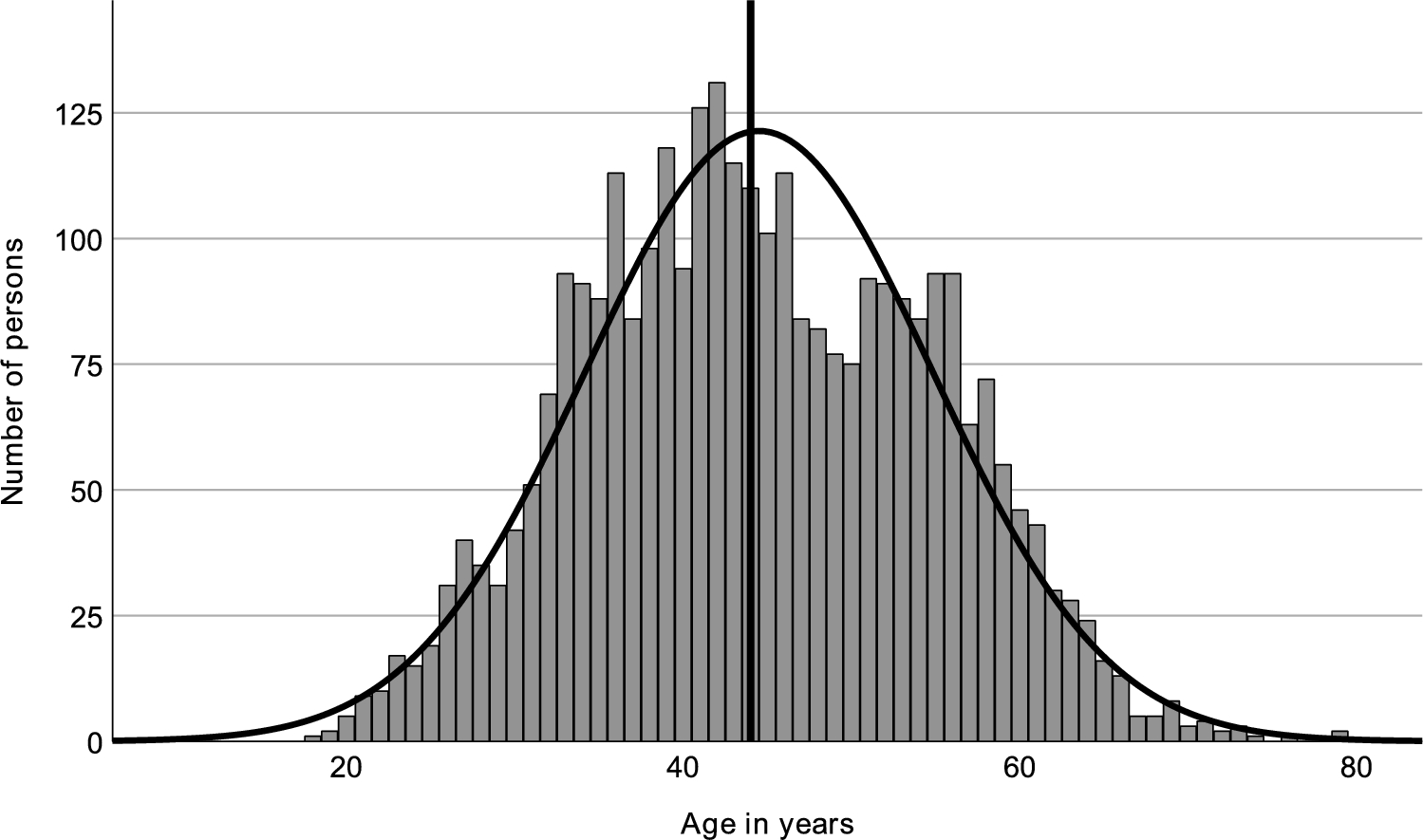
These datasets served as mutual validation. Both revealed nearly identical median ages (44 years for women, 46 for men), strengthening confidence in the findings.
The 0.21% Question
Extrapolating from representative counties, approximately 128 600 German adults aged 18–74 qualify as identified swingers (verified Joyclub profile with a photo, self-identifying as swingers). This figure represents just 0.21 % of the population and contrasts sharply with North-American consensual non-monogamy (CNM) rates of 4–9 %. Even after allowing for swingers who never join Joyclub – despite many venues admitting only registered members – the value remains comparatively low and aligns with earlier German CNM studies.
The data revealed additional insights:
- No "unicorns" here: Solo women comprise 12.4 % of profiles, solo men 30.4 %. The Anglo-American myth of scarce solo women does not apply to Germany.
- Middle-aged mainstream: The median age of 44–46 places swinging firmly in mid-life; fewer than one in ten participants is under 30.
- Geographic mysteries: Density varies from 80 to 380 per 100,000 inhabitants. Counties with similar demographics can differ greatly, suggesting powerful local cultural effects.
Inside the Events: Where Data Meets Behavior
Event analysis showed how the community actually functions:
- Women's preferences shape attendance: One club admitted 62 women and 171 men by meeting women’s individually expressed desires. Another event, marketed to women favouring a particular male physique, drew 118 women and 185 men.
- Economics versus reality: Solo women paid €34.47 on average, solo men €89.90, but no significant correlation emerged between female discounts and female attendance (p > 0.05). Price incentives appeared not to work as expected.
- Commitment through distance: More than 20 % of participants travelled over 100 km to events, far exceeding typical cultural-event behaviour. This suggests serious leisure commitment rather than casual entertainment.
The German Paradox: When Openness Reduces Participation
Germany’s relatively low swinging prevalence appears counter-intuitive. The country provides comprehensive sex education, nearly half of 16-year-olds have had intercourse, contraception is free at the point of sale until age 20, and religious moralising about sexuality is minimal. Why, then, do fewer Germans swing?
Reactance theory offers one explanation. In restrictive societies, CNM can act as quiet rebellion. Germany’s matter-of-fact sexual culture removes that rebellious appeal; swinging becomes just another leisure option.
Earlier non-academic studies suggest pragmatic concerns: fear of being over-burdened by multiple partners, loss of control over existing relationships, or jealousy jeopardising a primary partnership. German cultural caution may outweigh moral judgement. My data cannot decide, but the gap to North America implies that permissiveness alone does not drive participation.
Methodological Reflections and Future Directions
This study demonstrates digital sociology’s potential for researching invisible populations. The swinger community shows how groups can coordinate internally while remaining imperceptible to standard research approaches.
Ethical complexities required careful attention. Every analytical decision balanced scientific goals with the protection of personal data and personality rights. These considerations required additional reflection, detailed in the separate ethics publication referenced below.
The findings challenge stereotypes but raise new questions. Regional variations defy simple demographic explanations, pointing to unmeasured cultural factors.
Future research should explore factors underpinning Germany’s comparatively low swinging prevalence. Qualitative methods could illuminate micro-cultural drivers of regional differences and individual motivations beyond the reach of quantitative analysis.
For now, this study offers the first empirical map of a community that functions successfully without public recognition.
Note: Data collection focused on heterosexual profiles, reflecting the platform's demographic composition.
Main article (open data): Archives of Sexual Behavior – https://doi.org/10.1007/s10508-025-03198-z
Ethics discussion: Digital Society – https://doi.org/10.1007/s44206-024-00155-6

Follow the Topic
-
Archives of Sexual Behavior
This journal is the official publication of the International Academy of Sex Research (IASR) and publishes scientific research on sex, gender, and sexuality.