When Artificial Intelligence Designs a Smile: Promise, Pitfalls, and the Human Touch
Published in Computational Sciences and Biomedical Research







The Research Question
Digital smile design software is now widely used in prosthodontics and cosmetic dentistry. Many of these systems incorporate AI algorithms that can generate smile simulations automatically by analyzing facial landmarks and dental proportions. Supporters argue that AI reduces manual errors and saves valuable time. Critics, on the other hand, worry that machines cannot fully capture the emotional and artistic nuances that make a smile feel natural.
Our study set out to directly compare traditional, clinician-designed smiles with AI-generated smiles, asking:
- Do dentists, dental students, and members of the general public find AI-generated smiles as aesthetically appealing as those designed by experienced clinicians?
- Are there differences in preferences based on age, sex, or profession?
How We Conducted the Study
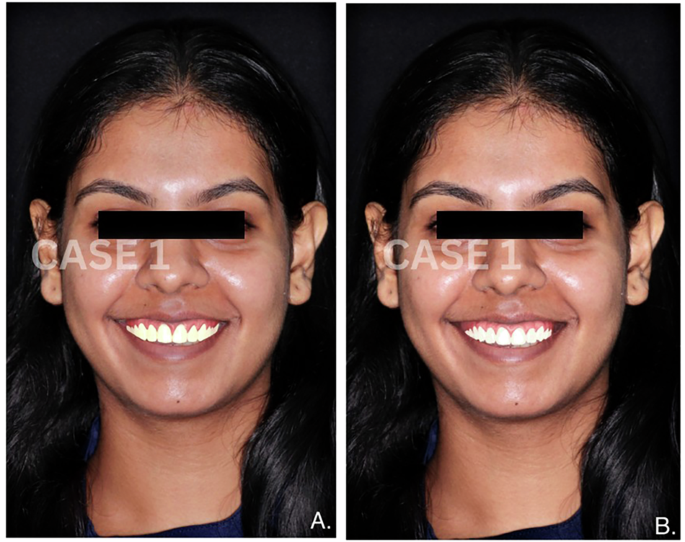
We carried out a cross-sectional online survey across India, recruiting 320 participants—including dentists, dental students, and non-dental professionals.
For the study:
- Four clinical cases were selected, and smiles were designed in two ways:
- Manual designs created by prosthodontists using Exo-CAD software.
- AI-generated designs produced automatically using the same software’s AI tools.
- Each participant was shown paired images of the same face with a manual vs AI-generated smile and asked to select which they found more aesthetically pleasing.
- Demographic information was also collected, and statistical analysis (Chi-square tests) was applied.
Key Findings
- Manual designs were consistently preferred across all participant groups—dentists, dental students, and laypersons.
- No significant differences in preference were observed based on age, sex, or profession.
- Interestingly, in two of the four cases (Case 3 and Case 4), AI-generated smiles achieved higher acceptance rates (39.4% and 39.7%) compared to the other two cases.
What This Means
The results highlight an important reality: AI has promise, but it is not yet a replacement for human artistry.
- AI strengths: It can quickly generate designs, ensure standardization, and support workflow efficiency.
- AI limitations: It struggles to interpret subtle elements like lip dynamics, emotional resonance, and individualized facial harmony.
In other words, AI can create a smile that looks “proportionate,” but it may miss the intangible qualities that make a smile feel authentic.
Why Some AI Smiles Were Better Accepted
The fact that AI designs for Case 3 and Case 4 were more widely accepted suggests that:
- In simpler or more symmetrical cases, AI may produce results close to what a human clinician would design.
- In more complex cases, however, participants clearly preferred the nuanced judgment of a prosthodontist.
This points toward the potential of hybrid models—where AI provides a baseline design, and clinicians refine it using their artistic and clinical expertise.
Broader Implications
Our study adds to the growing global conversation about AI in healthcare:
- Collaboration, not replacement: AI should be seen as a partner in clinical decision-making, not a substitute for human skill.
- Cultural and regional factors: Aesthetic preferences can vary by population. Our study, conducted in India, provides an important perspective on how local communities perceive AI in dental aesthetics.
- Future research: Long-term studies assessing patient satisfaction after treatment, not just in surveys, will be vital.
Limitations and Next Steps
Like any research, our study had limitations. The online survey format meant that viewing conditions (e.g., screen size, lighting) were not standardized. Smile attractiveness is also subjective, and subtle variations can influence perception.
Future research should:
- Use controlled clinical environments to minimize bias.
- Incorporate objective indices of aesthetics alongside subjective preference.
- Conduct longitudinal follow-ups to assess how patients feel about AI-generated designs after real treatments.
The Takeaway
AI is transforming dentistry, but it has not yet mastered the art of smile design. The clinician’s role—bringing creativity, empathy, and an understanding of human emotion—remains indispensable.
As technology advances, the future may lie in collaborative intelligence: hybrid models where AI handles the technical groundwork, and clinicians add the final artistic touch. This synergy could bring the best of both worlds—efficiency and personalization—to prosthodontics.
Until then, the human smile remains, at least for now, best crafted by human hands.
Follow the Topic
-
BDJ Open
This is an international, peer-reviewed, open-access, online-only journal publishing dental and oral health research from all disciplines. The journal is owned by the British Dental Association (BDA) and is the sister journal of the British Dental Journal.