Whoops from within: a glimpse behind the scenes of “Mucosal immune responses and intestinal microbiome associations in wild spotted hyenas”
Published in Earth & Environment, Ecology & Evolution, and Immunology




Animals face all sorts of external challenges, from scary predators to social squabbles. However, challenges and support can also come from within, as a hidden and largely unknown world inside their bodies plays a vital role in their health: the community living within their guts.
Just like us, animals have trillions of tiny helpers (and sometimes not-so-helpful hitchhikers) living in their guts. Their immune systems are like dedicated gardeners, nurturing the beneficial ones, controlling others, and weeding out the harmful to maintain a healthy ecosystem.
We know from human and animal experiments that a healthy gut community is very important for overall well-being, and when things get out of hand, it can lead to problems. But most of what we know comes from controlled environments or humans living in a largely artificial world, not from animals living freely in the wild, without any human intervention.
This is a huge knowledge gap!
That’s where our study comes in. We wanted to investigate how the gut community (including the good, the bad, and the we ’re-not-so-sure-about-them ones) is shaped by the immune system.
Wild spotted hyenas living in the Serengeti National Park in Tanzania were just the ones to help us. First, we could say they are just cute!
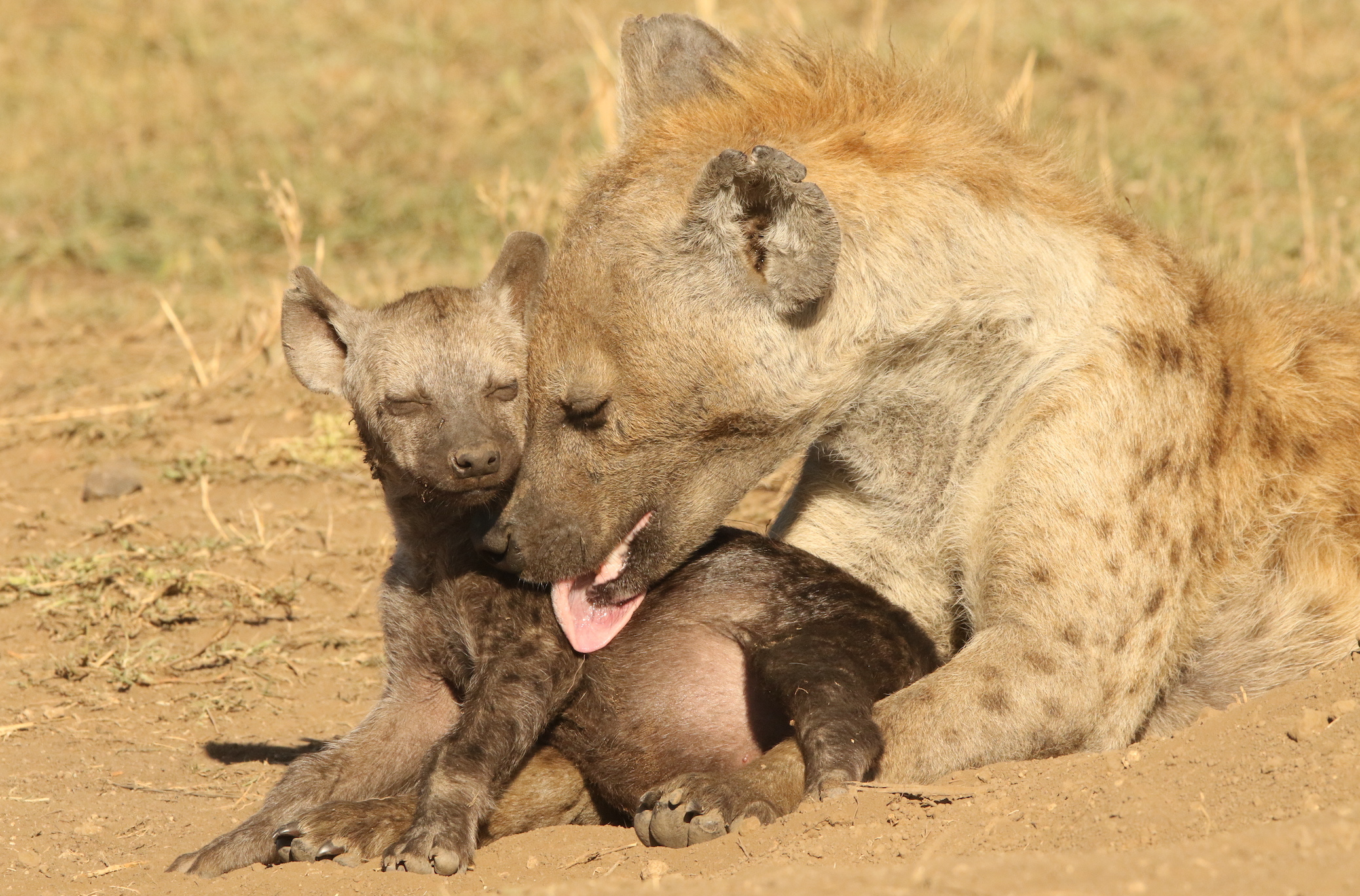
This alone is a great motivation to wake up daily before sunrise and spy on them for hours, getting to know all clan members, recording their behaviours, and trying to find their steaming poos in the long grass of the Savannah. For almost 40 years, we have been following the same three clans of hyenas, recognizing individuals, annotating their social interactions, and collecting their poos. We wanted to see how these interactions happen naturally, without any human interference.
But beyond their undeniable charm, hyenas are fascinating for another reason: they seem surprisingly healthy despite all parasites we see crawling in their poops, the occasional scavenging, and their incredible - and sometimes stressful - social lives. All this made us wonder, do hyenas have special immune systems or perhaps very resilient gut communities?
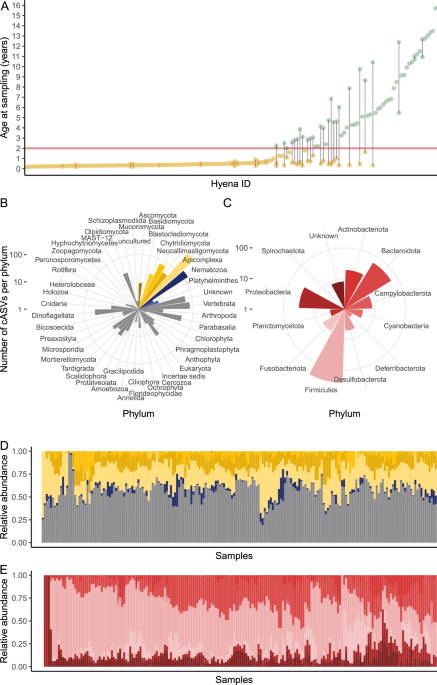
We dug deep in their poos and applied recently established protocols to measure hyenas’ local immune responses. We also assessed bacteria and eukaryote communities found in their poos and took into consideration individual factors and their ecological and social environment. Using advanced statistical tools, we found exciting connections!
The immune measures, IgA and mucin, were strongly associated with bacteria in the gut, but also with parasites and fungi, and these were age-dependent. We went further and investigated which taxa are tightly connected with these immune measures. We found some friendly bacteria, some not-so-friendly hookworms, and even certain fungi that have been linked to health outcomes in humans. Our study shows that age, immune responses, and the environment profoundly shape the gut community in a wild animal!
By studying gut communities in wild populations, and considering their intrinsic factors such as immune states and age, but also their ecological and social environment, we are gaining important insights into the interactions between animals and their gut communities. These findings are not just for hyenas, they can apply to other species, including us humans. The world is facing major challenges, such as the decline in microbiome diversity, even within the human gut, a serious One Health concern, meaning it impacts humans, animals, and the environment alike. That is why gaining baseline knowledge from natural, largely undisturbed populations is so important. It informs us on how animals interact with their inner microbial world.

Follow the Topic
-
Communications Biology
An open access journal from Nature Portfolio publishing high-quality research, reviews and commentary in all areas of the biological sciences, representing significant advances and bringing new biological insight to a specialized area of research.

Related Collections
With Collections, you can get published faster and increase your visibility.
Healthy Aging
Publishing Model: Open Access
Deadline: Dec 31, 2026
DNA repair and human disease
Publishing Model: Hybrid
Deadline: Oct 31, 2026