6,000 years of Adélie penguin ecology in the Ross Sea reconstructed from ancient environmental DNA
Published in Earth & Environment and Ecology & Evolution

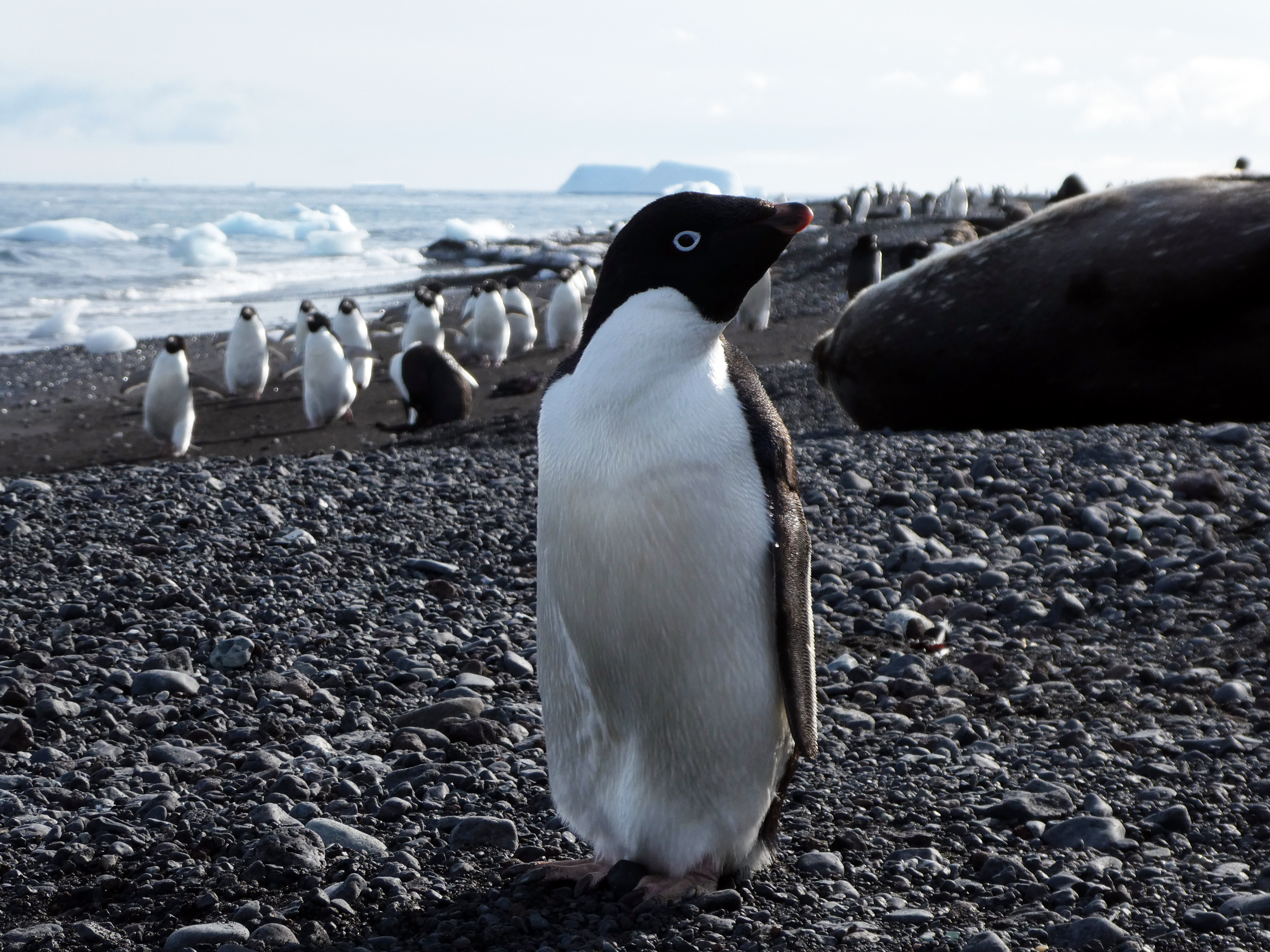




The Ross Sea, bordering the Antarctic continent due south of New Zealand, is widely regarded one of the last remaining areas of largely intact marine ecosystems on Earth. In December 2017, 2.09 million km2 of the Ross Sea and adjoining Southern Ocean received formal protection as the world’s largest Marine Protected Area (MPA). Commercial fishing activities were excluded from the majority of the MPA, while restricted fishing activities in smaller areas were permitted for research purposes. The establishment of the MPA was a major achievement for marine conservation, yet this protection was afforded for a period of just 35 years. After this time, extension of the region’s MPA status will require international agreement.
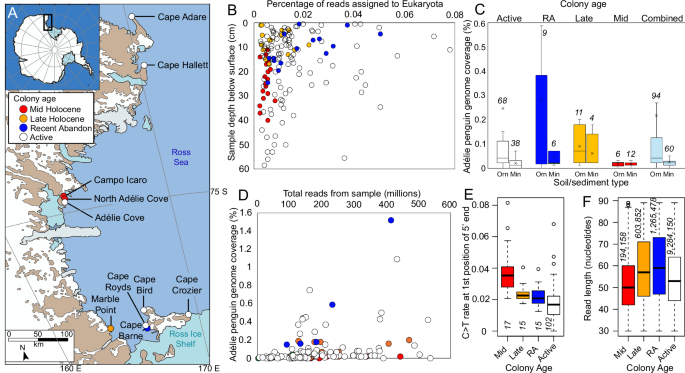
To evaluate the effectiveness of the MPA, the New Zealand Government funded a NZ$11.4 million five-year research programme beginning in 2018: the Ross Sea Region Research and Monitoring Programme (Ross-RAMP). This broad programme focused on 10 different components of Ross Sea region ecosystems, and for each looked to characterise baseline states, develop new methods for measuring long-term change, and undertake monitoring to evaluate change resulting from the MPA status. As a project within the research component focused on Adélie penguins, our team aimed to use ancient environmental DNA to reconstruct long-term baselines of Adélie penguin populations size and diet composition along the Victoria Land coast of the Ross Sea, exploring natural variability in both these aspects over the last 6,000 years.
Within the Ross Sea region and beyond, Antarctic biodiversity faces a variety of emerging threats, including climate change, over-fishing and introduction of novel species. With the potential for rapid biological change on the horizon, understanding baseline states and the resilience of Antarctic species to past environmental and climatic change is now more critical than ever.
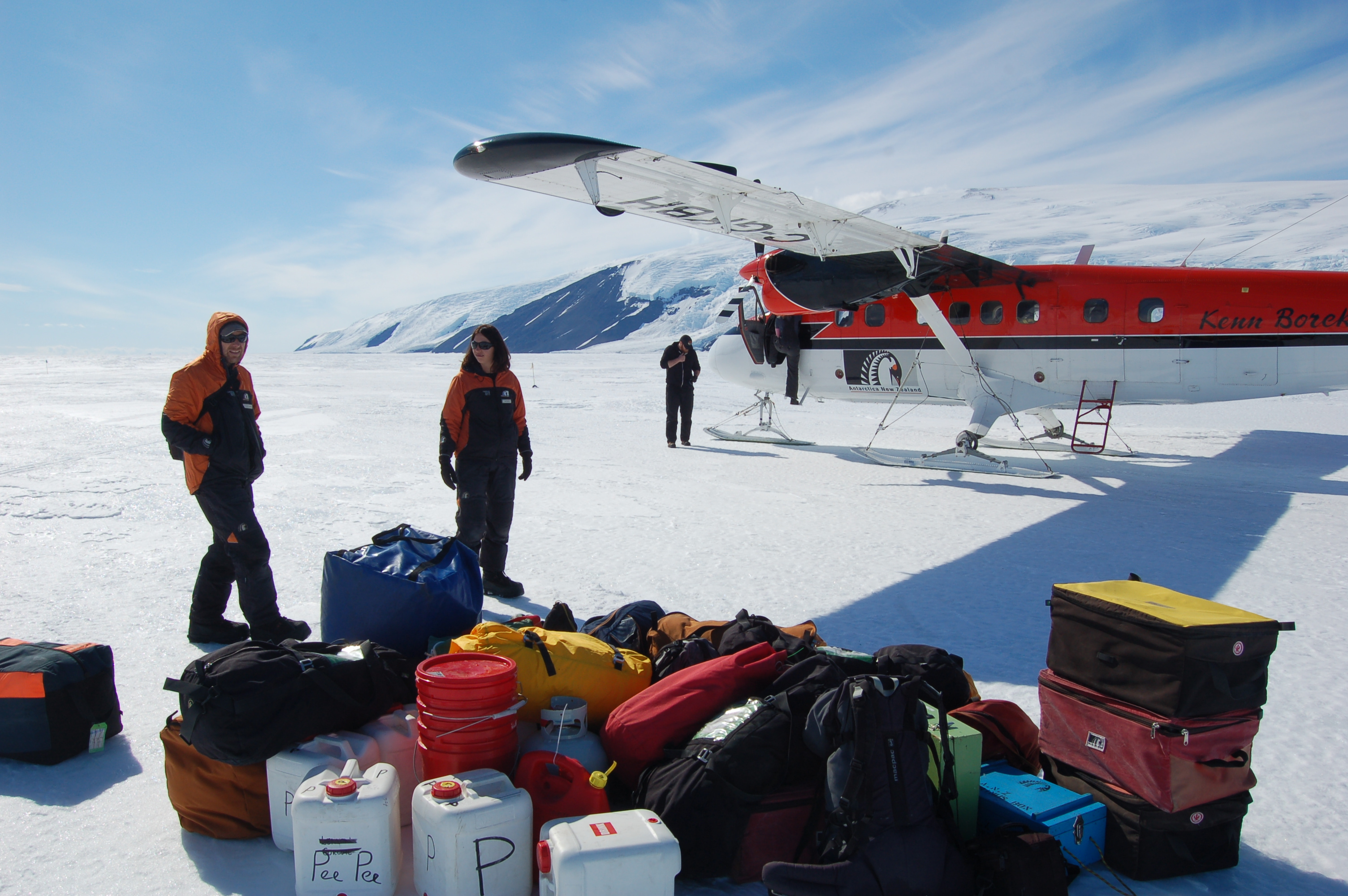
spanning ~730km of coastline between Cape Adare and Ross Island.
Here, Morgan Coleman and Theresa Cole stand beside our field gear on
sea ice at Edisto Inlet, near Cape Hallett. Photo credit: Jamie Wood.
Undertaking any fieldwork in Antarctica is a logistically challenging endeavour, but the scope of our project was significant. To achieve the spatial and temporal span of sites needed for our study design required 49 days on the continent over two consecutive summers, as well as 4 intercontinental flights, 3 Twin Otter flights, 24 helicopter flights, and accommodation at Scott Base, Mario Zucchelli Station, Cape Bird Hut and tents at Cape Hallett. Our field safety officer made a short video of some of the sights from our trip, which you can view here. Amazingly, we were able to access and undertake excavations at all field sites we had hoped to – something almost unheard of for the complexity of the work and notoriously changeable local weather conditions. The success of this fieldwork was due, in no small part, to the incredible planning, logistics, scheduling and field support provided by both Antarctica New Zealand and the Italian National Antarctic Research Programme.
After we returned to New Zealand with the samples a significant amount of wet laboratory work was undertaken in a purpose-built ancient DNA facility at Manaaki Whenua Landcare Research near Christchurch. DNA was extracted from the soil and sediment samples, and DNA libraries were then prepared before being shipped to China for sequencing. Bioinformatic analysis of the sequencing data presented several challenges to overcome, not only in regard the size of the dataset but in the necessary adaptation and modification of existing tools and methods to answer the specific research questions that we posed. One of the most complex aspects was the identification of Antarctic species, where we encountered limitations due to incomplete reference sequence databases, as well as a limited number of existing tools for ancient eDNA analysis. To overcome these hurdles, we compared multiple bioinformatic pipelines and developed innovative approaches to refine our analysis. These included customizing algorithms, integrating data from diverse sources, and validating results through cross-referencing with known taxonomic records. But this perseverance paid off, and we were able to extract new high-resolution insights about the past biodiversity of the region from the environmental DNA that had not previously been possible with other techniques.
.jpg)
The results of our study highlight the dynamic nature of populations, communities and ecosystems along the Victoria Land coast; a finding of particular relevance to understanding baselines within the Ross Sea region MPA. Populations of predators such as Adélie penguin are susceptible to changes in distribution and population size that are driven by factors such as climate and sea ice, both directly (i.e. through ability to access suitable breeding sites) and indirectly (via impacts on prey species). Over decadal time scale records, such as those that exist for observation studies of Adélie penguins, some of these changes are evident. Yet others, such as the former occupation of penguin breeding colonies by southern elephant seals, are masked by the passage of time, and can only be revealed through the study of millennial-scale biodiversity archives including those provided by ancient environmental DNA.
While the publication of this research represents a culmination of more than 7 years hard work since the inception of the idea, in a way it is really just the beginning. The dataset generated, which includes >94 billion DNA sequencing reads, will hopefully provide researchers with a valuable resource for answering a wide range of questions about biodiversity within the Ross Sea region over the past 6,000 years. For example, our team is currently using the data to explore spatiotemporal patterns of microbial and viral diversity and function, including pathogens and diseases of Adélie penguins.
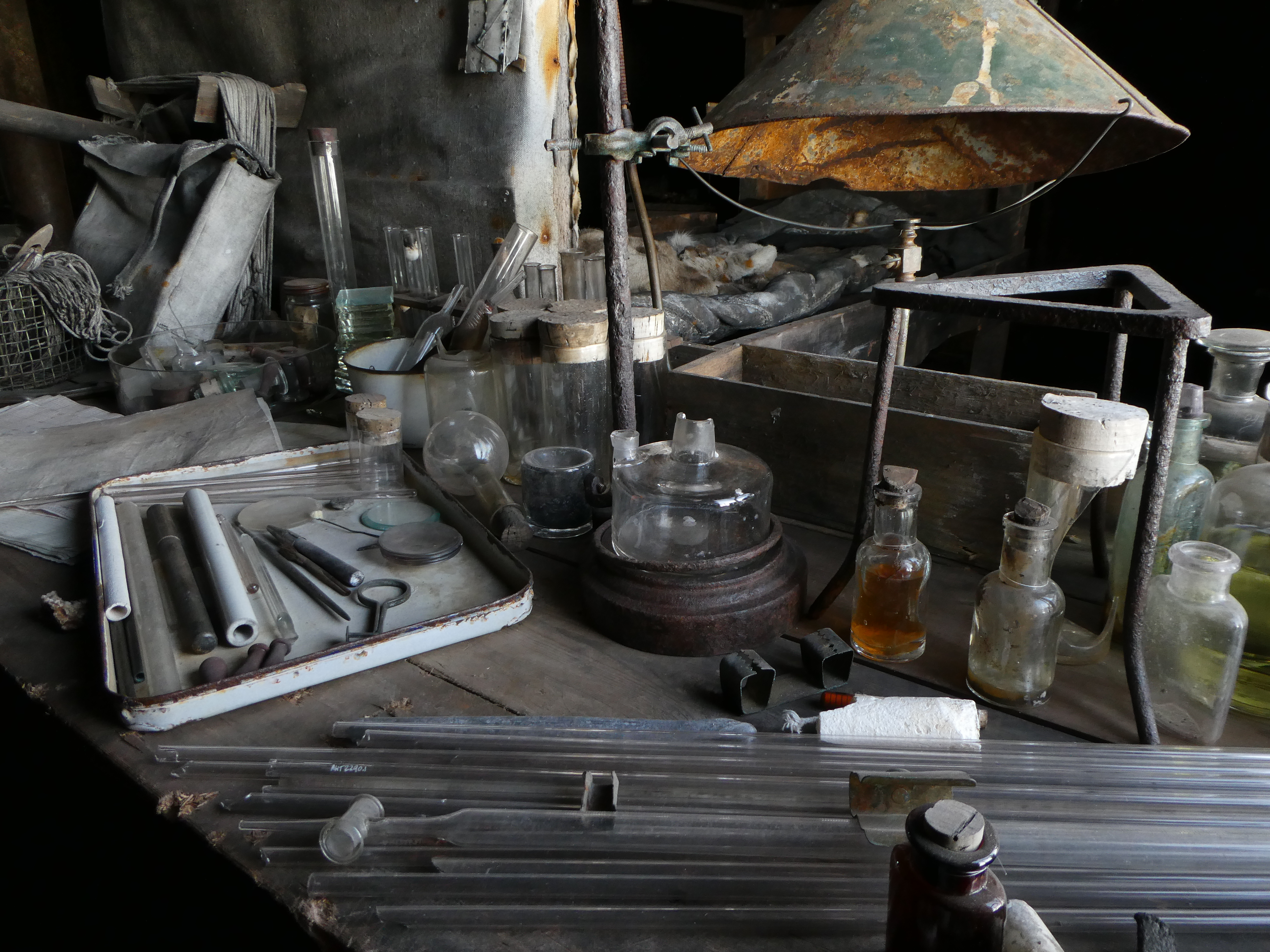
Photo credit: Jamie Wood.
An enduring memory from the time spent in Antarctica was standing in Captain Scott’s hut at Cape Evans and seeing the myriads of historic scientific equipment still scattered across the workbenches. This experience conjured mental images of Wilson, Nelson and Cherry-Garrard leaning over trays of freshly dissected specimens and provided a stark reminder of just how much technology has advanced over the past century. Early Antarctic scientists could never have dreamed of being able to study entire ecosystems simply by using sediments where no visible traces or organisms had been left behind. One wonders what incredible technical advances will be available to scientists researching Antarctica’s biological past a century from now.
Follow the Topic
-
Nature Communications
An open access, multidisciplinary journal dedicated to publishing high-quality research in all areas of the biological, health, physical, chemical and Earth sciences.

Related Collections
With Collections, you can get published faster and increase your visibility.
Women's Health
Publishing Model: Hybrid
Deadline: Ongoing
Tumor Microenvironment Crosstalk and Therapeutic Implications
Publishing Model: Hybrid
Deadline: Nov 02, 2026