A Confined-Etching Strategy for Intrinsic Anisotropic Surface Wetting Patterning
Published in Materials

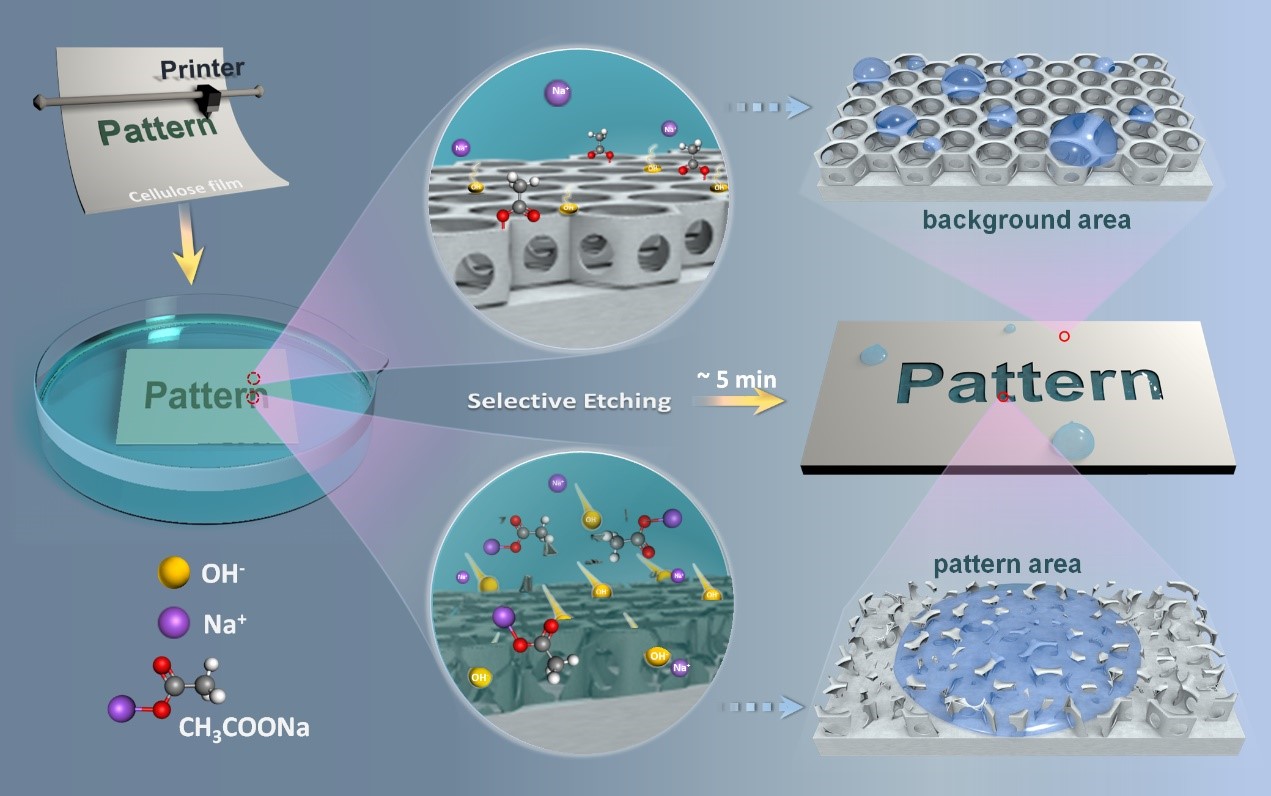




Decomposition behaviors of polymers have been widely studied in material science, but as-created chemical and physical structural changes have been rarely considered as an opportunity for wettability manipulation.
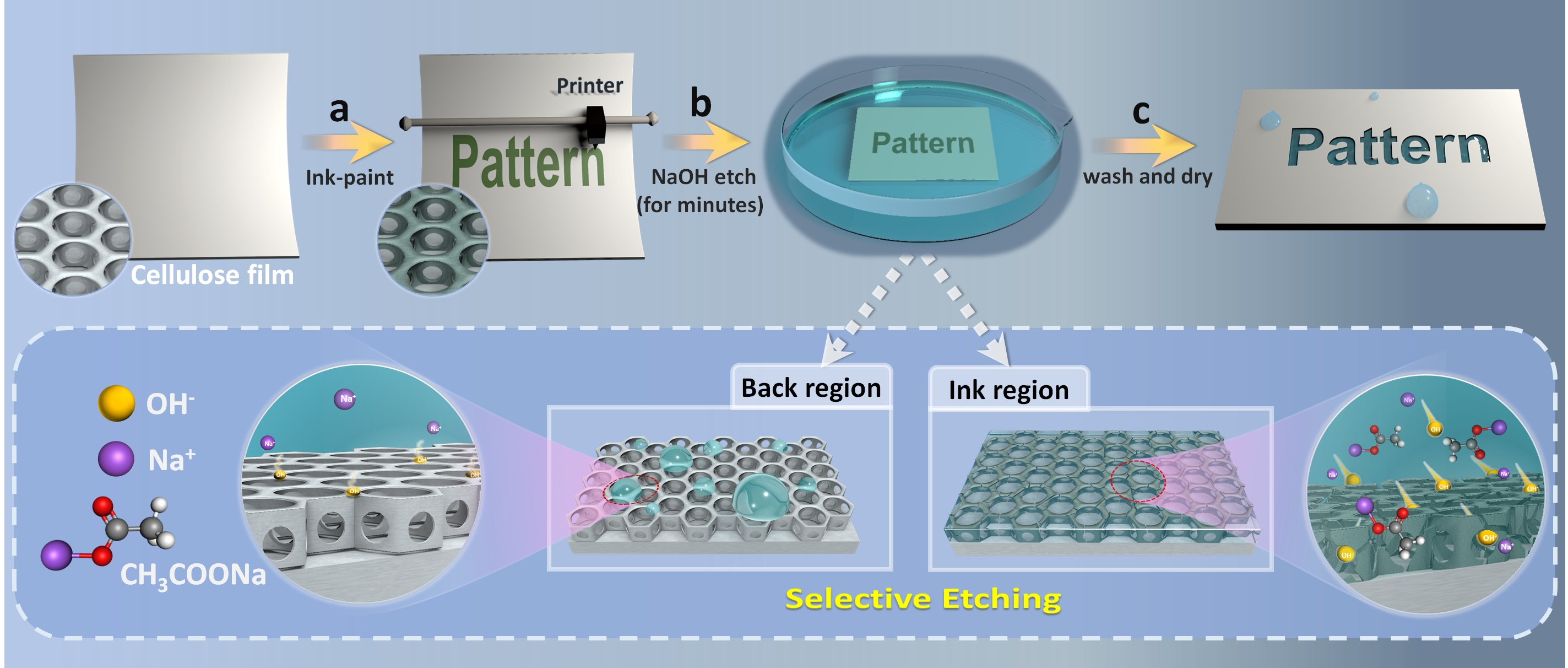
Fig. 1 Fabrication strategy of accurate patterns with anisotropic wettability. a Painting ink on microporous cellulose triacetate film to temporarily construct anisotropic water penetration ability. b Confined surface etching upon the treatment with aqueous NaOH solutions. c Washing the patterned surface to remove excess NaOH and drying for permanent patterns.
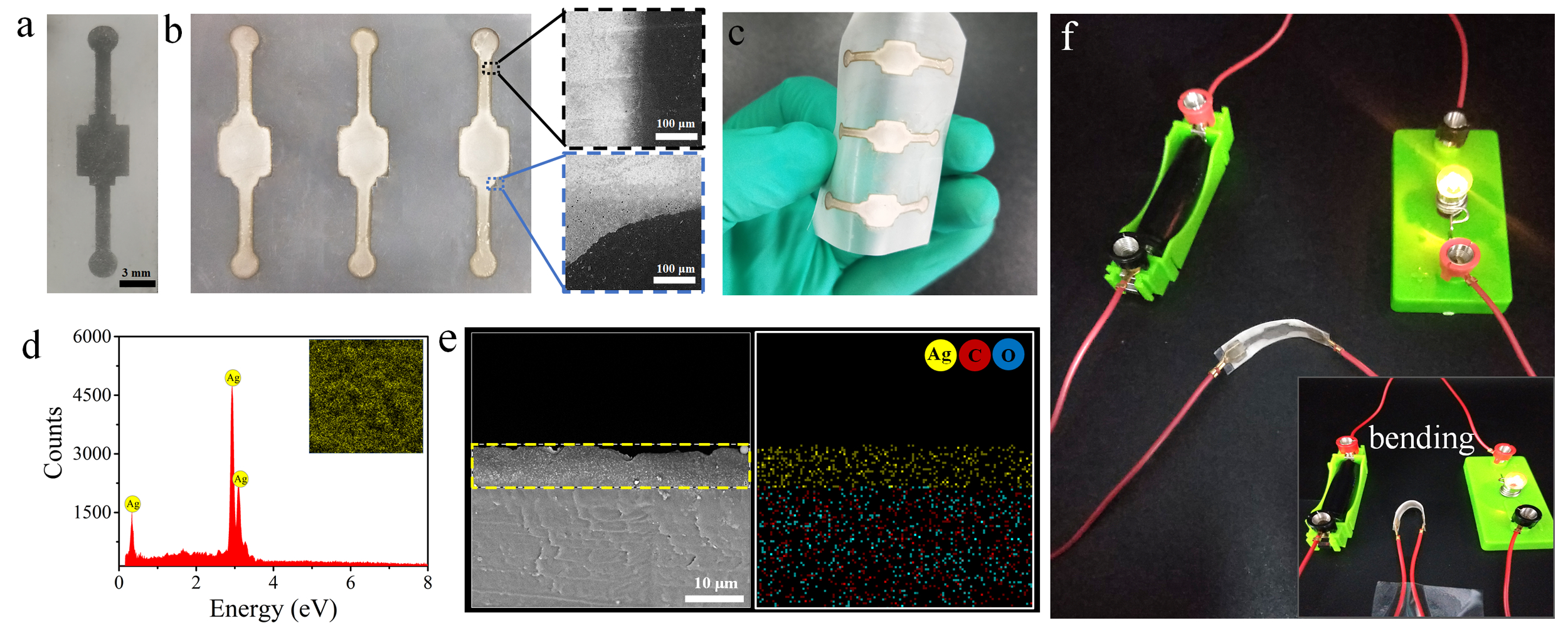
In our recent work, we report a facile and fast mask-free etching method for accurate surface patterning by controlling the confined decomposition of material surfaces. With a common printing technology, intrinsic, complex and accurate patterns (QR code, for example) are fabricated efficiently. Such intrinsic patterns can be used for realizing information storage and encryption. With selective wettability, pattern information can be stored and encrypted on the cellulose film; upon exposure to external stimuli, such as water, encryption keys can be read. Moreover, such a method can also be used to prepare functional materials, flexible electronics for instance. The as-prepared Ag electrode presents high electrical conductivity (63.9×10⁶ S cm-1) and bending-deformation resistance.
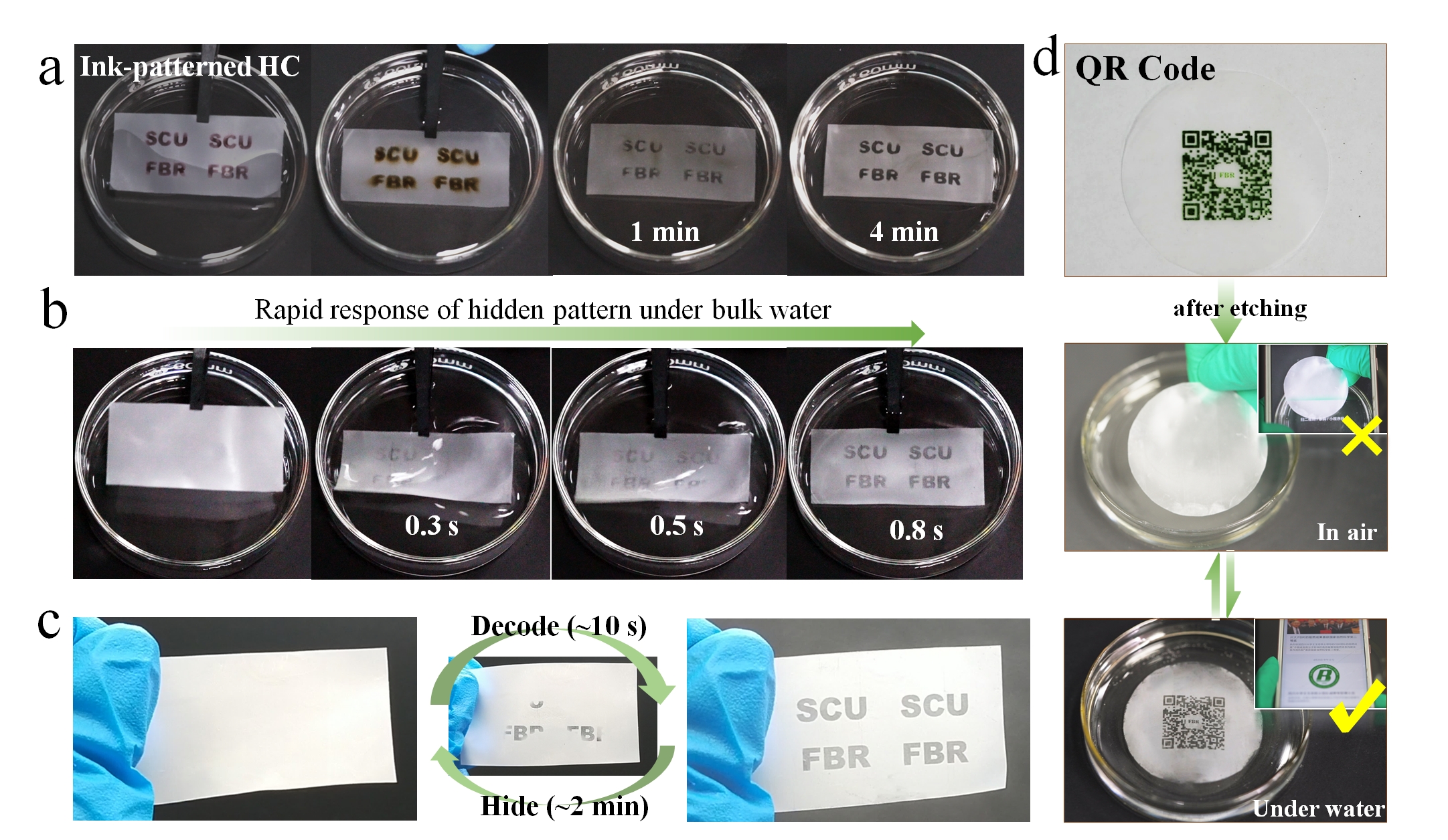
Fig. 1 Information storage and encryption. Preparation (a) and rapid water-response (b) of the hidden pattern “SCU FBR”. c Reversible decryption of the hidden information by water mist. d A QR code ink-printed on HC film before NaOH-treatment and the reading process of the hidden QR code after NaOH-treatment.
Such surface wettable patterning strategy is scalable, as long as ay substrates satisfy the three requirements:
1) chemical reactions/treatments (including chemical degradation, decomposition, and even conjugation) can be conducted for substrate surfaces;
2) the substrate surfaces can be written with inks and can well maintain ink patterns;
3) the original region and ink-printed region have different wettabilities to etching agents, enabling confined-etching treatments.
Such a mask-free and simple method shows great potential in the mass production of accurate functional patterns. We believe this strategy can be applied for more material surfaces, bringing more opportunities for wide applications.
For more details, see our paper in Nature Communications:
https://doi.org/10.1038/s41467-022-30832-4
Follow the Topic
-
Nature Communications
An open access, multidisciplinary journal dedicated to publishing high-quality research in all areas of the biological, health, physical, chemical and Earth sciences.

Related Collections
With Collections, you can get published faster and increase your visibility.
Women's Health
Publishing Model: Hybrid
Deadline: Ongoing
Tumor Microenvironment Crosstalk and Therapeutic Implications
Publishing Model: Hybrid
Deadline: Nov 02, 2026