A novel germline EGFR variant p.R831H causes predisposition to familial CDK12-mutant prostate cancer with tandem duplicator phenotype
Published in Cancer and Genetics & Genomics


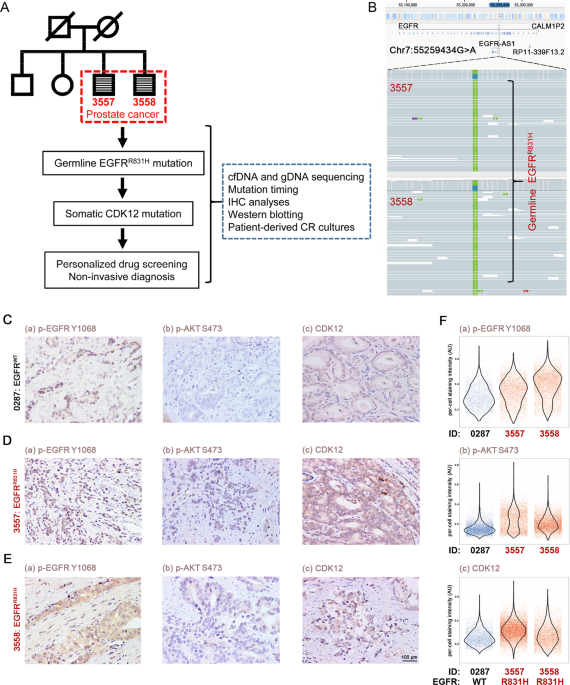

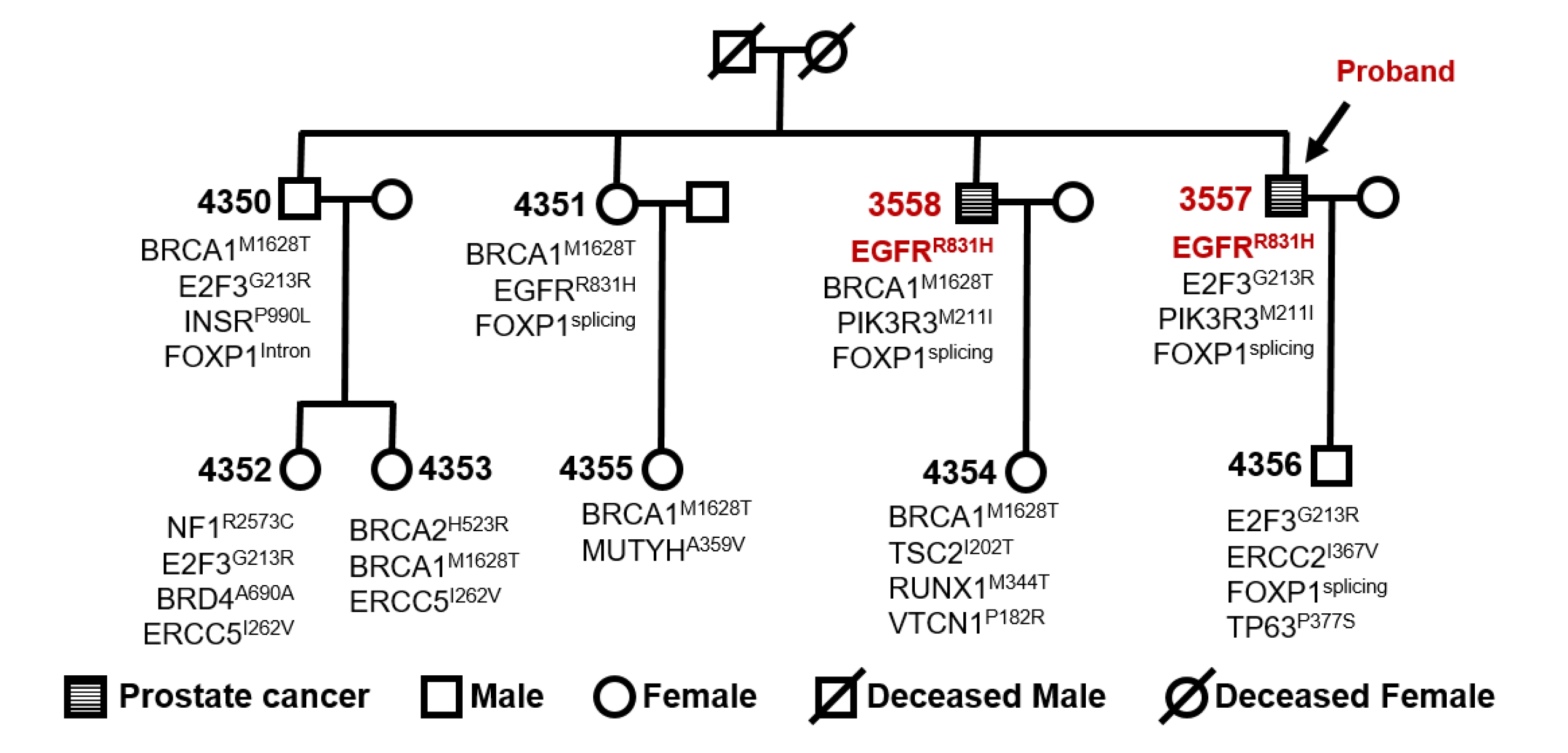
About 5%-10% of all prostate cancer (PRAD) cases are inherited. A specific type of PRAD known as the tandem duplicator phenotype (TDP), which is sensitive to certain immune therapies, makes up about 6.9% of these cases. However, we still don’t fully understand the genes involved in causing this. In our study, we found a Chinese family with two members affected by PRAD. Both members carried a rare genetic change in a gene called EGFR (specifically a variant called EGFRR831H), which appeared to be linked to the development of their cancer.
Based on patient-derived conditionally reprogrammed cell (CRC) model [1], which is closely resemble original tumor tissue as cell lines [2], we found that this EGFR variant caused increased activity in certain cell signaling pathways (EGFR and AKT), leading to cancer cell growth and movement. These cells were also more responsive to a drug called Afatinib, which blocks EGFR. This suggests that the EGFR variant is unusually active and contributes to how the cancer behaves.
Additionally, both of the cancer samples from these patients showed loss of function in another gene called CDK12 and had many duplications in their genetic material. We were able to detect these changes in the patients’ urine before they underwent surgery. By looking at larger public databases, we found a significant link between changes in EGFR and CDK12 genes.
In summary, our findings reveal a new connection between the EGFR gene and prostate cancer, highlighting the role of specific genetic changes in the disease and suggesting potential targets for treatment.
References
[1] Liu W., et al. Conditional reprogramming: Modeling urological cancer and translation to clinics. Clin Transl Med, 10(2):e95 (2020).
[2] Luo Y., et al. Comprehensive genomic profiling of urothelial carcinoma cell lines reveals hidden research bias and caveats. Clin Transl Med, 10(1):294-296 (2020).
Follow the Topic
-
Oncogene
This journal aims to make substantial advances in our knowledge of processes that contribute to cancer by publishing outstanding research.