African countries and their European collaborators: together in the fight against bird flu
Published in Microbiology
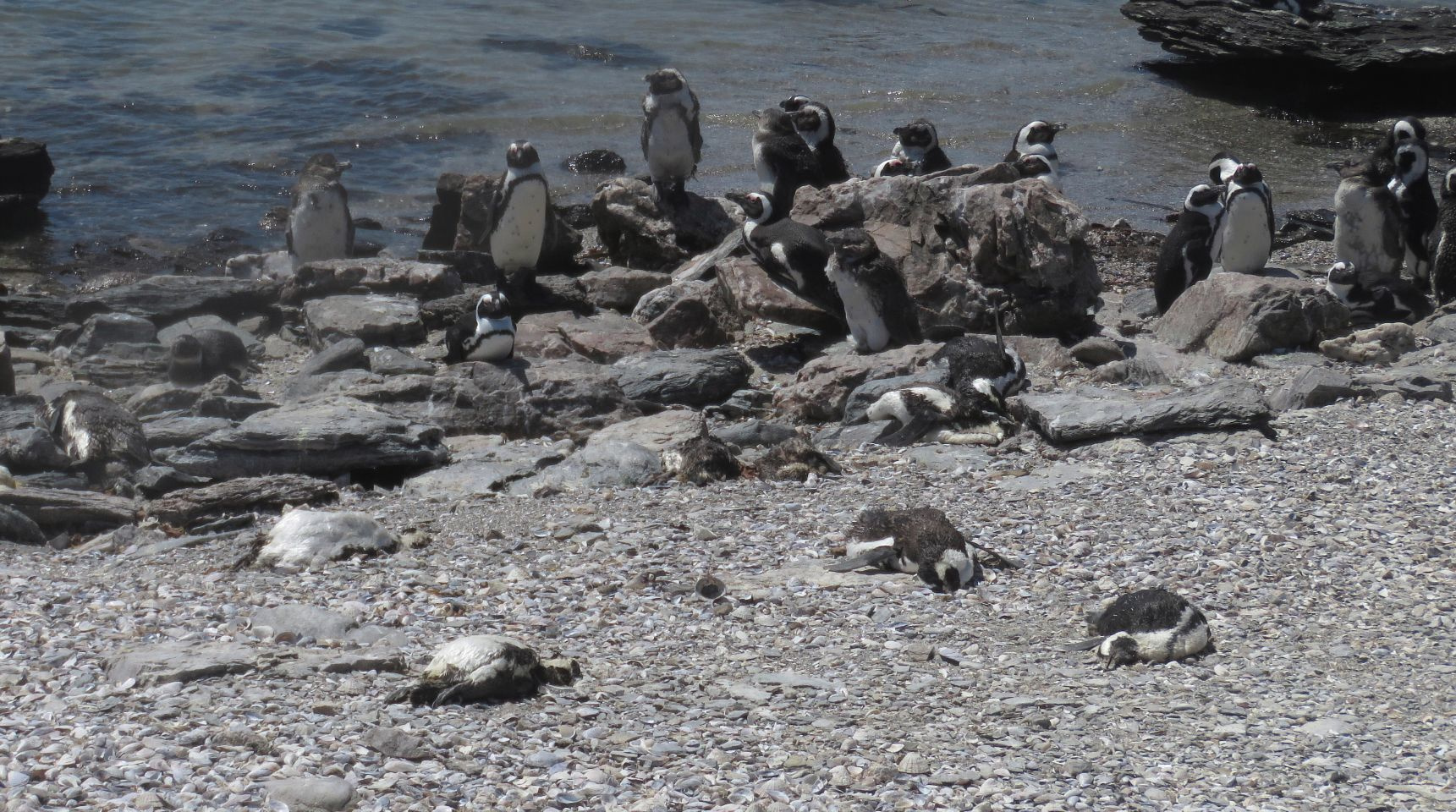


The highly pathogenic avian influenza (HPAI) H5Nx virus of the goose/Guangdong/96 (Gs/GD) lineage is one of the zoonotic agents challenging the world every year. As the name suggests, this strain emerged in China in 1996. Besides its enormous social and economic impact on the poultry industry, it represents a threat to both wild and endangered bird species, and to human health as well. This virus has spread globally, with devastating consequences, in particular for emerging economies, where poultry often represents the primary source of animal protein.
In the last fifteen years, different clades of Gs/GD HPAI H5Nx spread across continents on multiple occasions and three of them reached the African continent. In 2006, when the virus was detected for the first time in Africa, our group at the Istituto Zooprofilattico Sperimentale delle Venezie (IZSVe), Padua, Italy, built a strong collaboration with the African laboratories, which led, as a first outcome, to the generation and publication of the genomic sequence of the first HPAI H5N1 virus detected in the continent. Despite several countries managing to successfully control the disease after the first epidemic wave, new virus incursions afflicted the continent in the following years, and because of the limited resources available it proved very difficult to control their spread. Egypt and West Africa are the most affected regions and today, in these areas, different AIV subtypes, such as H5N1/H5N8/H9N2 and multiple Gs/GD HPAI H5 clades are co-circulating, creating opportunities for reassortment events and emergence of new strains with unknown zoonotic potential.
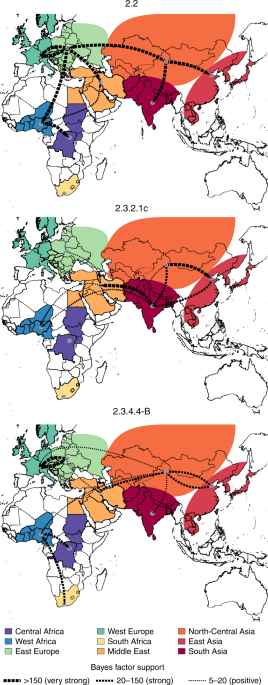
Thanks to the collaboration of an established network of thirteen African research institutions, it was possible to create the largest dataset of Sub-Saharan African HPAI H5Nx viruses collected between 2005 and 2018. We explored the spatiotemporal patterns of the diffusion to/from and within Africa and investigated the role that poultry trade and wild bird migration have played in the spread of the virus. We also considered the effects that climate variations might have had on wild bird movements and, consequently, on avian influenza virus diffusion. We identified the regions most vulnerable to the introduction and spread of avian influenza in Africa and the role of this continent in the global dynamics of the virus.
Despite the increasing number of sequences available in GenBank, our study suggests that disease surveillance, outbreak reporting and sequencing efforts vary considerably between countries and data gaps still exist. However, avian influenza does not respect political borders. Underreporting, poor surveillance and low response capacity are not a matter of concern for a single country but for the entire world. We must unite to face this dangerous global threat. This work published at https://doi.org/10.1038/s41467-019-13287-y has been the result of the efforts of a multidisciplinary and transcontinental team of 13 African 3 European laboratories.

Follow the Topic
-
Nature Communications
An open access, multidisciplinary journal dedicated to publishing high-quality research in all areas of the biological, health, physical, chemical and Earth sciences.

Related Collections
With Collections, you can get published faster and increase your visibility.
Women's Health
Publishing Model: Hybrid
Deadline: Ongoing
Tumor Microenvironment Crosstalk and Therapeutic Implications
Publishing Model: Hybrid
Deadline: Nov 02, 2026