AHNAK2, a clue that may lead us to diagnosing Pancreatic Cancer earlier
Published in Cancer



Laboratory research focuses on the best way to understand, diagnose and treat pancreatic cancer. Our team in Barts Cancer Institute at Queen Mary University of London decided to focus on early diagnosis as it is one of the best ways to improve survival. Early pancreatic cancer can be treated with a combination of surgery and chemotherapy.
Our first step was to look at the genes that are upregulated in pancreatic cancer cells. Multiple studies have been conducted which gave us a list of genes that were uniquely upregulated in cancer and not in normal pancreas tissue. AHNAK2 was one of the main genes we frequently saw being upregulated in cancer. Unfortunately, AHNAK2 has been very minimally studied. There is lack of data on its role.
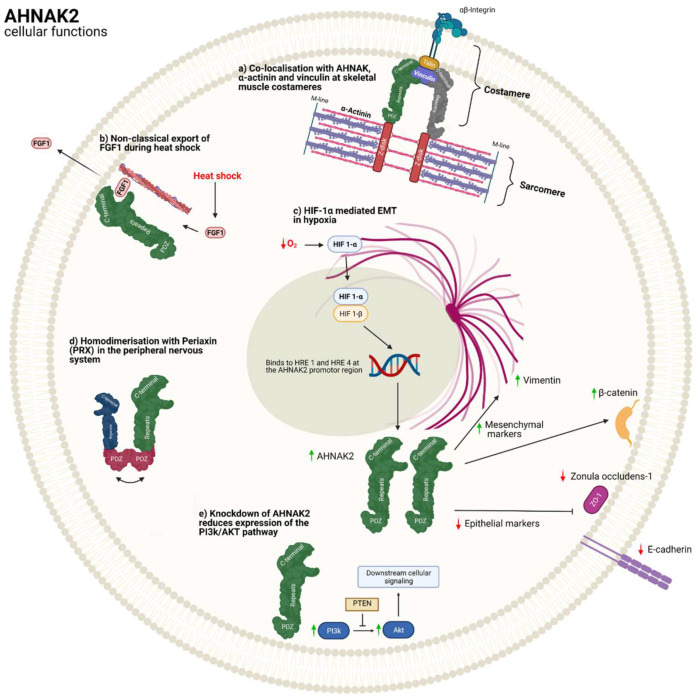
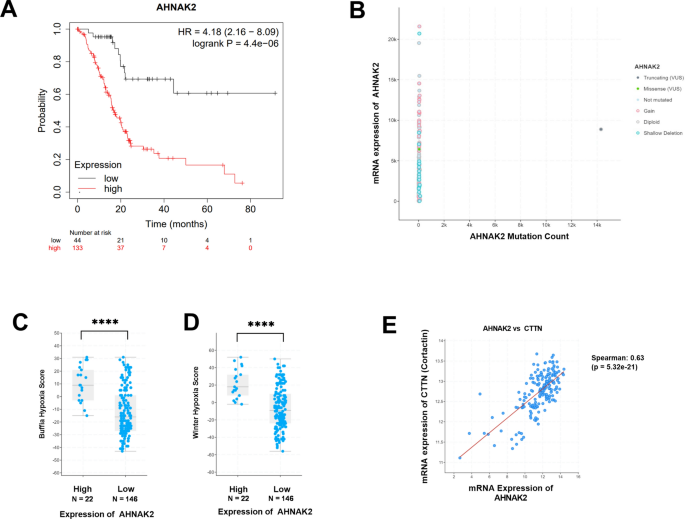
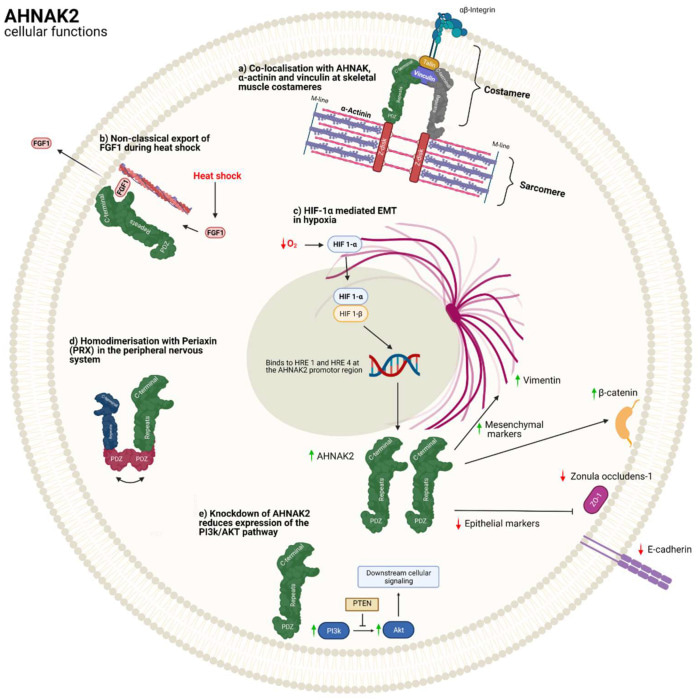
However, there was some work done by other researchers in lung and kidney cancer which showed a link between AHNAK2 and cancer growth, particularly in low oxygen settings, which is where pancreatic cancer cells thrive. Thus, we chose AHNAK2 and asked the question - which other proteins may interact with it? We demonstrated that AHNAK2 was associated with Ezrin and Cortactin, two proteins well studied that are essential in the ability of pancreatic cancer cells to move and invade. And finally, we found that those with high AHNAK2 expression also had high expression of hypoxia genes, genes found expressed in very low oxygen environments.
We then stained pancreatic cancer cells using a technique called immunofluorescence, to assess the sub-cellular localisation of AHNAK2 and its association with Ezrin and Cortactin. Clear co-localisaton of AHNAK2 was in with these two proteins, particularly in pseudopodia in multiple different pancreatic cancer cell lines. Furthermore, AHNAK2 protein expression increased in low oxygen environments, as well as changes upon growth on different substances: these acted as surrogates to the kind of microenvironment the cells would be surrounded in.
We silenced the AHNAK2 gene in the pancreatic cancer cells we grew in the lab and compared it to the normal cancer cells. By comparing the two we can see what effect AHNAK2 expression, or lack of it, has on the cells. In our spheroid model experiment which tests invasion, silencing AHNAK2 reduced the invasion of some of the cell lines, not all. Therefore, AHNAK2 was definitely involved in mobility and invasion, but in a particular stage or type of pancreas cancer, possibly only early on in the disease.
Now that we had some good evidence of AHNAK2s biological role in cancer, we wanted to measure it in patient samples. We took 30 pancreatic cancer patients and 30 normal matched controls and measured AHNAK2 levels in their blood. If we choose the cutoff of 421.47 ng/ml, we would be able to diagnose pancreatic cancer with a sensitivity of around 87%. With other known biomarkers we could make this performance even better, what was incredible was that this performance was better than the biomarker we currently use in clinical practice, CA 19-9.
Finally, we imaged pancreas tissue with antibodies that tag AHNAK2 using a technique called immunohistochemistry. Pancreatic cancer cells stained brown, meaning that AHNAK2 was expressed in pancreatic cancer tissue as a protein. Normal pancreatic tissue did not stain much at all, showing that its expression was cancer specific.
Our journey took us from defining a research problem, creating the question and performing multiple experiments to help answer that question. Although we can say AHNAK2 has a role in pancreatic cancer and may be an excellent biomarker in future, further studies are needed to build upon this.
We aim to recruit more patients and controls so we can verify the findings of AHNAK2 being a superior biomarker to CA 19-9, and perhaps using both these markers together to strengthen their diagnostic ability. This would be a cheap blood test that can be performed on a wide basis in clinical medicine and that may help us screen at risk patients.
Further studies are also needed to investigate AHNAK2 in pancreas cancer in more detail. Sequencing RNA and DNA in cancer cells that have AHANK2 silenced and comparing them to pancreas cancer cells expressing AHNAK2 would give us an idea of other genes are co-regulated with AHNAK2.
AHNAK2 is just a small piece in the large puzzle that is pancreatic cancer. But with this work we are another step closer to saving more lives from this devastating disease. We would like to thank members of the Barts Pancreatic Tissue Bank, the Tumour Biology team at the Barts Cancer Institute and the patients and volunteers involved in this study, without them we would not have been able to make these discoveries. You can read more about this body of research here: https://www.nature.com/articles/s41598-025-87337-5.

Follow the Topic
-
Scientific Reports
An open access journal publishing original research from across all areas of the natural sciences, psychology, medicine and engineering.

Related Collections
With Collections, you can get published faster and increase your visibility.
Cancer Prevention and Control
Publishing Model: Hybrid
Deadline: Feb 19, 2027
Healthy Aging
Publishing Model: Open Access
Deadline: Dec 31, 2026