AI-generated avatars in education and business ethics: What do students think?
Published in Education and Business & Management

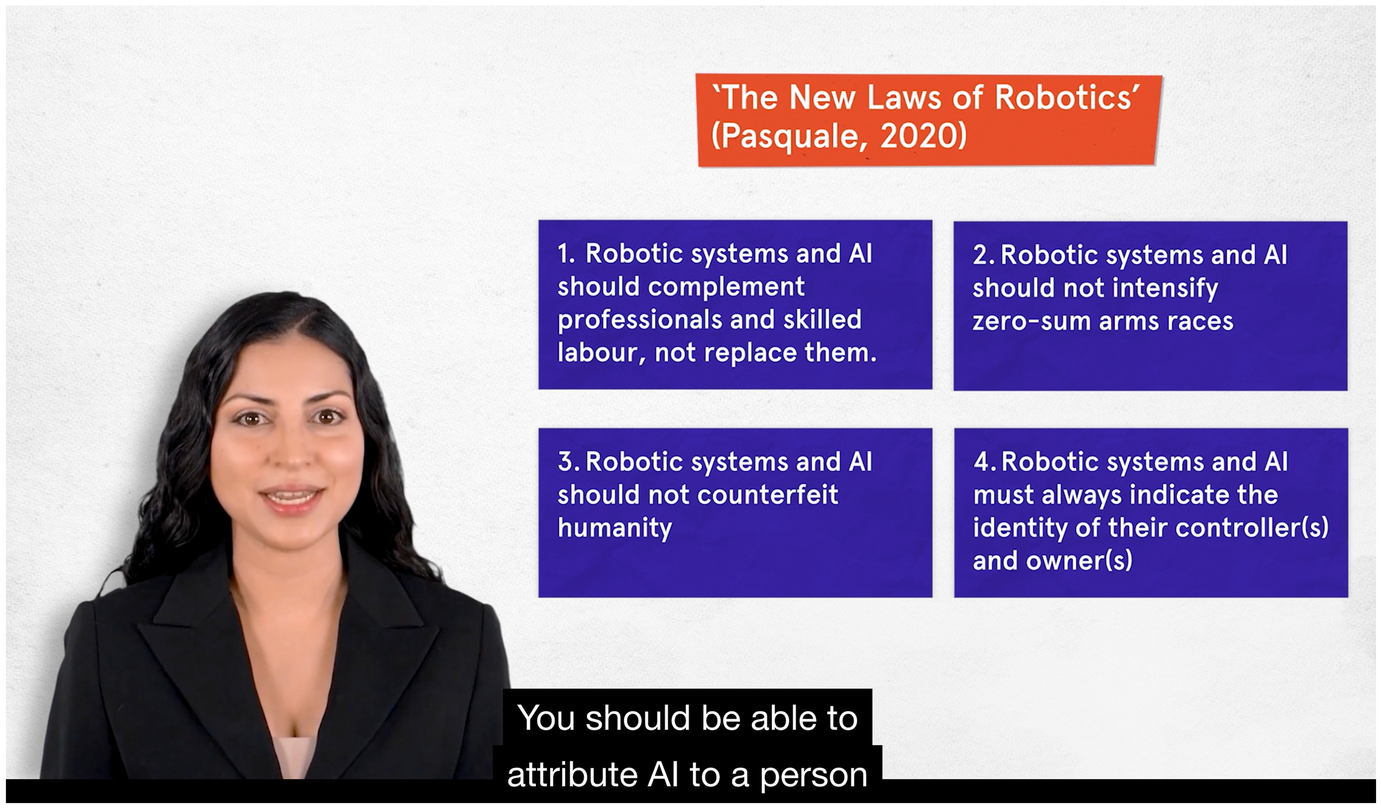

AI text-to-video creation is already big business for commercial learning and development, particularly for generating training videos. The video process offers efficiencies and is easy to update in multiple languages, without needing human actors, cameras and microphones, or media expertise. Our research considers the ethical implications of using such commercial AI software in educational video.
In focus groups, we asked for students’ perceptions and experiences of AI-generated avatars in a module about business ethics. The transcripts of these discussions were analysed with a systematic inductive research approach to thematic development, as proposed by Gioia et al. (2021).
Student perceptions and experiences
We found that students are immersed in and largely accepting of technology, including AI, and are at times unaware of its use. This trend seems likely to continue as AI avatar technology becomes better at mimicking human gestures and expressions.
Students had mixed reactions towards AI avatars. While some students appreciated the innovative approach, others were less impressed, highlighting the complex and contextual nature of integrating AI into teaching and learning.
On the one hand, students liked the idea of customisable avatars, already popular in gaming. Students suggested avatars could respond to questions and offer personalised learning pathways. Such avatars may also have the potential to engage students more because of their emotional connection, which in online learning environments is sometimes lacking.
The future of AI-generated avatars in education
Our findings suggest a cautious approach towards integrating AI avatars. Students viewed educational videos not just as sources of information but as platforms for social communication. In remote learning scenarios, teachers' video presentations become critical in establishing their presence and building relationships with students.
Video content generated with AI is more engaging when it has a pedagogical purpose and includes human and nonhuman interaction. If learning is just about acquiring knowledge, AI avatars might even be preferred in some contexts. However, students value the human touch, the conversational insights and idiosyncrasies of their human teachers. The future of learning lies in more active participation and a collaborative approach, where AI enhances, rather than replaces, the irreplaceable human elements of teaching.
This research brings us to ethical questions about using AI in education that are yet to be addressed. What types of generated AI content are suited to which contexts? How transparent is it? How to acknowledge the sources of AI-generated content? It is more important than ever that educators ask these ethical questions of AI use, to better shape the learning experiences of today and tomorrow.

Follow the Topic

Related Collections
With Collections, you can get published faster and increase your visibility.
Postdigital Dialogues
Dialogue is an exchange of information between people, a linguistic format which supports such exchange, a form of art, a type of inquiry, an approach to pedagogy, a precondition for social change, and much more. In Postdigital Science and Education, dialogue serves many different purposes from the development and dissemination of ideas through getting to know people behind the ideas to community development. Dialogue can take many forms from words through music to dance. In this collection, we present a series of interviews published in Postdigital Science and Education since its inception.
The Postdigital Dialogues collection is permanently open for submissions. Expected length of interviews is approximately 7000 words. Longer and shorter interviews, and other forms of dialogical work, may be considered in consultation with the Collection Editor. Individual authors and author collectives are encouraged to discuss their ideas with the Collection Editor as early as possible in the making of their articles.
Publishing Model: Hybrid
Deadline: Ongoing
Book Reviews
In today’s dominance of scholarly articles, writing books is a bit of a Don Quixotean enterprise – authors spend years on research and writing, and only a small number of published books receive deserved attention. Therefore, book reviews are an important way of acknowledging people who still write books. Critical reviews, that deeply engage with the text, are also an important aspect of scholarly communication. Knowledge develops through scholarly dialogue, and Postdigital Science and Education actively supports and catalyzes such dialogue. In this collection, we present a series of book reviews published in Postdigital Science and Education since its inception.
The Book Reviews collection is permanently open for submissions. Expected length of articles is approximately 2000 words. Longer and shorter submissions may be considered in consultation with the Collection Editor. Individual authors and author collectives are encouraged to discuss their ideas with the Collection Editor as early as possible in the making of their articles.
Publishing Model: Hybrid
Deadline: Ongoing