An energetics tale of the 2022 mega-heatwave over central-eastern China
Published in Earth & Environment
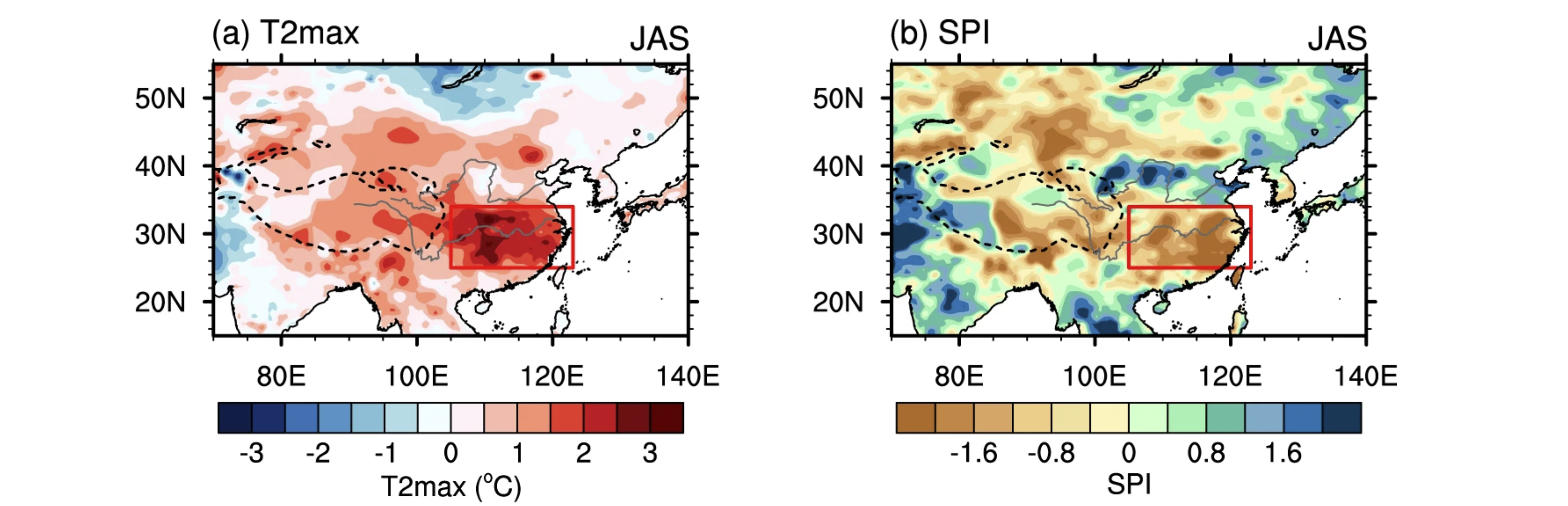

Heatwaves pose widespread yet disproportionate threats to the ecosystems and human well-being across the globe, and these associated adverse effects are further exacerbated by mega-heatwaves with long durations and large amplitude. In the mid-to-late summer of 2022, a record-breaking mega-heatwave roasted broad swathes of China, among which the central-eastern region is considered the hardest-hit. While several studies attributed the extremely hot summer in 2022 to extra-tropical atmospheric circulation, tropical sea surface temperature, and local soil moisture–temperature feedback, the latter being a comprehensive quantitative attribution of the multiple dynamical and radiative drivers on the occurrence of this mega-heatwave is absent. In fact, this attribution gap exists in almost the entire research community for climate and weather extremes.
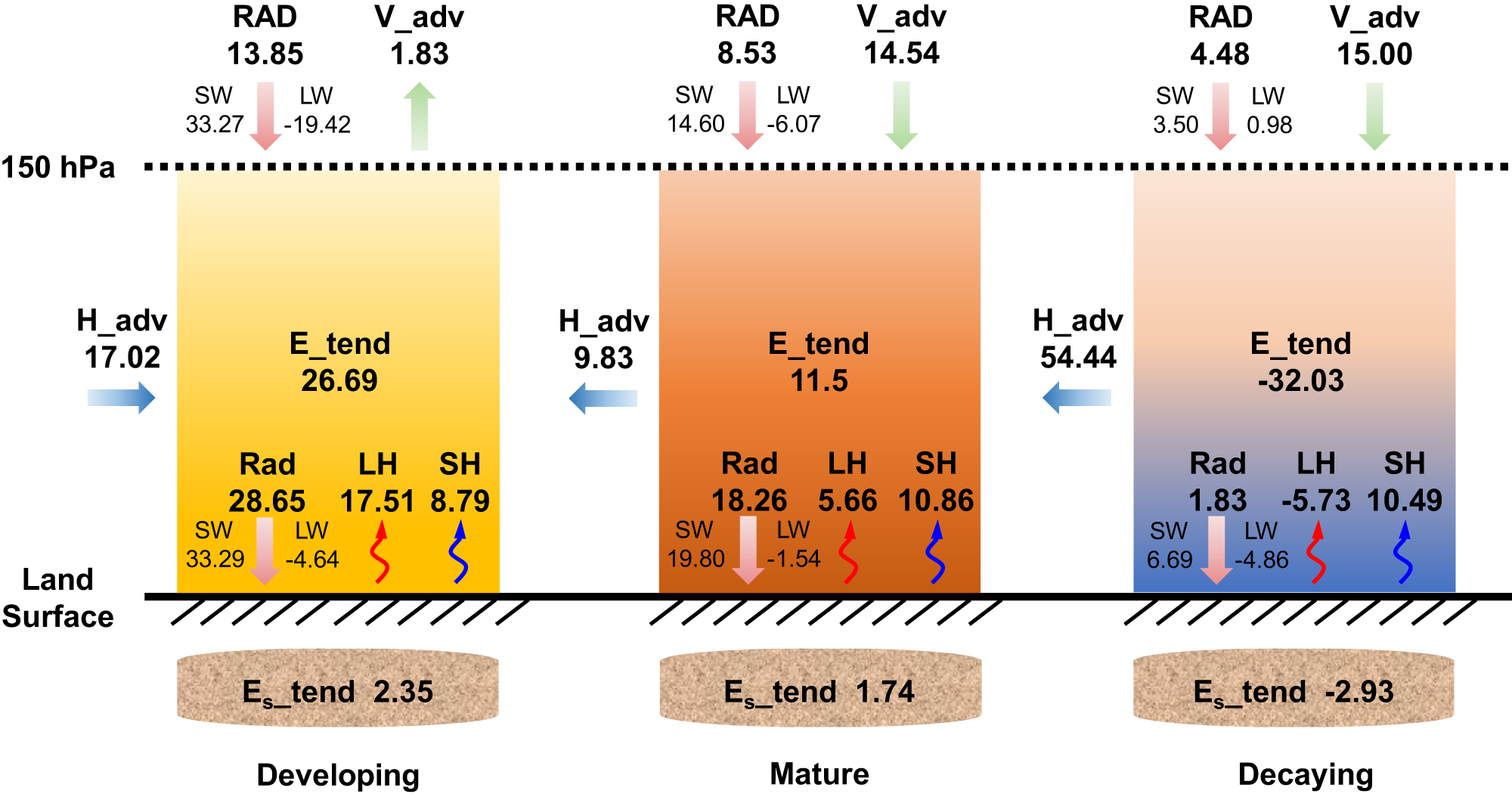
By constructing a process-resolving, energetics-based attribution framework (PREAF), here we quantitatively delineate the lifecycle of the record-breaking 2022 mega-heatwave over central-eastern China from a local energetics perspective. It is found that the cloudlessness induced radiative heating and atmospheric dynamics dominate the total energy buildup during the developing stage, while the land-atmosphere coupling and atmospheric horizontal advection act most effectively to sustain and terminate the heatwave (Fig. 1), respectively. A reduction in anthropogenic aerosols provides a persistent positive contribution during the event, suggesting that pollution mitigation measures may actually increase the amplitudes of future heatwaves. With this framework, initial efforts are made to unravel culprits in a model’s sub-seasonal prediction of this mega-heatwave, demonstrating the framework’s potential for efficiently detecting the origins of climate extremes and quantitatively assessing the impacts of mitigation policies for sustainable development.
Given its advantage, we recommend applications of the PREAF concept to quantitative attributions of multi-scale weather and climate events, including the variations of extreme heat and cold events, intra-seasonal oscillation systems (e.g., MJO), monsoons, El Niño-Southern Oscillation, and so on. Taking into account of the effects of solar irradiance and trace gases such as ozone, CO2, and CH4, we can also quantify the contributors to climate change (e.g., global warming) using this efficient, offline, and model-free approach. Addable contributions from the anthropogenic forcing by different species (e.g., ozone, CO2, and aerosols) and other physical processes will be disclosed. The PREAF thus provides an objective and efficient tool for understanding, predicting, and even projecting of extreme weather and climate events, and for assessing the impacts of mitigation policies for sustainable development.

Follow the Topic
-
npj Climate and Atmospheric Science
This journal is dedicated to publishing research on topics such as climate dynamics and variability, weather and climate prediction, climate change, weather extremes, air pollution, atmospheric chemistry, the hydrological cycle and atmosphere-ocean and -land interactions.

Related Collections
With Collections, you can get published faster and increase your visibility.
Atmosphere-Biosphere Interactions
Publishing Model: Open Access
Deadline: Oct 31, 2026
AI-Driven Innovation in Atmospheric Chemistry and Composition–Climate Interactions
Publishing Model: Open Access
Deadline: Oct 31, 2026


Please sign in or register for FREE
If you are a registered user on Research Communities by Springer Nature, please sign in