Behind the Paper: Expanding Accessibility in Eye Care Through Remote Refraction Testing
Published in General & Internal Medicine

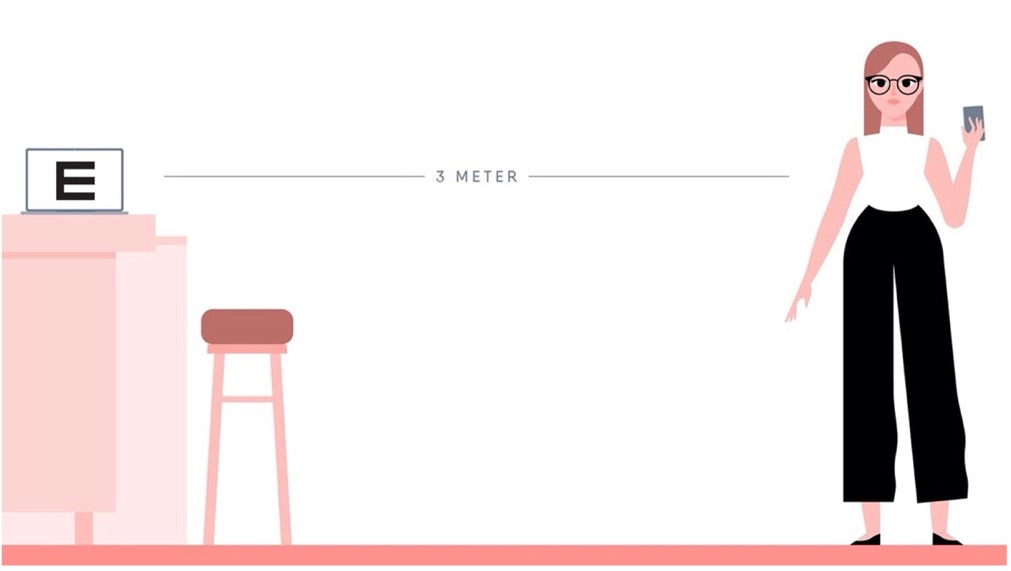


Refractive errors are the most common cause of preventable visual impairment worldwide, impacting not only individual quality of life but also societal productivity. Despite being easily correctable, refractive errors often remain unaddressed due to barriers like limited access to eye care professionals, especially in low-resource settings. In our study, recently published in Nature Digital Medicine, we explore a potential solution: self-adminstered web-based remote refraction testing. This innovation leverages accessible technology to provide an alternative to traditional, in-office eye exams for uncomplicated refractive assessments.
The Vision Behind Remote Refraction Testing
Imagine a scenario where all you need to assess your vision is a smartphone, a laptop, and an internet connection. In a world where these devices are sometimes more readily available than clean drinking water, this approach has the potential to revolutionize access to eye care. Our study aimed to evaluate the real-world performance of a web-based refractive testing algorithm and compare its results to conventional in-office prescriptions. By doing so, we demonstrated its feasibility as a reliable tool for self-administered vision and refractive assessments.
The Nuts and Bolts of Our Research
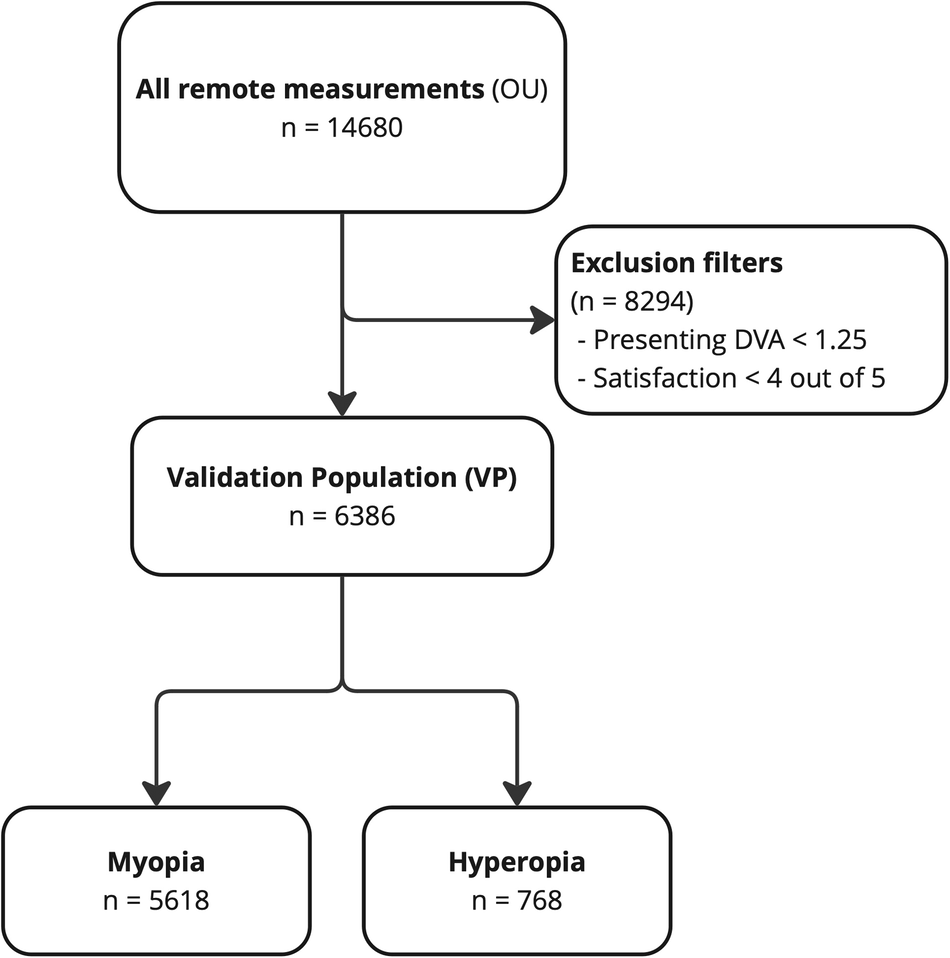
We analyzed the performance of the algorithm on data from 14,680 real-world healthy eyes aged 18 to 45 years. These participants had high visual acuity, were satisfied with their current glasses or contact lenses, and had spherical errors between –3.50 and +2.00 diopters, as well as cylindrical errors of up to –2.00 diopters. We have provided extensive bias- and sensitivity analyses, true to our core values of transparency and accountability. The test is offered by easee, an Amsterdam based Medtech company (https://easee.online).
The results speak for themselves. For myopic (nearsighted) participants, the mean difference between remote refraction and conventional prescriptions was just 0.01 diopters, with 82% falling within ±0.75 diopters, respectively. Myopics represent the lion share of refractive errors. By 2050, 50% of the world population is predicted to be myopic.
Bear in mind that these data reflect the performance of the algorithm only. In practice, a human overread by a trained easee optometrist ensures a further reduction of outlier measurements or erroneous prescriptions.
Why This Matters
While effective, traditional eye exams are resource-intensive and require physical presence at a clinic for both patients and eye care professionals. For many people, particularly those in remote or underserved areas, these requirements can be prohibitive. A web-based solution that allows users to assess their vision from the comfort of their homes has the potential to bridge this gap, providing:
- Increased Accessibility:By removing the need for specialized equipment or travel, remote refraction testing can reach populations that traditional eye care cannot.
- Cost-Effectiveness:The simplicity of the required technology—a phone and a laptop—makes this approach more affordable than in-office visits.
- Scalability:With incremental improvements, this technology could be deployed globally, complementing existing eye care services.
Our findings also highlight areas that require attention. The underestimation of hyperopia, for example, underscores the need for algorithmic improvements. While the technology is not a substitute for comprehensive eye exams, it serves as a valuable step in the digital vision care journey.
A Broader Perspective
The implications of this study extend beyond refractive error correction. It exemplifies how digital health solutions can transform care delivery by making it more accessible, equitable, and patient-centered. This aligns with broader efforts to leverage technology in addressing global health disparities, a goal that resonates strongly with the mission of Nature Digital Medicine. The future integration of this technology in various healthcare settings is promising, since post-operative management after cataract surgery revolves around the same type of data. These self-collected health data, enriched with Patient Reported Outcome Measurements, potentially reduce the societal burden of cataract surgery. Myopia management, screening programs for uncorrected refractive errors, or alleviating poor-sightedness in high-risk elderly groups are just some of the avenues we are exploring, together with a great team of scientists and clinicians.
Follow the Topic
-
npj Digital Medicine
An online open-access journal dedicated to publishing research in all aspects of digital medicine, including the clinical application and implementation of digital and mobile technologies, virtual healthcare, and novel applications of artificial intelligence and informatics.

Related Collections
With Collections, you can get published faster and increase your visibility.
Synthetic Clinical Data and Privacy-Preserving Frameworks for Trustworthy Health AI
Publishing Model: Open Access
Deadline: Jun 03, 2027
Digital Biomarkers for Enabling Proactive Clinical Decisions
Publishing Model: Open Access
Deadline: May 18, 2027