Breakfast Skipped, Mood Declined: What University Cafeteria Data Reveal about Depression
Published in Computational Sciences and Behavioural Sciences & Psychology

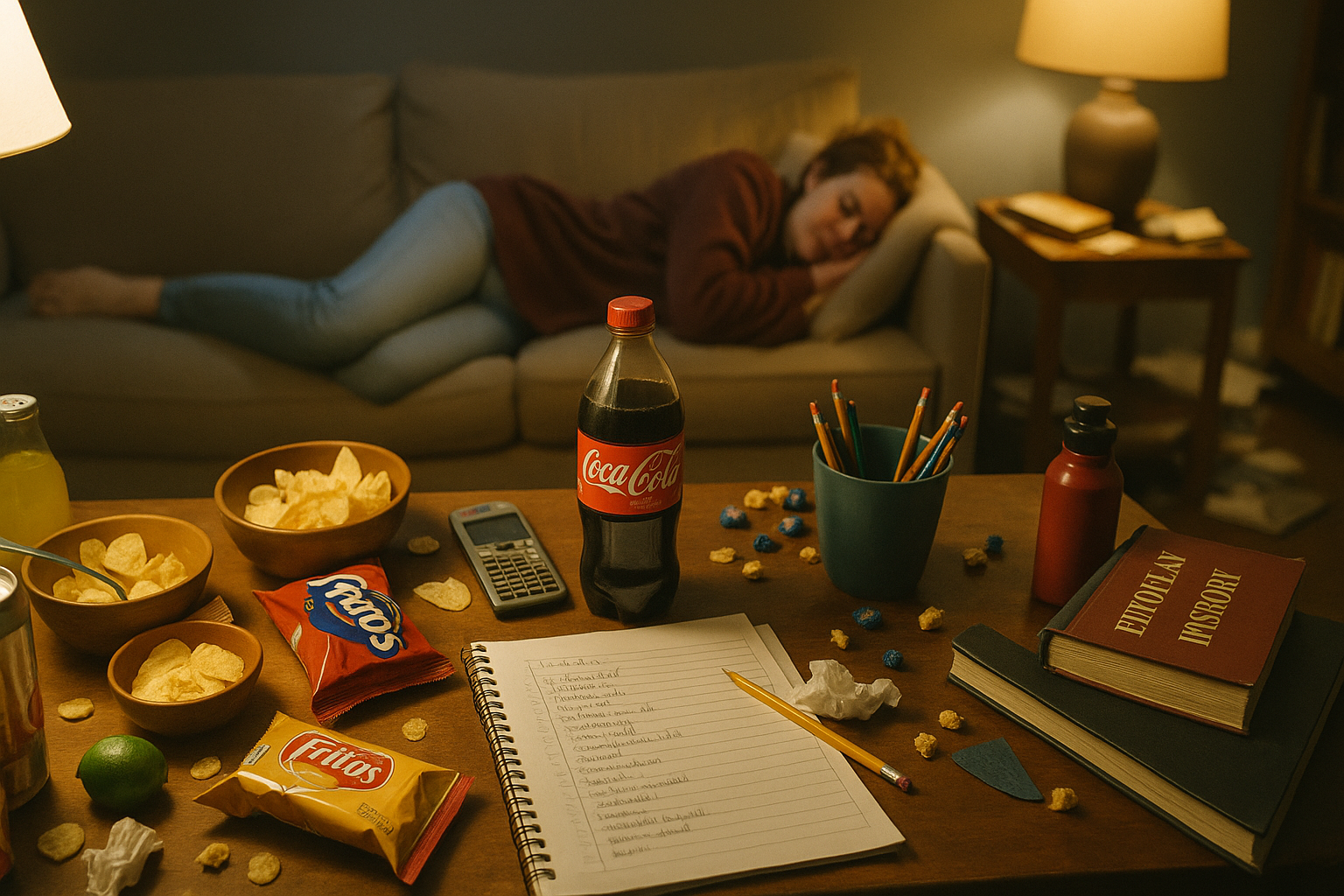







Depression is now the leading cause of disability worldwide, yet it often hides in plain sight. Clinicians rely on questionnaires and interviews, tools that depend on a person recognising their symptoms and seeking help. Many students do not. What if the rhythms of everyday life—the moments when we tap a campus card to pay for coffee or lunch—could help flag when something is wrong before distress becomes overwhelming?
My colleagues and I explored this possibility in a study recently published in JMIR Public Health and Surveillance. We analysed thirty days of anonymised dining‐hall transactions from 3,310 undergraduates at a large Chinese university and compared them with standard depression scores collected midway through the observation period. Because every student pays for meals with the same cashless system, the result was an unusually fine-grained, objective record of daily eating patterns. Our aim was to test whether those patterns changed in systematic ways among students experiencing different levels of depressive symptoms.
The findings were striking. Students with moderate-to-severe depression were less likely to eat three regular meals, especially breakfast. Their first meal of the day occurred, on average, nearly two hours later than that of their non-depressed peers. Spending was disproportionately shifted toward the evening, and menu diversity—an index based on the range of food categories purchased—fell by roughly one third. Even after adjusting for age, sex and body-mass index, these irregularities remained robust. A machine-learning model trained on the dining features alone distinguished moderate-to-severe depression from healthy mood with an accuracy of about 67 percent—far from perfect, yet a meaningful signal extracted from behaviour that students generate without conscious effort.
Why do eating rhythms matter? Human physiology follows a 24-hour circadian clock regulated by light exposure, social activity and, critically, food intake. Skipping breakfast delays the metabolic “day” and can desynchronise internal clocks that coordinate appetite, hormone release and mood regulation. Laboratory experiments have shown that circadian misalignment blunts positive affect and worsens anhedonia—the inability to feel pleasure that sits at the core of depressive illness. Our real-world evidence supports this mechanistic link and shows that the disruption is visible in something as mundane as cafeteria receipts.
Digital traces of behaviour have already transformed marketing and political forecasting; public health is only beginning to grasp their promise. Mobile-phone step counts predict flu outbreaks several days earlier than hospital reports, Google searches for “sleepless” or “worthless” correlate with suicide mortality, and social-media language patterns can indicate PTSD years after deployment in military veterans. Compared with these data streams, meal purchases enjoy two advantages: they represent a basic biological need intimately tied to mood, and they are captured with minimal privacy intrusion because universities already collect them for billing.
Still, enthusiasm must be tempered by ethical vigilance. Dining logs can reveal sensitive information about religion, medical conditions such as food allergies, or financial hardship. Any deployment of predictive algorithms needs explicit informed consent, rigorous data encryption and clear pathways for students to opt out. Moreover, an algorithm can only suggest risk; diagnosis belongs to trained clinicians, and supportive counselling must be available if the system flags a student.
There are practical hurdles as well. Our model performed best in identifying moderate-to-severe depression; its ability to pick up mild cases was weaker. Integrating additional passive signals—sleep timing from Wi-Fi log-ins, library check-outs that mark social withdrawal, or wearable data on heart-rate variability—may improve precision. Yet adding modalities also increases complexity and the scope for misuse, so interdisciplinary oversight is essential.
For universities eager to translate this research into policy, a staged approach is wise. First, pilot anonymous monitoring to validate local patterns, because dining culture differs across campuses and countries. Second, invite student representatives into governance committees that set rules on data retention and action thresholds. Third, pair any alert system with low-barrier counselling resources—walk-in clinics, online chat platforms, or peer-support programmes—to ensure that detection leads to tangible help rather than stigma.
Beyond campus, the concept of nutritional rhythms as mental-health biomarkers opens new avenues for prevention. Public-health campaigns often focus on food quantity and nutrient balance; our results suggest that timing and regularity warrant equal attention. Simple guidelines—eat breakfast within two hours of waking, maintain a roughly twelve-hour fasting window overnight, diversify food choices across the day—could be promoted alongside traditional dietary advice. Technology firms developing meal-ordering apps or smart cafeterias might incorporate gentle prompts when users drift toward irregular patterns, much like step counters nudge sedentary office workers to move.
Critics may argue that correlational studies cannot prove causation and that embedding surveillance in daily life risks normalising intrusion. These concerns are valid. Yet the alternative—waiting for students to self-identify as depressed when they may feel ashamed or unaware—has left too many to struggle in silence. Digital phenotyping, if pursued transparently and ethically, offers a complementary route: it translates the concealed language of habits into early warnings and interventions.
Across centuries, physicians relied on what patients told them; in the twenty-first century, we can also listen to what their data show. Each beep of a card reader at the canteen is a clue. Aggregated and safeguarded, those clues may help universities meet their duty of care in an age when mental ill-health is both widespread and, all too often, invisible.
Our study demonstrates one practical step toward that goal. By revealing how disrupted eating rhythms mirror depressive burden, it underscores the broader principle that everyday behaviour carries a physiological signature. Harnessing that signature responsibly could shift mental-health care from reactive to proactive, delivering support not after crisis strikes but as soon as subtle patterns whisper that help is needed.
Xizhe Zhang is a researcher specialising in computational psychiatry and network science. The study discussed here, “Digital Dietary Behaviors in Individuals With Depression: Real-World Behavioral Observation,” was published in 2024 in JMIR Public Health and Surveillance.