Can coral recruitment lead the way to recovery after a devastating disease outbreak in the Caribbean?
Published in Ecology & Evolution
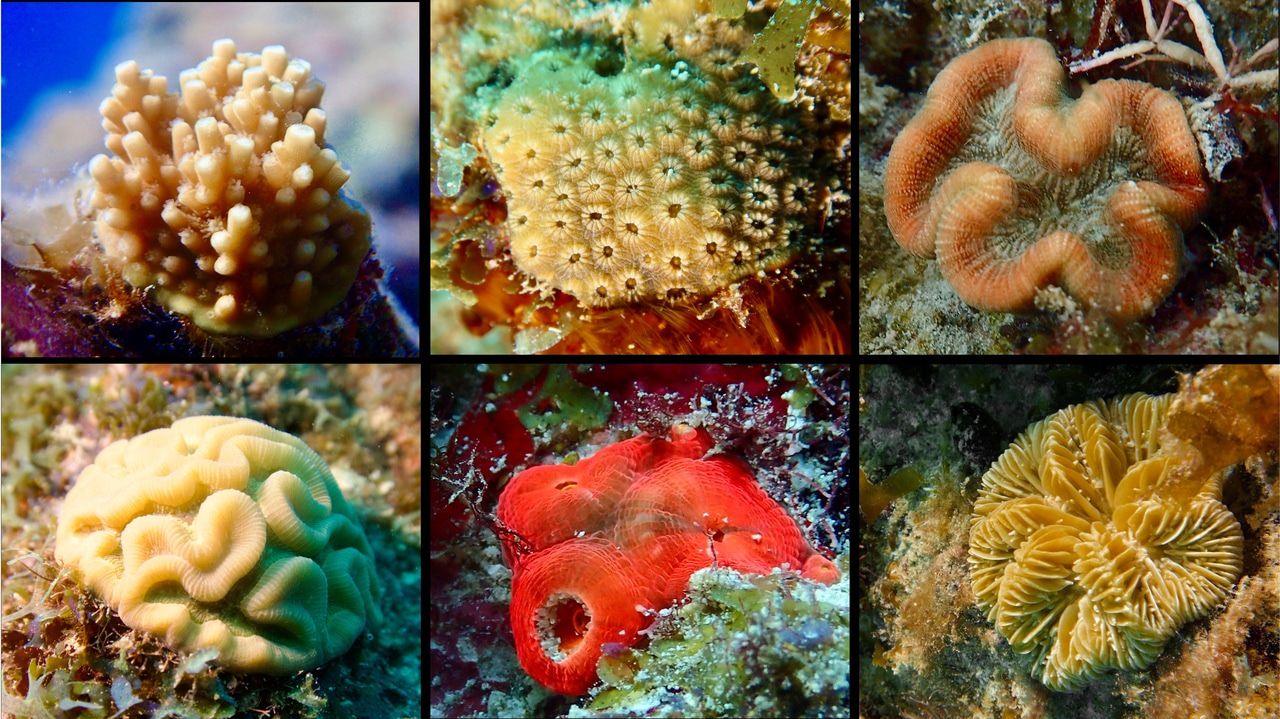


The Caribbean’s coral reefs are among the most diverse and vibrant ecosystems on Earth, supporting thousands of species of fish and invertebrates. These reefs also provide critical services to local communities, including fisheries, tourism, and coastal protection. Yet, in the past decades, these ecosystems have faced an escalating crisis, driven by a combination of climate change, pollution, and disease outbreaks.
One of the most alarming threats is Stony Coral Tissue Loss Disease (SCTLD)—the deadliest coral disease ever documented. Since its emergence in 2014, SCTLD has rapidly spread across the Caribbean, resulting in widespread mortality among over 30 coral species. Some affected coral species have experienced mortality rates exceeding 90%, triggering concerns about the long-term persistence of affected populations.
The challenge of coral recovery
Coral reefs are naturally resilient, capable of recovering from disturbances through processes like recruitment (the settlement of coral larvae) and growth of juvenile colonies. However, the scale and speed of recent mortality events have raised a critical question: Can Caribbean coral populations recover naturally, or are they locked in low-abundance states where human interventions are needed to maintain them?
While it is increasingly widely accepted that proactive human actions are necessary to guide reef recovery, and indeed many actions are being conducted to intervene in affected populations, less attention has been paid to understanding the natural potential for recovery of wild coral populations at ecologically meaningful scales. Addressing this is vital for management efforts, as if juvenile corals establish and survive successfully, they could serve as a seed bank—essential for natural reef recovery and the ecosystem’s resilience.
Our recent study, published in Communications Earth and Environment, explores this critical question by examining whether coral juveniles are exhibiting signs of recovery that could enable reefs to rebuild in the future. We utilised extensive post-SCTLD data from juvenile and adult individuals at 75 sites along a 450 km track in the Mexican Caribbean. We recorded 4,209 juvenile corals (from 33 species) and 22,254 adult colonies (belonging to 43 species). This comprehensive amount of data allowed us to investigate whether natural recovery is possible and whether natural recruitment could help mitigate some of the losses caused by SCTLD.
Focusing on juvenile corals: The key to future reefs
We found that the populations of several susceptible species underwent severe changes, not only in overall number but also in terms of the skewness of their size distributions, resulting in disproportionately smaller colonies.
Despite the devastating effects of SCTLD, our observations of corals in their early life stages—either surviving the outbreak or recruiting afterwards—offer a positive sign of resilience among affected populations at a regional scale. For instance, we found that a notable proportion of juveniles appeared after the peak of the disease, with many in the early stages of settlement. This suggests that even in the face of widespread mortality, some species retained the capacity to reproduce sexually and establish new colonies. This natural recruitment, driven by surviving adults capable of reproducing despite their reduced numbers, could potentially support the gradual rebuilding of coral populations under favourable conditions.
While these signs of recruitment are encouraging, they are not uniformly distributed among all species. Notably, some of the most severely affected corals—such as Dendrogyra cylindrus (pillar coral) and Meandrina meandrites (maze coral)—are showing very limited signs of recovery. Their populations may be too depleted or their reproductive success too compromised for natural recovery to occur without targeted intervention.
This variability underscores an important point: not all coral species will recover at the same rate or to the same extent. Some, with their faster reproductive cycles and higher resilience, may rebound sooner; others, particularly the larger, slow-growing, or rare species, may face ongoing decline.
Why monitoring coral babies matters
Understanding juvenile coral dynamics is crucial, not only because they represent the future of reefs but also as indicators of population dynamics and reef health. If a reef supports a healthy influx of coral recruits and juveniles, it suggests that the coral populations’ reproductive potential remains functional—even after considerable disturbance.
Moreover, monitoring juvenile populations helps identify critical factors that influence recruitment success, such as substrate quality, water quality, and the presence of algae or other competitors. Particularly, crustose coralline algae (CCA), a type of calcium carbonate-encrusted algae, plays a pivotal role in facilitating coral larval settlement. Healthy populations of CCA often correlate with higher recruitment rates.
Broader Implications for Reef Conservation
The insights gained from our study have critical implications for reef management and conservation. They suggest that protecting juvenile habitats is just as important as conserving adult colonies. Ensuring that juvenile corals can settle and grow involves managing local stressors, such as pollution, sedimentation, and algal blooms.
The post-disturbance recovery of populations and communities relies heavily on the survival, recruitment, and growth of newly settled individuals. However, species often exhibit high mortality during early life stages, creating bottlenecks in recovering populations. Thus, understanding the early life stages can provide valuable insights into the long-term effects of disturbances, recovery, resilience, and ecological dynamics.
Our study provides a snapshot of the juvenile coral community in the wake of this mass mortality event, offering valuable early insights into recovery pathways. However, ultimately, the comeback of these affected species will depend on the survival of these juveniles into adulthood and their subsequent ability to reproduce and contribute to the next generation. Therefore, long-term studies that track the development and reproductive success of these juvenile populations are essential for drawing more definitive conclusions and deepening our understanding of post-disturbance dynamics within coral communities.

I am a marine ecologist and researcher at the Reef Systems Unit of the National Autonomous University of Mexico (UNAM). I have a broad interest in ecology, including marine biodiversity, global change biology and conservation ecology.
My research is primarily based on the Caribbean, but I also have interests elsewhere, including the Tropical Eastern Pacific and the Indian Ocean. I earned my PhD from the University of East Anglia (UK) and was a postdoctoral fellow at Simon Fraser University (Canada). I have also worked in the Mexican agency for protected areas and served as a Science Coordinator for the Healthy Reefs Initiative.
Follow the Topic
-
Communications Earth & Environment

An open access journal from Nature Portfolio that publishes high-quality research, reviews and commentary in the Earth, environmental and planetary sciences.
Related Collections
With Collections, you can get published faster and increase your visibility.
Archaeology & Environment
Publishing Model: Hybrid
Deadline: Mar 31, 2026
Drought
Publishing Model: Hybrid
Deadline: Mar 31, 2026
Please sign in or register for FREE
If you are a registered user on Research Communities by Springer Nature, please sign in