Celebrating World Environment Day: June Highlights from the Research Communities
Published in Earth & Environment and Sustainability






Explore the Research

World Environment Day
World Environment Day is the United Nations day for encouraging worldwide awareness and action to protect our environment.
On June 5, people around the globe came together to mark World Environment Day - the United Nations’ flagship day for encouraging awareness and action to protect our environment. Established in 1972, this annual event has grown into the largest international platform for environmental outreach, engaging millions of people in more than 150 countries.
Each year, World Environment Day shines a spotlight on a specific environmental theme. In 2025, the focus is on ecosystem restoration and how we can all play a part in healing our planet. Across our Research Communities, researchers are sharing their work on some of the most pressing environmental challenges of our time. Here are a few thought-provoking Behind the Paper posts that explore these topics in depth.
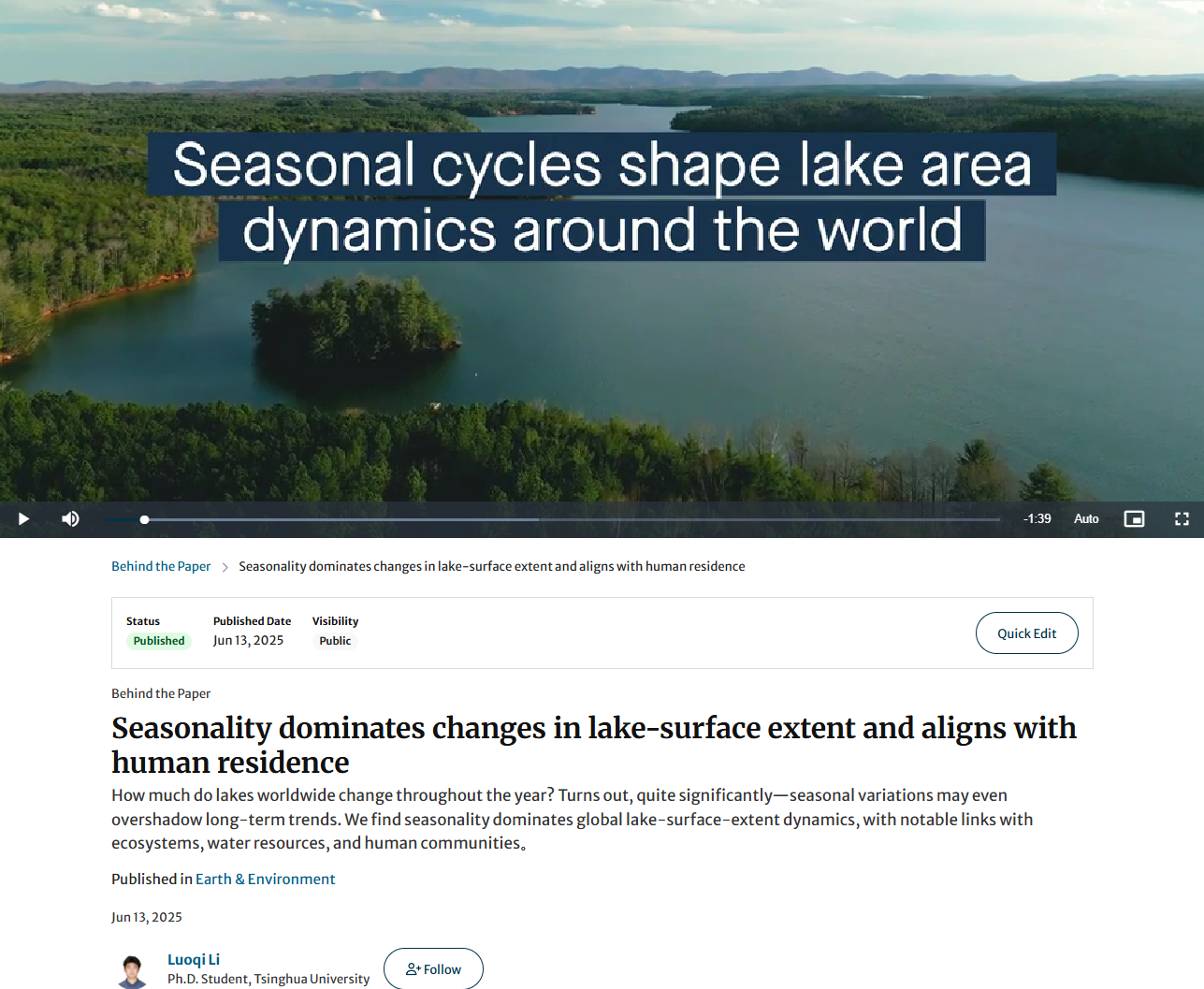
Tracking Lake Changes Through the Seasons
How do seasonal patterns influence our freshwater ecosystems and how closely are they tied to where people live? @Luoqi Li reveals that lake-surface-extent dynamics across the globe are shaped more by seasonal variation than by long-term trends, with a striking alignment to human settlements, as published in Nature. Explore how climate patterns and human presence interact to reshape water landscapes in this Behind the Paper video post .
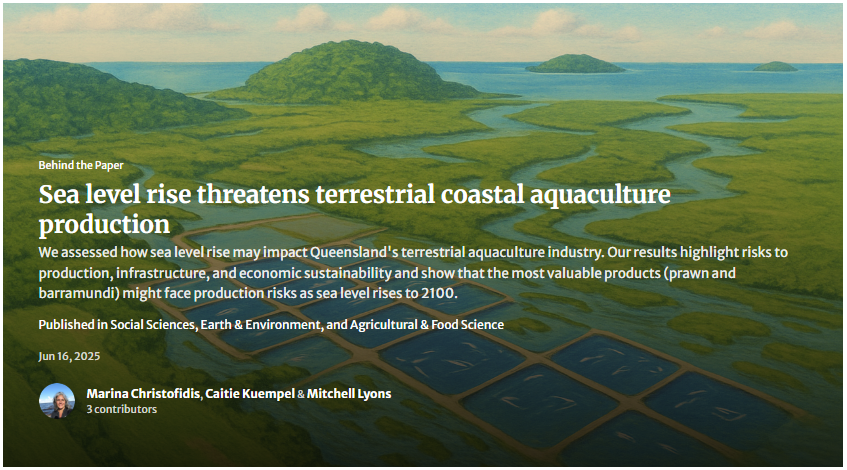
When the Ocean Comes In: A New Risk for Coastal Food Systems
As sea levels continue to rise, a hidden crisis is unfolding for coastal aquaculture. This Behind the Paper post by @Marina Christofidis , @Caitie Kuempel and @Mitchell Lyons explores new research that highlights how saltwater intrusion is jeopardizing terrestrial aquaculture systems, putting global food production and coastal economies under pressure. Read the full insights from the researchers here.
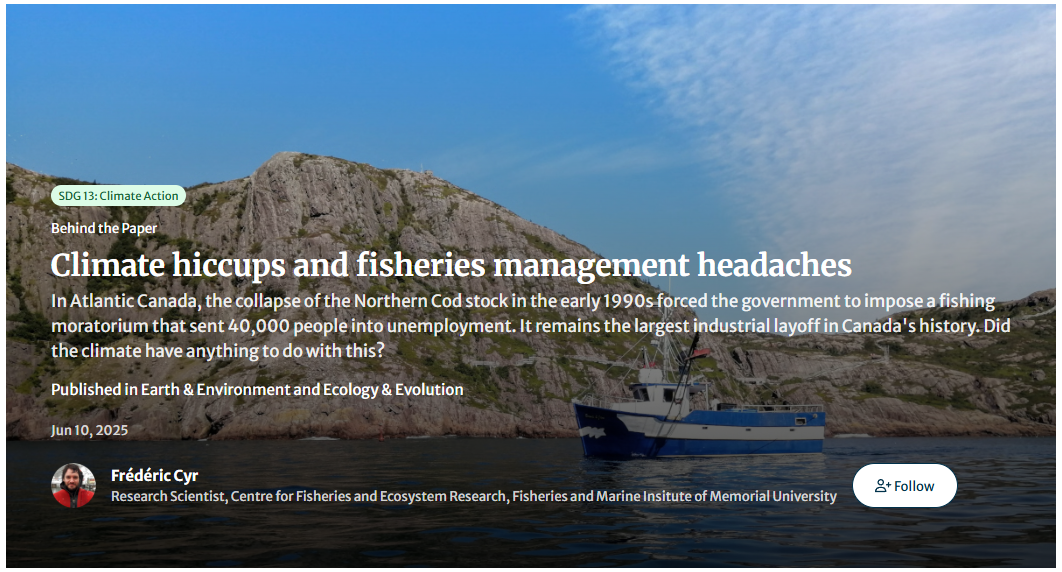
Short-Term Climate Shocks, Long-Term Management Headaches
Even small climate shifts can lead to big problems for fisheries. In this Behind the Paper post, which reflects upon an article in Nature Communications, @Frédéric Cyr reveals how unpredictable environmental changes are stressing both ecosystems and decision-makers, and why more agile management tools are urgently needed. Explore their insights here.
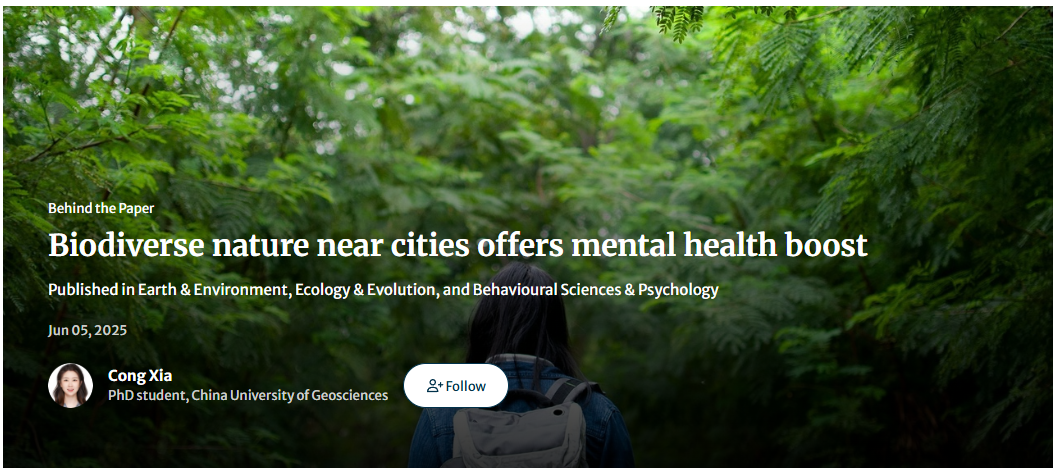
Green Spaces, Healthy Minds: The Power of Urban Biodiversity
Could a walk in a biodiverse park be just what the mind needs? New research featured in this Behind the Paper post by @Cong Xia reveals that natural spaces rich in biodiversity near cities are linked to better mental health outcomes. It's not just access to green space that matters, but the variety of life within it. Discover how nature’s richness supports human well-being here.
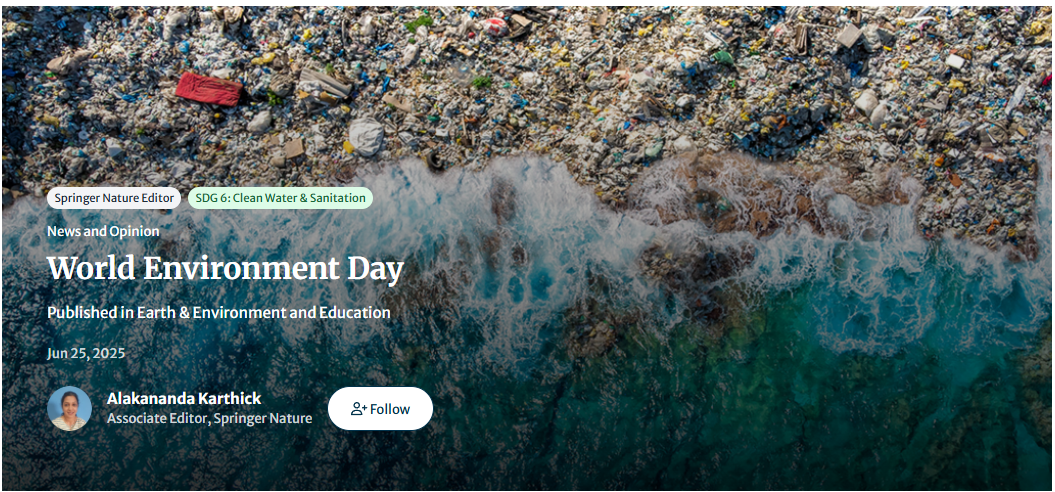
Celebrating Science for a Healthier Planet
Written by @Alakananda Karthick, this post marks World Environment Day by spotlighting research published in Springer Nature journals and books from researchers tackling the planet’s most urgent environmental challenges - from climate change and biodiversity loss to pollution and ecosystem resilience. Join the conversation and explore the full post here.
For more stories that illuminate how research is shaping a more sustainable future, visit the Behind the Paper channel.
Curious to explore beyond environmental science? Discover more highlights from across our Communities:
Let’s celebrate the role of science in driving positive change - for our planet and our future.
Passionate about connecting researchers and amplifying their voices through digital engagement. As Manager for the Research Communities by Springer Nature, I work with researchers to showcase their discoveries and experiences.
With a strong interest in public engagement and creative science communication, I’m dedicated to making research more accessible and inspiring wider conversations around scientific discovery and innovation.
Follow the Topic
-
Nature
A weekly international journal publishing the finest peer-reviewed research in all fields of science and technology on the basis of its originality, importance, interdisciplinary interest, timeliness, accessibility, elegance and surprising conclusions.
-
Nature Communications
An open access, multidisciplinary journal dedicated to publishing high-quality research in all areas of the biological, health, physical, chemical and Earth sciences.
-
Nature Cities
This journal aims to deepen and integrate basic and applied understanding of the character and dynamics of cities, including their roles, impacts and influences — past, present and future.
-
Aquaculture Science and Management
This is an open access peer-reviewed journal that aims to publish innovative research about the management of aquaculture species, the related food security considerations, and the industry’s relationship with the environment.




Related Collections
With Collections, you can get published faster and increase your visibility.
Women's Health
Publishing Model: Hybrid
Deadline: Ongoing
Synergizing aquaculture & blue carbon in a changing climate
Aquaculture Science and Management calls for contributions to a Collection centred on "Synergising aquaculture & blue carbon in a changing climate." We invite researchers to share original studies that investigate the intersection of aquaculture practices and blue carbon sequestration in coastal ecosystems. This Collection aims to elucidate how aquaculture can contribute to climate mitigation strategies, including the enhancement of carbon storage and the restoration of coastal habitats. Uniting four journals and scientific communities, this Collection is a part of the Climate Change and Livestock super Collection which highlights innovative, climate-smart approaches to safeguarding animal health and welfare across aquaculture, porcine, dairy and poultry. Topics of interest include but are not limited to:
- Carbon sequestration mechanisms in aquaculture
- Corporate or product level climate accounting for seafood
- Coastal ecosystem restoration practices
- Aquaculture systems and their climate resilience
- Integration of blue carbon strategies in fisheries
- Socioeconomic impacts of restorative aquaculture
- Policy frameworks for synergies in aquaculture and blue carbon
- Technological innovations in sustainable aquaculture practices
Join us in fostering interdisciplinary dialogues that highlight the critical role of aquaculture in the sustainability of our marine environments.
This Collection supports and amplifies research related to SDG 13, Climate Action and SDG 14, Life Under Water.
All submissions in this Collection undergo the journal’s standard peer review process. Similarly, all manuscripts authored by a Guest Editor(s) will be handled by the Editor-in-Chief. As a newly launched open access publication, this journal has waivers to cover article-processing charges (APCs). For more information about receiving a waiver, please contact alex.waite@springernature.com before submitting a manuscript. For additional support please visit OA funding and support, or email OAfundingpolicy@springernature.com or the Editor-in-Chief.
Publishing Model: Open Access
Deadline: Mar 25, 2027