💡Celebrating the International Day of Light: Highlights from the Research Communities

On May 16, the world celebrated the International Day of Light, taking a moment to reflect on the critical role light plays in science, culture, and everyday life. This date marks the anniversary of the first successful operation of a laser in 1960 by physicist and engineer Theodore Maiman. The laser is a powerful symbol of how fundamental research can spark innovations that transform industries, from healthcare and communications to energy and technology.Â
We’ve seen a range of exciting content and activities across our Communities that celebrate the science of light in different ways. Here are a few highlights:Â
Illuminating the Overlooked: Light Pollution and the SDGs
How often do we think about the cost of our ever-brighter world? @Jari Lyytimäki explores how light pollution is often overlooked in global sustainability efforts, which affects human health, ecosystems, and energy use. The research, published in Discover Sustainability, highlights surprising risks within current SDG strategies and makes the case for smarter lighting and the restoration of natural darkness as essential parts of sustainable development. This Behind the Paper post invites us to rethink what progress looks like under artificial lights.Â
How Atoms Could Bend Light Backwards
What if we could achieve negative refraction without complex metamaterials? In a paper published in Nature Communications, @Janne Ruostekoski shared how carefully arranged atomic systems can collectively bend light in unexpected ways, offering a new path toward powerful lenses and optical innovation. Discover more in this Behind the Paper post.Â
Lighting Up Science with Every Stretch
What happens when you stretch a material two thousand times? In this captivating visual demonstration, @Xin Pan revealed how mechanoluminescence, which is light emitted through mechanical action, undergoes a remarkable transformation as the material is repeatedly stretched. The video captures the evolving emission in real time and offers a compelling view into the physics behind it, along with potential applications in sensors, smart materials, and more. Watch the transformation in this Behind the Paper video post complementing the research published in Nature Communications!Â
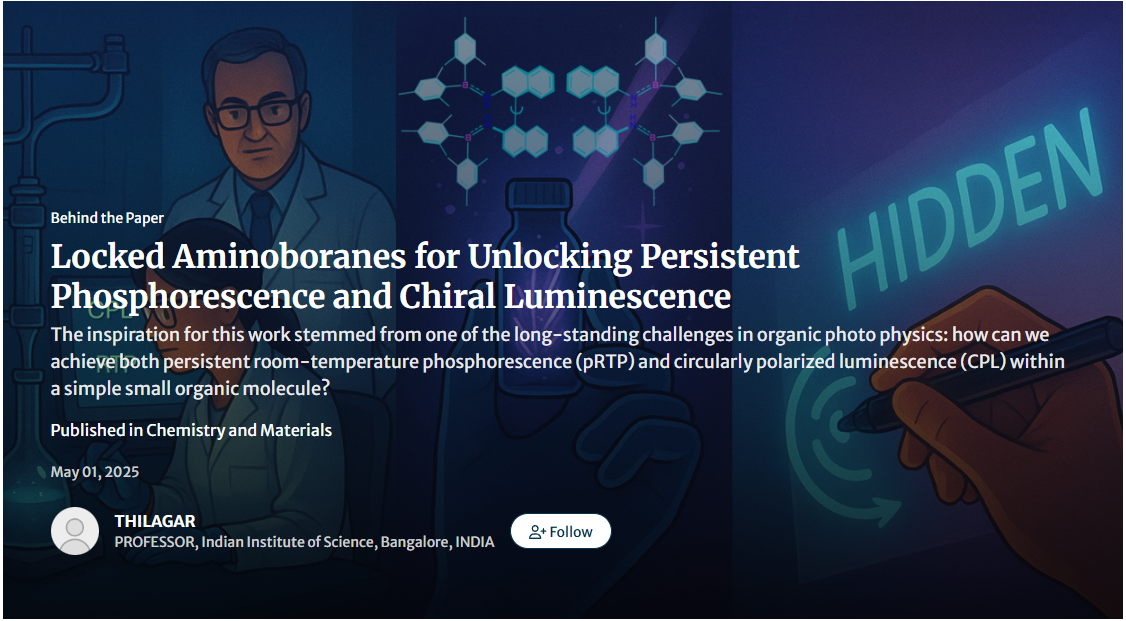
Unlocking Phosphorescence and Chirality in Aminoboranes
 @THILAGAR  explores how locked aminoboranes can unlock rare optical phenomena like persistent phosphorescence and chiral luminescence published in Communications Chemistry. These fascinating properties open possibilities in next-generation materials, from optical sensors to advanced display technologies. By carefully designing the molecular structure, it becomes possible to achieve both a long-lived glow and chiral light interactions. Learn more in this Behind the Paper post.Â
From lasers and luminescence to light pollution and optical breakthroughs, the International Day of Light reminds us how discoveries in light science continue to shape our world. We’ve loved highlighting the diverse and inspiring stories shared across our Communities, and now it’s your turn to join the discussion!Â
What did you find most fascinating? What questions would you ask the researchers behind these studies? Add a comment to spark conversation or tag a researcher who might enjoy diving into these illuminating posts.Â
For more stories that shine a light on research, head to the Behind the Paper channel. Curious to explore further? Discover more highlights from across our Communities:Â
Let’s celebrate the power of light to inspire, innovate, and connect.Â
Follow the Topic
-
Nature Communications
An open access, multidisciplinary journal dedicated to publishing high-quality research in all areas of the biological, health, physical, chemical and Earth sciences.
-
Communications Chemistry
An open access journal from Nature Portfolio publishing high-quality research, reviews and commentary in all areas of the chemical sciences.
-
Discover Sustainability
A multi-disciplinary, open access, community-focussed journal publishing results from across all fields relevant to sustainability research whilst supporting policy developments that address all 17 of the United Nations Sustainable Development Goals (SDGs).

Your space to connect: The Polarised light Hub
A new Communities’ space to connect, collaborate, and explore research on Light-Matter Interaction, Optics and Photonics, Quantum Imaging and Sensing, Microscopy, and Spectroscopy!
Continue reading announcementRelated Collections
With Collections, you can get published faster and increase your visibility.
Women's Health
Publishing Model: Hybrid
Deadline: Ongoing
Digital Transformation for Sustainable Business Operations: Technologies, Challenges, and Opportunities
In recent years, the convergence of advanced technologies such as Artificial Intelligence, Machine Learning, the Internet of Things, and blockchain with sustainability goals has triggered a paradigm shift in how organisations approach business operations. The rise of digital transformation is not only driving innovation but also unlocking new opportunities to enhance environmental responsibility, economic growth, and social equity. As organizations aim to adopt greener business practices, the integration of digital solutions presents both opportunities and challenges for achieving sustainable operations.
The digital transformation of business operations is redefining a new future for organisational practices, such as supply chain management, human resources, finance, marketing, and customer relations. The infusion of emerging technologies into these areas is changing not just how businesses operate but also how they engage with stakeholders and customers. For example, AI and IoT are enabling resource allocation, while blockchain enhances transparency and accountability in supply chains, facilitating better decision-making. However, these shifts are not without their challenges, including data privacy concerns, cybersecurity risks, and the complex task of aligning new technologies with existing business models.
This Collection seeks to explore the diverse dimensions of digital transformation and its impact on sustainable business practices. Key questions include: How do organisations leverage digital technologies to drive eco-friendly operations? What are the barriers that prevent companies from fully embracing these innovations? What ethical considerations emerge emerge from the intersection of sustainability and digitalisation? Addressing these questions is imperative as businesses around the world navigate the transition towards sustainability while optimising their digital strategies. Scholars, practitioners, and industry experts must collaborate to develop frameworks, policies, and solutions that enable businesses to achieve both operational efficiency and environmental stewardship.
This Collection represents a significant contribution to the growing body of knowledge on digital transformation and sustainability. By providing both theoretical and practical perspectives for understanding the complexities of integrating technologies into business operations, this Collection will contribute to several academic fields, including operations management, sustainability studies, organisational behaviour, and information systems. Below, we outline the primary contributions of this Collection:
Technology and Operations Management: This Collection will contribute to a deeper understanding of digital operations management by examining how organisations adopt and integrate emerging technologies to optimise business processes.
Sustainability and Resource Efficiency: This Collection will explore how digital solutions such as AI, IoT, and blockchain are facilitating sustainable business models and practices such as resource management, reducing waste, and enhancing energy efficiency across industries.
Business Strategy and Digitalisation: The Collection will provide insights into how digital transformation affects corporate strategies, emphasizing the long-term sustainability of businesses in a competitive market.
Ethical Considerations: The integration of AI and other digital tools into business operations raises ethical concerns about fairness, transparency, and social impact, which this Collection aims to address by offering evidence-based insights.
Technology in Human Resource Management: This Collection will look at the impact of digital transformation on HR practices, including talent acquisition, employee development, and work environment design.
Promote Practical Solutions: Emphasizing real-world applications, the Collection will provide concrete strategies and frameworks for businesses seeking to operationalise digital sustainability, making it highly relevant for policymakers, corporate leaders, and practitioners.
By combining rigorous theoretical insights with empirical research, this Collection aims to provide a holistic view of how businesses can leverage digital transformation to achieve sustainable growth. Contributions from diverse academic disciplines ranging from technology, business ethics, sustainability, to organisational management will help provide a comprehensive framework for addressing the challenges and opportunities that arise at this intersection.
We invite submissions from scholars and practitioners that draw on various theoretical frameworks, including but not limited to: Resource-Based View, Dynamic Capabilities Theory, Green Innovation Theory, Sociotechnical Systems Theory, Triple Bottom Line Framework and Technology Acceptance Model. We welcome both qualitative and quantitative research, as well as mixed-methods approaches that provide rigorous theoretical and practical insights.
Possible Topic Areas:
We invite submissions on, but not limited to, the following topics:
• Leveraging Digital Technologies for Sustainable Business Practices: Investigate how businesses utilise AI, IoT, and blockchain to promote environmental responsibility and sustainable resource management.
• Barriers to Digital Sustainability Integration: Explore the challenges organisations face when aligning digital solutions with sustainability goals, including technical, organisational, and regulatory hurdles.
• Transforming Business Models through Digitalisation: Examine how digital tools are reshaping traditional business models to drive long-term sustainability in various industries.
• Ethical Implications of Digital and Sustainable Practices: Delve into the ethical concerns arising from the use of AI and other digital technologies in sustainable business operations, including issues of fairness, transparency, and data privacy.
• Digital Innovation and Organisational Change for Sustainability: Analyse how businesses are restructuring their operations to integrate new digital technologies while maintaining a focus on sustainability and eco-friendly initiatives.
• Role of Digital Transformation in Supply Chain Sustainability: Assess how digital technologies are improving supply chain transparency, reducing waste, and enhancing resource efficiency for a more sustainable business ecosystem.
• Impact of Digitalisation on Employee Engagement in Sustainable Practices: Investigate how digital transformation influences employee behaviour, well-being, and their ability to contribute to organisational sustainability goals.
• Digital Tools for Measuring and Reporting Sustainability: Discuss the role of digital technologies in tracking, reporting, and improving sustainability metrics in business operations.
• Green Business Strategy and Technology Adoption: Explore how businesses are aligning their green strategies with digital innovations, and how these synergies support broader sustainability objectives.
• The Future of Business Sustainability in the Digital Era: Forecast the evolving role of digital transformation in advancing sustainability efforts across various industries and global markets.
This Collection supports and amplifies research related to SDG 9
Keywords: Digital Transformation; Sustainable Business; Technology Integration; Business Operations; Innovation in Sustainability; Challenges in Digital Adoption; Green Technologies; Smart Business Practices; Sustainable Development Goals (SDGs); Business Process Optimization
Publishing Model: Open Access
Deadline: Feb 28, 2026


Please sign in or register for FREE
If you are a registered user on Research Communities by Springer Nature, please sign in