China’s popular language input system and neurodevelopment of reading
Published in Neuroscience




What was the main aim of your research?
Our team is interested in exploring how children’s literacy learning has become susceptible to frequent typewriting due to the popularization of electronic devices and learning platforms. The main aim of our study was to investigate whether children’s neurodevelopment of reading is affected by China’s language input system in the information era.
Why did you decide to investigate this?
The rise of digital technology has changed the traditional mode of communication and learning. Children are encouraged to read through digital learning platforms and required to learn typewriting skills. Chinese reading acquisition demands intensive visuo-orthographic and visuo-spatial processing of Chinese characters. Yet, the most popular input method used in China—the pinyin method, is pronunciation-based and does not require appropriate orthographic information to generate characters. This study raises concerns about the costs of children’s reliance on digital technology.
What were the key findings from the study?
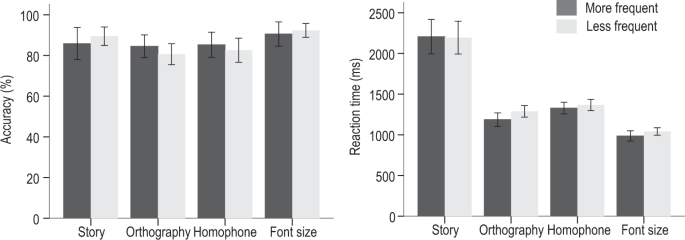
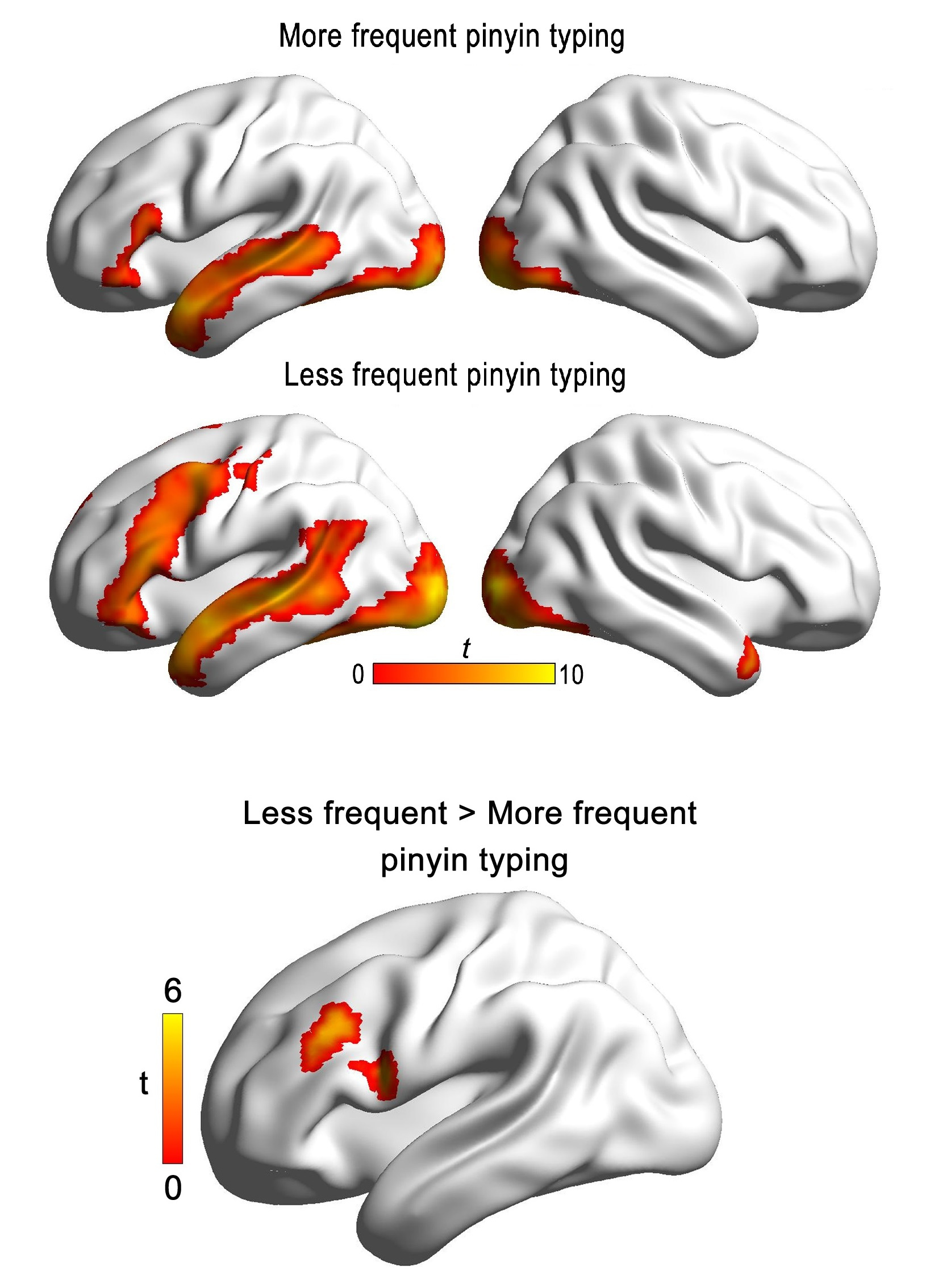
Our study has demonstrated that intermediate Chinese readers (age 9-11) with more time (spending > 15 minutes each day) on pinyin typing had lower scores in character and word reading tests than those with less time (spending < 15 minutes each day) on pinyin typing. More frequent usage of pinyin typing and digital devices was associated with overall weaker cortical activations, weaker functional connections, and less gray matter volume within the reading cortical network as compared with less frequent usage of pinyin typing.
What does this mean?
Our results suggest that the frequent usage of the pinyin input method affects Chinese children’s reading development. Chinese children are facing literacy challenges in the digital age. To preserve visuo-orthographic encoding of Chinese characters, we would recommend to restrict the use of pinyin input, and promote orthography-based input methods including handwriting.
What is the future for the field?
We believe that the usage of e-devices can enrich the learning environment but the strengths and weaknesses should be carefully examined to optimize its role in learning to read. In future, we hope to examine the effect of the handwriting-based input method on reading and its application to reading and writing intervention.
Follow the Topic
-
npj Science of Learning

An online open access peer-reviewed journal dedicated to research on all aspects of learning and memory – from the genetic, cellular and molecular basis, to understanding how children and adults learn through experience and formal educational practices.
Your space to connect: The Psychedelics Hub
A new Communities’ space to connect, collaborate, and explore research on Psychotherapy, Clinical Psychology, and Neuroscience!
Continue reading announcementRelated Collections
With Collections, you can get published faster and increase your visibility.
Effects of lifestyle behaviours on learning and neuroplasticity
Publishing Model: Open Access
Deadline: Mar 09, 2026
Reimagining Teaching and Learning in the Age of Generative AI Agents
Publishing Model: Open Access
Deadline: Jul 13, 2026
Please sign in or register for FREE
If you are a registered user on Research Communities by Springer Nature, please sign in