Current state of ethical challenges reported in Saudi Arabia: a systematic review & bibliometric analysis from 2010 to 2021
Published in Healthcare & Nursing and Philosophy & Religion


Bioethics comprises principles that focus on medical/ clinical ethics (issues in healthcare), research ethics (issues in conduction and implications of research), environmental ethics (issues that arise due to relationships between human activities and the environment), and public health ethics (issues in public health). Moral action guides and principles are important in providing guidance to the moral duties in any situation. Although not absolute, such guidelines need to be acceptable among different religions and cultures.
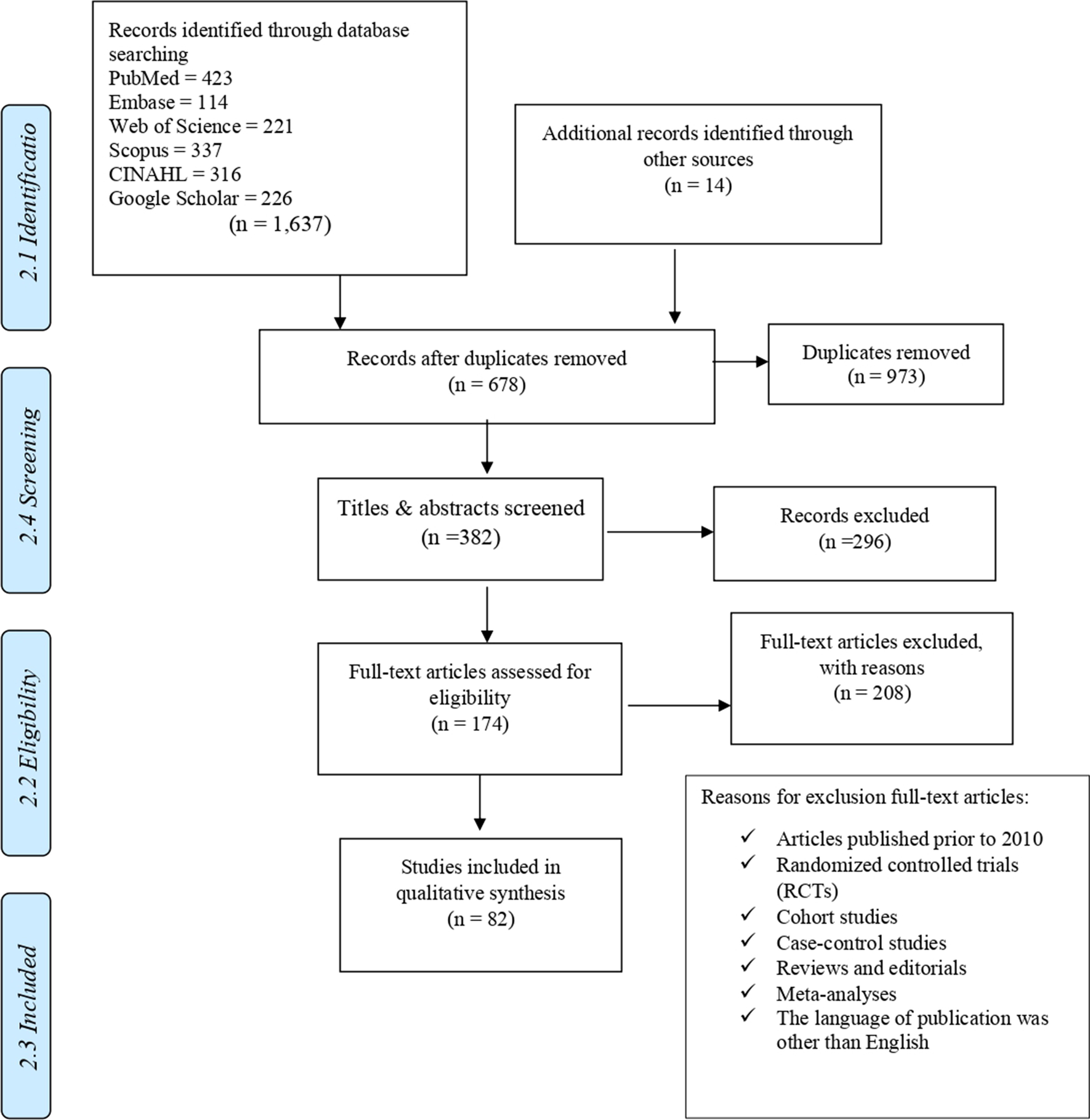
In Saudi Arabia, bioethical issues often challenge ethics, as they contradict moral traditions and sometimes perceive matters in an unconventional light, which must take the entire spectrum of ethical theories into account. For this reason, consideration of the moral and philosophical aspects of bioethics is of great importance. Therefore, this systematic review aimed to systematically identify, compile, describe and discuss ethical arguments and concepts in the best-studied domains of bioethics in Saudi Arabia and present cultural, social, educational, and humane perspectives. As a result, this systematic review became the first organized synthesis of the five most debated bioethical domains that have been studied in the Kingdom of Saudi Arabia. Eighty-two studies were identified across five main domains for a final review and assessment: 'Medical Ethics Curriculum in Saudi Arabia,' 'Doctor-Patient Relations,' 'Informed Consent,' 'Do-Not-Resuscitate,' 'Organ Donation & Transplantation.'
The most studied domain of five included domains was ‘Organ Donation and Transplantation,’ 33 articles, with the most papers being published in 2020. The overall knowledge about organ donation and transplantation varied based on the research objective (i.e., blood, skin, kidney donation). In general, the participants reported insufficient information about organ donation and transplantation. The main source of information about organ donation was TV, social media. Participants from rural areas were less likely to have information about organ donation than their counterparts in urban areas. Organ donation awareness was higher in educated individuals with higher socioeconomic status and married participants. The degree of awareness was found to impact the willingness to donate positively. Reasons for refusal to donate were the fear of premature termination of medical treatment to facilitate organ retrieval and transplantation, worries about receiving inadequate health care after donation, lack of family support, lack of incentives, not enough information about organ donation, fear of complications after organ donation, religion. In contrast to the stated barriers to organ donation, among those participants who expressed their will or were positive about organ donation and transplantation, gender, age of the recipient, religion and incentives did not appear to play a role. Moreover, organ donation was motivated by helping others and compassion, a good deed, the importance of donation, belief that organs are not beneficial after death, and an altruistic act.
The synthesis of ‘Medical Ethics Curriculum in Saudi Arabia’ domain showed that regardless of the region, target population, most participants in all included studies agreed on the importance of studying the principles of medical ethics as a discipline with its methods, literature, vocabulary, and content. Although some participants completed theoretical ethics classes while attending medical school, the theory does not address the practical ethical dilemma faced in daily practice after graduation. There was a lack of knowledge about organ donation regulations, withholding or stopping mechanical ventilation, conflict with family, and advice from the ethics committee, religious aspects, brain death, 'Do-Not-Resuscitate (DNR) policies, the existence of the Saudi PBR.
The thematic evaluation of 'Doctor-Patient Relations' domain showed that most participants, mainly healthcare representatives had little knowledge about doctor-patient relations. However, there was a strong consensus that every patient should be treated with honesty and dignity. Patients of a high socioeconomic class should not be treated with extra care, and confidentiality should be maintained in all circumstances. Lack of training, knowledge of cultural norms, patient participation in decision-making, gender differences between patients and doctors, and a lack of time were major barriers to effective communication skills with patients and their families. Patients recommended doctors and nurses to improve their interpersonal skills and take a more holistic, patient-centered approach. This can improve information delivery and resolve disagreements between patients/family members and healthcare providers about treatment decisions.
The third most studied domain of medical ethics research in Saudi Arabia was 'Informed Consent' with 12 publications. Health care providers supported informed consent. The majority agreed that consent should be given for each new procedure and should be perceived as an ongoing process, not a one-off decision, with parental consent being considered mandatory for children's treatment. However, there was low quality of informed consent in terms of experience with informed consent processes and transparency of risks. Although patients' opinions on the purpose of informed consent varied, the informed consent process and being aware of treatment was important for all. In terms of the trust, some patients trusted the doctor to make decisions on their behalf, while others required more independent decision-making and preferably more effective disclosure of information. In addition, there was an overall poor quality of informed consent process and administration, knowledge of the risks of intervention and alternative treatment, and insufficient information included in informed consent.
The synthesis of ‘Do-Not-Resuscitate’ domain showed that most healthcare representatives could define the order of DNR. Still, it required deeper knowledge to learn whether there is a clear local or national DNR policy. Those who knew about the policy did not read in detail. The most common limitation of essential discussions about DNR was a lack of patient understanding, educational level, cultural background of patients, and a lack of DNR policy knowledge by medical staff. Most health care representatives wanted to learn more about patients' rights regarding end-of-life care and the use of the DNR order, as this would support the treatment plan for terminally ill patients. Studies in which patients were included as a target population expressed a will to participate in discussions with doctors on planning end-of-life care and making their own decisions. Patients with higher levels of education, medical background, and knowledge of DNR were more likely to agree with DNR practice. Non-Saudi doctors making decisions about life-sustaining treatment or DNR orders consulted with ethics committees in their hospitals more often than Saudi doctors. Saudi doctors who received their education and postgraduate studies abroad were confident in their knowledge of ethics in medical practice but were less confident in making decisions about life-sustaining treatment or DNR orders.
This systematic quantitative synthesis is expected to guide researchers, funders, and policymakers about the strengths and gaps in knowledge and attitudes regarding medical ethics in Saudi Arabia, both among the general public and health professionals.

Follow the Topic
-
BMC Medical Ethics
This journal is an open access journal publishing original peer-reviewed research articles in relation to the ethical aspects of biomedical research and clinical practice, including professional choices and conduct, medical technologies, healthcare systems and health policies.

Related Collections
With Collections, you can get published faster and increase your visibility.
Digital determinants and ethical AI in global health
BMC Medical Ethics invites submissions to our new Collection, Digital determinants and ethical AI in global health. The integration of digital technologies and artificial intelligence (AI) into healthcare has transformed the landscape of global health, introducing new opportunities and challenges. As these technologies become more embedded in clinical practice and public health strategies, emphasizing the ethical implications surrounding their use is crucial.
Recent advancements have highlighted the necessity for algorithmic transparency and accountability, as well as the need for inclusive approaches to AI that prioritize health equity. With this, researchers are encouraged to contribute to a more equitable healthcare system that respects patient rights and fosters trust in digital health solutions. Embedding ethical considerations at the forefront of digital innovation, rather than treating them as secondary concerns, is critical to ensuring that emerging technologies do not reinforce existing health inequities.
This Collection examines the intersection of digital determinants and ethical AI, with particular attention to informed consent, algorithmic transparency, and the implications of emerging technologies for patient autonomy and healthcare equity. To ensure a genuinely interdisciplinary dialogue, we invite submissions from physicians, legal scholars, philosophers, engineers, computer scientists, data scientists, and other digital‑technology professionals. Key areas of interest include, but are not limited to:
- Informed consent in digital health
- Algorithmic transparency and accountability
- Equity and inclusion in AI healthcare solutions
- Bias in AI diagnostics and decision-making
- Ethical implications of data privacy in digital health
- The interaction between digital determinants and other determinants of health
- Digital literacy in global health projects
- The impact of large language models (LLMs) on global health and their role as digital determinants of health
- Emerging debates about AI in One Digital Health
- Ethical discussions on the sustainability of AI and the environmental effects of health digitalization at a global scale
- Comparative analyses of data governance models, AI, and other digital technologies in relation to their impacts on global health
This Collection supports and amplifies research related to SDG 3: Good Health and Well-Being.
All manuscripts submitted to this journal, including those submitted to collections and special issues, are assessed in line with our editorial policies and the journal’s peer-review process. Reviewers and editors are required to declare competing interests and can be excluded from the peer review process if a competing interest exists.
Publishing Model: Open Access
Deadline: Jan 13, 2027
Ethical challenges in outbreak response
BMC Medical Ethics is calling for submissions to our Collection, Ethical challenges in outbreak response. The emergence of infectious disease outbreaks presents numerous ethical challenges that require careful consideration by public health officials, healthcare providers, and policymakers. As outbreaks escalate, the need for rapid decision-making often clashes with the principles and values that underpin clinical and public health ethics. This Collection aims to explore these dilemmas, focusing on the intersection of ethics and crisis management during outbreak response. We welcome work that critically reassesses governance failures during the COVID-19 pandemic, other outbreaks, and/or anticipates "Disease X" scenarios. The collection seeks to provide a platform for discussing normative tensions distinctive to outbreak contexts, such as urgency, uncertainty, collective risks, and coercive powers.
Addressing ethical challenges in outbreak response is crucial for ensuring that future public health interventions are fit for purpose. In addition to substantive principles, there is now increased attention to the procedural justice that should guide public health decisions in crises, emphasizing the need for transparent, inclusive, and participatory approaches. As societies grapple with the complexities of managing outbreaks, examining these ethical dimensions will be vital for fostering public confidence and ensuring the effectiveness of interventions in future outbreaks.
This Collection welcomes critical reflection on the strengths and limits of existing ethical frameworks for outbreak response, including their capacity to address contextual complexity, power asymmetries, and global inequities.
Topics of interest include but are not limited to:
- Ethical dilemmas in resource allocation
- Tensions between individual rights and coercion for collective ends
- Consent and authorization in conditions of urgency, uncertainty, and constrained liberty
- Public trust in health systems
- Crisis management ethics
- Reciprocity and occupational risk (healthcare workers, essential workers)
- Global justice and structural inequalities
- Bioethical frameworks for outbreak response
- Ethics in pandemic preparedness
We welcome normative, empirical, and interdisciplinary contributions that critically examine how ethical commitments are negotiated, operationalized, or compromised in outbreak response.
Researchers are invited to submit their work to this Collection, showcasing insights into the ethical challenges faced during outbreak response and exploring innovative solutions to ensure ethical practices in public health.
This Collection supports and amplifies research related to SDG 3 (Good Health and Well Being) and SDG 10 (Reduced inequalities).
All manuscripts submitted to this journal, including those submitted to collections and special issues, are assessed in line with our editorial policies and the journal’s peer-review process. Reviewers and editors are required to declare competing interests and can be excluded from the peer review process if a competing interest exists.
Publishing Model: Open Access
Deadline: Dec 11, 2026