Developing a Marine Bioassay for Emerging Contaminants Using Haliotis midae
Published in Earth & Environment, Ecology & Evolution, and Sustainability



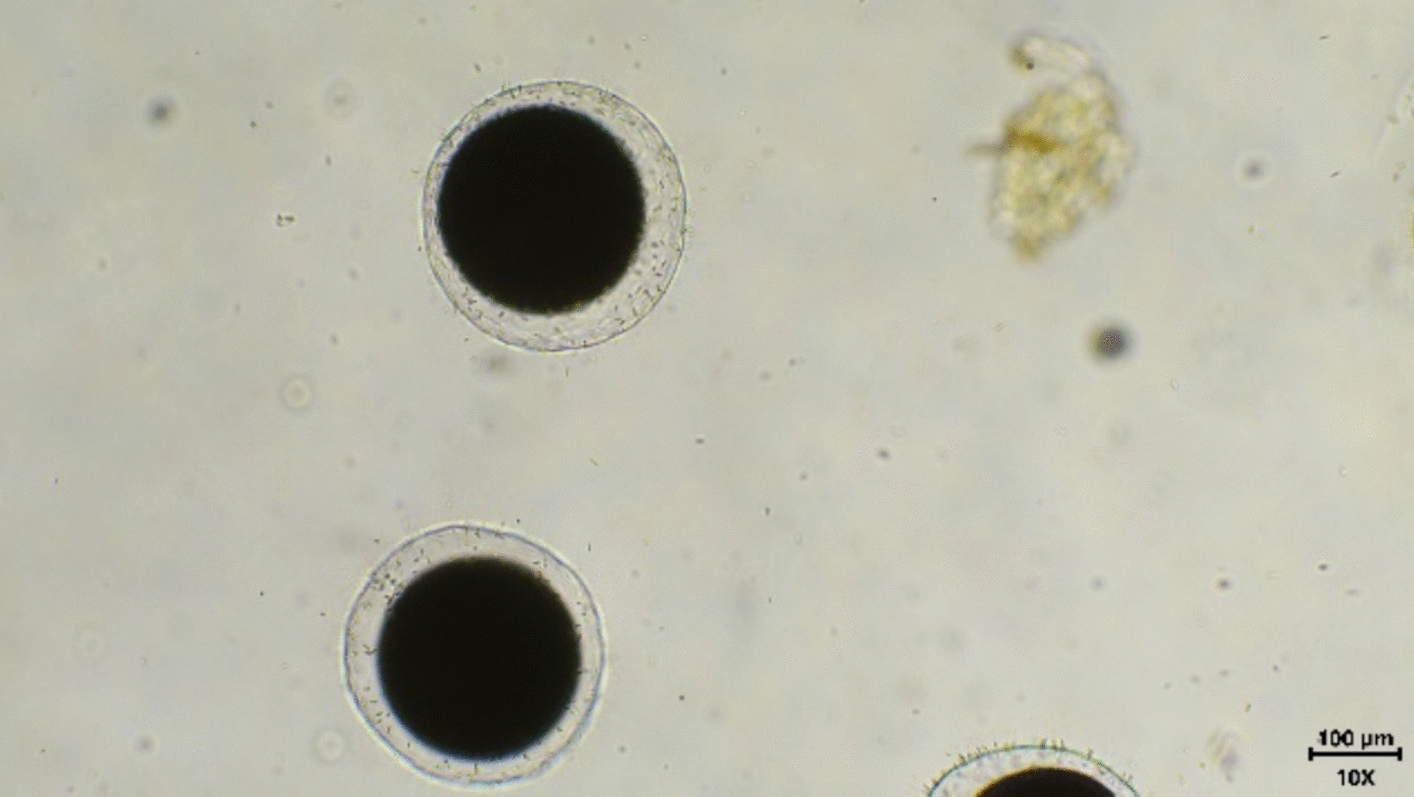

The health of our oceans is under increasing threat—not just from visible pollutants like plastics, but from chemical compounds that are much harder to trace. These emerging contaminants (ECs)—including pharmaceuticals, personal care products, and industrial chemicals—are now being detected in coastal waters globally, including along South Africa’s shores. Yet, we know very little about their ecological impacts on local marine life.
In our recently accepted paper in Discover Environment, we present a breakthrough in developing a standardised marine bioassay using Haliotis midae, a native South African abalone species of both ecological and economic significance. This work represents the first local adaptation of the USEPA Whole Effluent Toxicity (WET) embryo–larval development test for a South African marine organism.
Why Haliotis midae?
South Africa’s National Toxicity Monitoring Programme (NTMP) currently has no marine ecotoxicology tools—yet our oceans support critical industries such as mariculture, tourism, and fisheries. H. midae offered a promising candidate due to its accessibility from local aquaculture farms and its ecological relevance. What was missing was a standardised method that could demonstrate its utility in pollution testing.
The Challenges We Faced
Working with marine organisms at early life stages is not easy. Ensuring reliable gamete quality, maintaining controlled seawater conditions, and adapting international protocols for a local species all presented challenges. Additionally, the five ECs we tested—Acetaminophen, Atrazine, Benzotriazole, Carbamazepine, and Emtricitabine—were chosen based on both local occurrence data and their potential for harm, yet toxicity thresholds in abalone were previously unknown.
What We Found
Our findings were eye-opening: even the lowest tested concentrations (25 µg/L) caused significant developmental delays and abnormalities in H. midae embryos and larvae. This highlights the species’ sensitivity to chemical pollution and validates its potential use in routine monitoring. The assay also passed all USEPA acceptance criteria, confirming its reproducibility and robustness.

![]() Broader Impact
Broader Impact
This work goes beyond a single species or location. It directly contributes to Sustainable Development Goals:
-
SDG 6 – Clean Water and Sanitation
-
SDG 14 – Life Below Water
-
SDG 15 – Life on Land
By establishing a cost-effective and scalable marine toxicity testing tool, we provide a pathway for evidence-based decision-making in environmental policy and coastal water management.
The Story Behind the Scenes
This project was a true team effort, combining methodological adaptation, local ecological knowledge, and toxicological testing. Somien Venter led the assay development and testing, while I (Hendrik Brink) and Evans Chirwa provided project supervision, conceptual guidance, and Andrew Witte provided industry context. The work was supported by a team of collaborators committed to sustainable ocean stewardship.
We hope this research provides a foundation for integrating marine bioassays into national monitoring frameworks, not just in South Africa, but in other regions facing similar challenges.

Follow the Topic
-
Discover Environment
This is a transdisciplinary, open-access journal that provides a leading platform for the rapid dissemination of knowledge and advances covering the research and innovation that is taking place across the environmental sector.

Related Collections
With Collections, you can get published faster and increase your visibility.
Monitoring environmental pollution and impact on health
The intensification of human activities and the expansion and densification of urban areas cause various damages to the environment, necessitating continuous monitoring to assess the impact and extent of potential risks to both the environment and human health, in order to ensure urban sustainability.
This collection, “Monitoring Environmental Pollution and Impact on Health,” invites contributions that utilize tools related to health impact assessment, human health risk, ecological risk, data modeling, geospatial data, and Geographic Information Systems (GIS) to analyze impacts within urban environments. We also encourage the publication of research on the dynamics of pollution and health in rural and peri-urban areas, interdisciplinary studies between environmental sciences and public health, epidemiology, and urban planning for a holistic assessment of the multifaceted impacts of pollution on human well-being. In addition, studies that contribute actionable policy recommendations for local governments, environmental agencies, or public health institutions dealing with urban pollution are welcome. Research (time series or longitudinal studies) that demonstrate public health trends related to chronic exposure to pollutants, aiming for a better understanding of long-term urban sustainability issues, are also encouraged. Studies addressing health risks for vulnerable populations (such as children, the elderly, or low-income communities) exposed to environmental pollution in densely populated areas are of particular interest. We welcome studies on participatory monitoring and the development of citizen science, empowering communities to act in collaboration with local environmental health surveillance managers. Research involving satellite pollution monitoring and remote sensing is also encouraged. Comparative studies on pollution and health across different regions, identifying critical hotspots and globally replicable mitigation strategies, are of interest. We also welcome research that investigates environmental justice and urban socio-demographic inequalities/disparities in health due to environmental pollution. Review studies and meta-analyses exploring trends, methodologies, and gaps in urban environmental health research are also welcome.
Keywords: Health impact assessment, Environmental quality monitoring (air, water, and soil), Pollution sources and emissions, Spatial analysis, Geospatial technology, Climate change, Urban sustainability, Machine learning, Ecological risk assessment, Human health risk assessment
This Collection supports and amplifies research aligned with the following Sustainable Development Goals (SDGs): SDG 11.
Publishing Model: Open Access
Deadline: Feb 28, 2027
Water Environment: Addressing Global Water Challenges
Water is an indispensable natural resource, yet it faces escalating threats from pollution, climate change, and human activity. The Water Environment: Addressing Global Water Challenges section of Discover Environment Journal is dedicated to publishing innovative research on the dynamics of water systems—tracing their journey from source to fate while examining the interplay between natural processes and anthropogenic influences. This section delves into critical domains, including chemical hydrology, watershed and basin science, glacier environments, and land-use impacts. We welcome contributions that address pressing issues such as water pollution, the transport and transformation of contaminants, hydrological modeling, and sustainable water management strategies. We place particular emphasis on the consequences of land-use changes on hydrological cycles, the stability of glacier-fed water systems, and effective approaches to safeguarding freshwater and marine ecosystems.
Key topics include:
Chemical Hydrology: Analysis of water composition, pollutant behavior, and geochemical interactions shaping water quality.
Basin and Catchment Science: Investigations into watershed hydrology, sediment transport, and hydrogeomorphological processes.
Glacier Environments: Research on cryospheric hydrology, glacier-fed rivers, and the influence of climate change on water availability.
Land-Use Systems: Examining the effects of agriculture, urbanization, deforestation, and industry on water resources.
Water Pollution & Remediation: Addressing emerging contaminants (e.g., microplastics, pharmaceuticals, PFAS), nature-based solutions, and policy frameworks for water protection.
Sustainable Water Management: Innovations in water conservation, resilience-building strategies, and alignment with Sustainable Development Goals (SDGs), particularly SDG 6 (Clean Water and Sanitation).
Methodological advancement in water research
Furthermore, to enhance the scope and impact of the section, we strongly encourage submissions that:
• Include case studies from underrepresented regions, particularly Sub-Saharan Africa and small island states, to showcase diverse hydrological challenges and locally relevant water management solutions.
• Promote the integration of traditional ecological knowledge and community-based water governance practices to enhance the cultural relevance and sustainability of proposed water stewardship strategies.
• Explore transboundary water issues, including shared aquifers and river basins, to highlight the importance of cooperation and policy in sustainable resource management.
• Emphasize the value of coupling remote sensing and GIS technologies with in-situ hydrological data for improved water quality monitoring and modeling accuracy across scales.
• Focus on emerging contaminants such as microplastics, pharmaceuticals, and PFAS in both freshwater and marine environments, reflecting current global research priorities.
• Give greater attention to groundwater-surface water interactions and their implications for long-term water availability, especially under changing climate and land-use patterns.
• Highlight the role of climate change scenarios and projections in shaping adaptive water management frameworks, particularly in glacier-fed and drought-prone regions.
• Feature interdisciplinary collaborations between hydrologists, ecologists, social scientists, and engineers to propose holistic and inclusive water resource solutions.
• Promote alignment of all submissions with SDG targets, especially SDG 6 (Clean Water and Sanitation) and SDG 13 (Climate Action), to strengthen policy relevance.
• Include policy briefs or synthesis articles that translate technical findings into actionable guidance for water managers and decision-makers.
By fostering interdisciplinary collaboration and highlighting diverse perspectives, the Water Environment: Addressing Global Water Challenges section serves as a vital platform for advancing knowledge on global water challenges and informing policy for sustainable water stewardship.
This Collection supports and amplifies research related to: SDG 6 & SDG 13
Keywords: Water Systems, Water Pollution, Climate Change, Land-Use Impacts, Sustainable Water Management, Emerging Contaminants, Hydrological Modeling, Interdisciplinary Collaboration, SDG 6 (Clean Water and Sanitation), Chemical Hydrology, Watershed Science, and Glacier Environments.
Publishing Model: Open Access
Deadline: Dec 30, 2026