Discovery of Easy Activity Promotion of Photoelectrochemical Reactors: Time & Energy Saving via Coupled Faradaic/Electrostatic Boosting Strategy!
Published in Chemistry and Earth & Environment

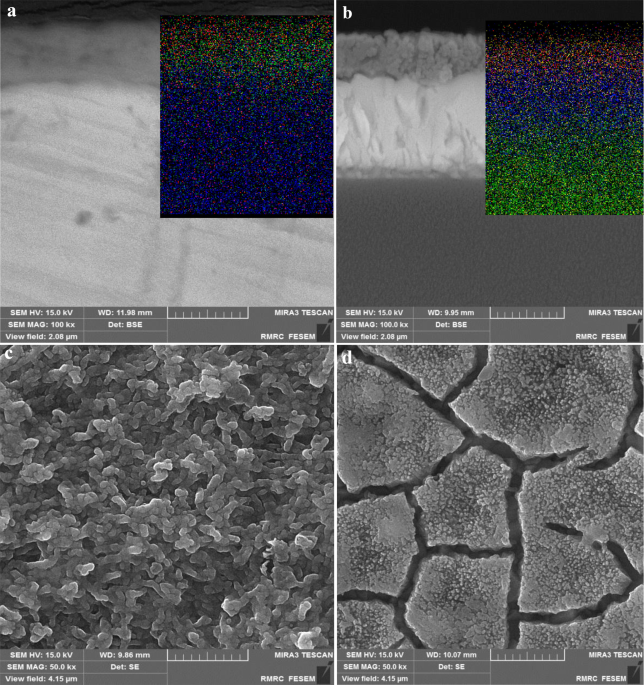

Because of emerging widespread applications in various fields, including water quality, energy & fuel production and environmental remediation issues, it is crucial to introduce a facile cost-effective route to enhance the activity of these PEC reactors, reduce their operational time and save their energy/power consumption.
Through the facile Coupled Faradic/Electrostatic Strategy and employing an electrostatic bias to the photoelectrode (Fig. 1), the activity of PEC reactors can be substantially boosted, and their operational time and electrical consumption can be decreased by almost half!
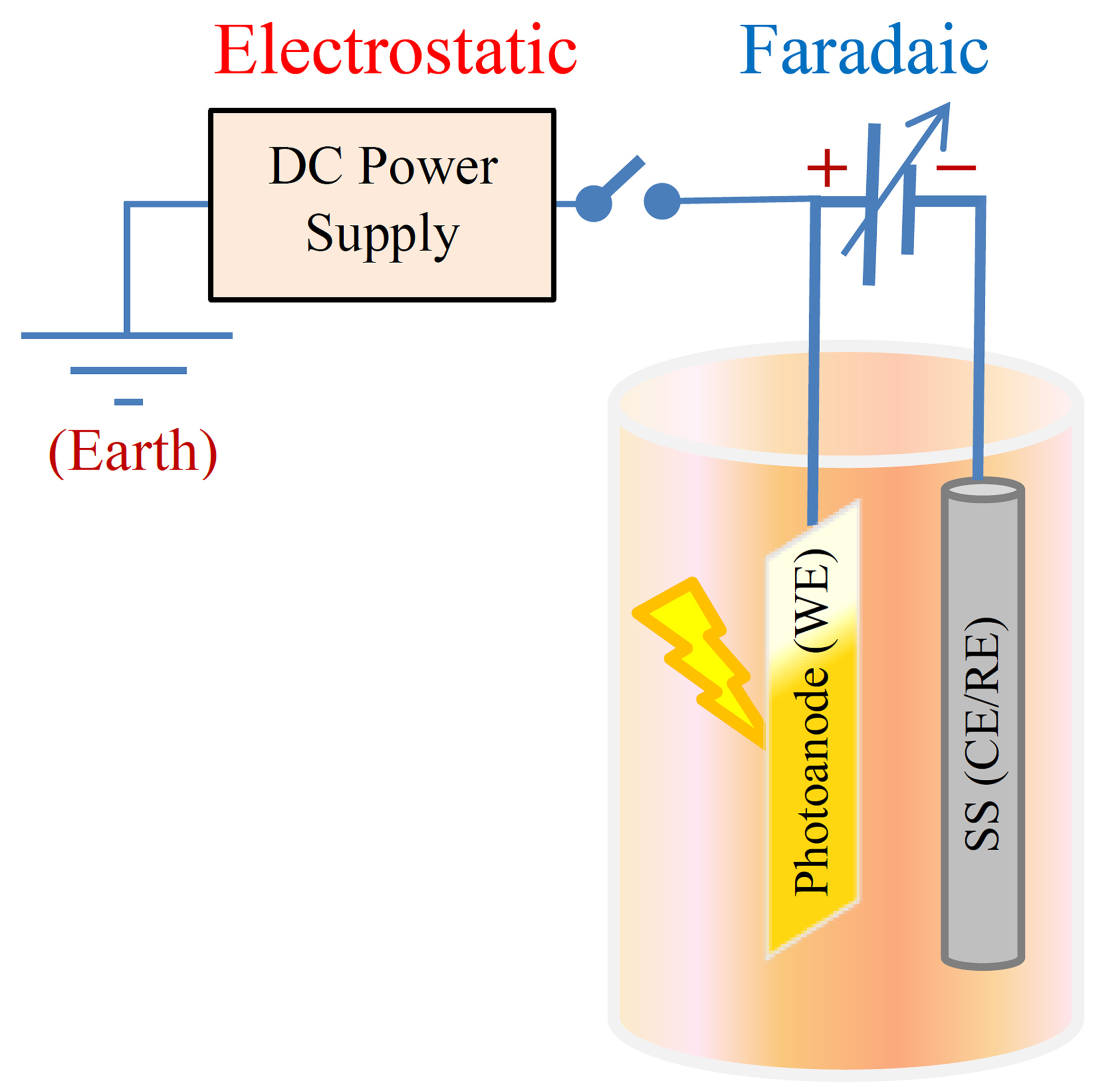
Figure 1. Schematic representation of the dually-biased photoelectrochemical (PEC) reactor with the manner of applying non-faradaic (electrostatic) and faradaic potential biases to the photo-reactor [Source: Journal of Power Sources 602 (2024) 234329; https://authors.elsevier.com/a/1im4f1M7w0emdr].
Although the strategy mentioned above has been originally suggested to boost the activity of a given PEC reactor for dye degradation, it is predicted it can be easily extended to other PEC systems including water splitting, solar-to-fuel conversion, artificial photoelectrochemical synthesis, etc.
Other related source: npj Clean Water (2023) 6:10 https://doi.org/10.1038/s41545-023-00230-4

Mohsen Lashgari is a Full Professor of Physical Electrochemistry & Materials Science at IASBS. His research interests and expertise are as follows:
- Semiconductor-based Solar Energy Materials [Thin-film & Bulk] and Photoelectrochemical Devices/Reactors.
- Green Technologies, Pollutant Transformation/Valorization, and Artificial Photosynthesis of Fuels/Chemicals.
- Finding Sustainable Strategies and Fundamental Solutions for Energy/Water/Fuel and Environmentally related Problems.
- Advanced Oxidation/Reduction [Atomistic Hydrogenation], Heterogenous Catalysis & Electrostatic Boosting Strategy.
- Electrolysis, H2, CO2, NH3, etc.
- Hazmat, Corrosion and Environmental Remedy.
- Solar-based Fuels/Phenomena.
- Quantum [Coupled Cluster/Polarized Continuum] Models in Corrosion Science & Metals Protection.
- Applied Physical Chemistry.
- Global Warming & Climate Change: Fundamental Insights and Practical Solutions!
Follow the Topic
-
npj Clean Water
This journal publishes high-quality papers which report cutting-edge science, technology, application, policy and societal issues that contribute towards a more sustainable supply of clean water.

Related Collections
With Collections, you can get published faster and increase your visibility.
Advanced Sensing and Data-Driven Approaches for Water Quality Monitoring
Publishing Model: Open Access
Deadline: Oct 31, 2026
Resource Recovery and Carbon Mitigation in Wastewater Treatment: Advancing the Water–Energy–Carbon Nexus
Publishing Model: Open Access
Deadline: Oct 31, 2026