Embrace Changes, Always

This is the first time our work is selected as the Featured Research in Journal of Translational Medicine. We are deeply honored. And here, I, the corresponding author, would like to share one of my untold stories behind this research.

Published in Biomedical Research

Embrace Changes, Always
Like

Share this post

Choose a social network to share with, or copy the URL to share elsewhere

This is a representation of how your post may appear on social media. The actual post will vary between social networks

Explore the Research

BioMed Central
BioMed Central BioMed Central

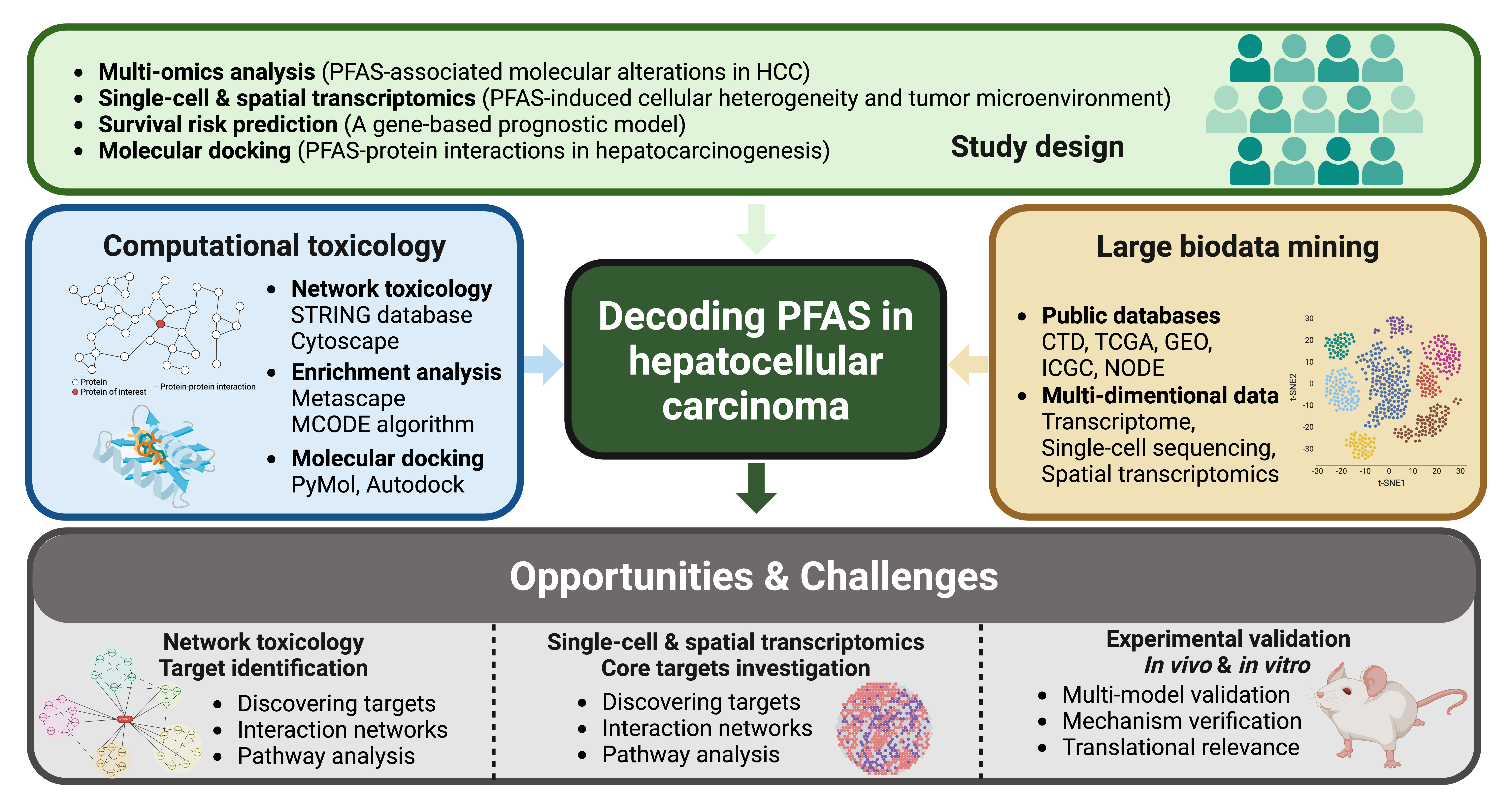
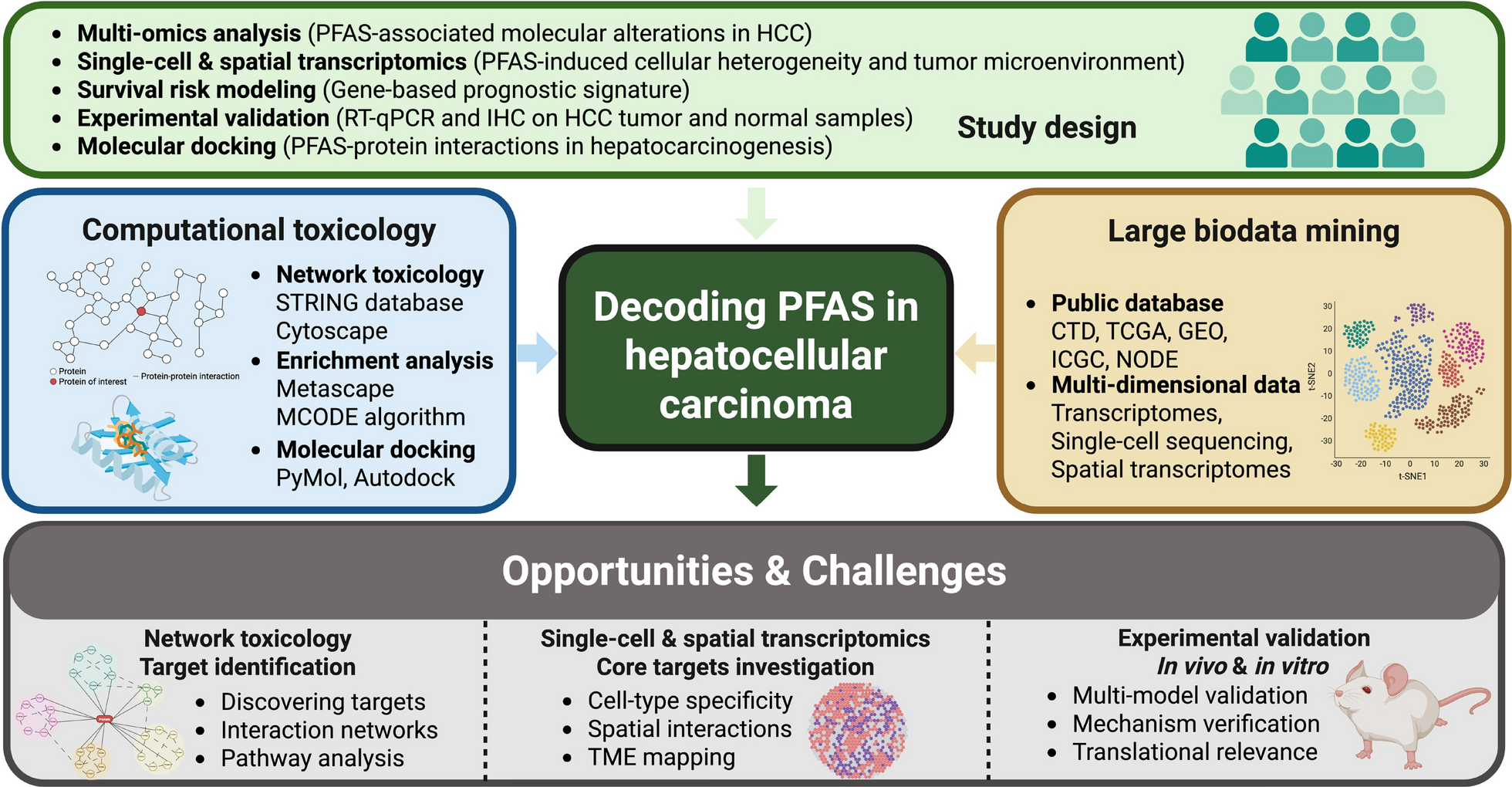
Decoding per- and polyfluoroalkyl substances (PFAS) in hepatocellular carcinoma: a multi-omics and computational toxicology approach - Journal of Translational Medicine

Background Per- and polyfluoroalkyl substances (PFAS), particularly perfluorooctanoic acid (PFOA) and perfluorooctane sulfonate (PFOS), are synthetic chemicals known for their widespread use and environmental persistence. These compounds have been increasingly linked to hepatotoxicity and the development of hepatocellular carcinoma (HCC). However, the molecular mechanisms by which PFAS contribute to HCC remain underexplored. Methods This study employs a multi-omics approach that combines network toxicology, integrated machine learning, single-cell RNA sequencing, spatial transcriptomics, experimental validation, and molecular docking simulations to uncover the mechanisms through which PFAS exposure drives HCC. We analyzed publicly available transcriptomic data from several HCC cohorts and used differential gene expression analysis to identify targets associated with both PFAS exposure and HCC. We constructed a protein–protein interaction (PPI) network and a survival risk model, the PFAS-related HCC signature (PFASRHSig), based on integrated machine learning to identify prognostic biomarkers, with the goal of identifying core targets of PFAS in HCC progression and prognosis. RT-qPCR and immunohistochemical (IHC) staining were used to validate the expression levels of the targets in both tumor and normal tissues. Molecular docking simulations were conducted to assess the binding affinities between PFAS compounds and selected target proteins. Results Functional enrichment studies revealed that PFAS targets were associated with metabolic signaling pathways, which are actively involved in lipid, glucose, drug metabolism, etc. Through integrated machine learning and PPI network analysis, we identified six genes, APOA1, ESR1, IGF1, PPARGC1A, SERPINE1, and PON1, that serve as core targets of PFAS in both HCC progression and prognosis. These targets were further validated via bulk RNA-seq, single-cell RNA-seq, and spatial transcriptomics, which revealed differential expression patterns across various cell types in the HCC tumor microenvironment. The results of RT-qPCR and IHC staining were consistent with the in silico findings. Molecular docking simulations revealed strong binding affinities between PFAS compounds and these core targets, supporting their potential roles in PFAS-induced hepatocarcinogenesis. Conclusions Our study highlights key molecular targets and pathways involved in PFAS-induced liver carcinogenesis and proposes a robust survival risk model (PFASRHSig) for HCC. These findings provide new insights into PFAS toxicity mechanisms and offer potential therapeutic targets for mitigating the health risks associated with PFAS exposure. Collectively, our findings help in advancing clinical applications by providing insights into disease mechanisms and potential therapeutic interventions.

I joined a research team in my freshman year in Wenzhou Medical University that  focused on bioinformatic analysis regarding breast cancer. The PI had big ambitions, as she spoke often of publishing groundbreaking papers and making a name in medical science. What she lacked, however, was the ability to turn any of those dreams into reality.

For two long years, she pushed us to satisfy her endless curiosity. Our own academic interests? Irrelevant. Our training needs? Ignored. She had us running analyses and generating data, all to support her ever-shifting, half-baked hypotheses.

Despite claiming herself as a mentor in computational biology, she could barely give any constructive suggestions and guidance. I had to spend my own money on R programming courses because the guidance I needed simply didn’t exist in her team. As for experimental design, she once had us perform T cell–related studies on nude mice (Balb/c), an act that defied scientific logic.

Still, I hesitated to leave. I feared that switching labs would “break the continuity” of my research training, as if there was anything coherent about the past two years.

Then the final straw came: one day during the summer holiday, after weeks of late nights spent in the lab, she said something cruel in a meeting, dismissive, cutting, and entirely uncalled for. That was it. I said goodbye.

After I left, I found a new mentor, who has real vision, solid expertise, and the real ability to lead a big team. I also met brilliant collaborators from across the country (e.g., Shanghai Jiao tong University Renji Hospital, BIOPIC, ...), who are thoughtful, capable, and passionate regarding their insights. For the first time, I felt part of a real scientific community, not just a cog in someone else's vanity project.

Then came the milestone that I finally got my first paper accepted. It was published in Journal of Translational Medicine. That achievement would have been unimaginable had I remained trapped in that dysfunctional lab. Stepping away didn’t just spare me further frustration, instead, it led me to a new environment filled with clarity, rigor, and collaboration.

That first publication was just the beginning. Encouraged and inspired by those around me, I went on to publish my second study, which, to my surprise, was selected as a Featured Research article. Yes, again in Journal of Translational Medicine

Now, as the first or corresponding author, I’ve published seven papers with a cumulative impact factor exceeding 50.  And more importantly, I love what I am doing now, deeply.

None of these would have happened if I hadn’t found the courage to leave the wrong place.

Embrace changes.

Always.
Please sign in or register for FREE

If you are a registered user on Research Communities by Springer Nature, please sign in

Follow the Topic

Biomedical Research
Life Sciences > Health Sciences > Biomedical Research

Related Collections

With Collections, you can get published faster and increase your visibility.

Harnessing Innovative Machine Learning Techniques to Combat Drug Resistance in Solid Tumors

In recent years, the challenge of drug resistance in solid tumors has emerged as a significant barrier to effective cancer treatment, often leading to treatment failure and poor patient outcomes. As traditional therapeutic approaches struggle to overcome this hurdle, there is a growing interest in leveraging innovative machine learning techniques to enhance our understanding of drug resistance mechanisms and improve therapeutic strategies. This article collection aims to gather cutting-edge research that explores the intersection of machine learning and oncology, focusing on how advanced algorithms can be applied to predict drug resistance, optimize treatment plans, and ultimately foster personalized medicine approaches in cancer care. By fostering interdisciplinary collaboration and sharing novel insights, this collection seeks to pave the way for transformative advancements in the fight against cancer.

This article collection explores integrating advanced machine learning methodologies—including ensemble learning, deep learning, reinforcement learning, explainable AI, and quantum computing—in understanding and overcoming drug resistance in solid tumors. We invite contributions highlighting novel algorithms, examples of innovative machine learning technique implementation, and interdisciplinary approaches, ultimately leading to improved therapeutic outcomes and enhanced patient care in oncology.

opics of Interest

The collection welcomes original research, reviews, commentary and methodology articles on the following topics:

• Ensemble Learning Techniques;

• Applications in predicting drug resistance profiles;

• Comparative studies of ensemble methods versus traditional approaches;

• Deep Learning in Oncology;

• Neural network architectures for tumor characterization;

• Image analysis and interpretation for drug response prediction;

• Reinforcement Learning;

• Adaptive treatment strategies using reinforcement learning;

• Simulation models for drug resistance evolution;

• Explainable AI;

• Methods for interpreting machine learning models in clinical settings;

• The role of explainability in improving treatment outcomes;

• Quantum Computing Applications;

• Quantum algorithms for optimizing drug discovery processes;

• Examples of quantum-enhanced machine learning techniques in oncology.

All submissions in this collection undergo the journal’s standard peer review process. Similarly, all manuscripts authored by a Guest Editor(s) will be handled by the Editor-in-Chief. As an open access publication, this journal levies an article processing fee (details here). We recognize that many key stakeholders may not have access to such resources and are committed to supporting participation in this issue wherever resources are a barrier. For more information about what support may be available, please visit OA funding and support, or email OAfundingpolicy@springernature.com or the Editor-in-Chief.

This collection supports and amplifies research related to SDG 3: Good Health and Well-Being.

Publishing Model: Open Access

Deadline: Nov 30, 2026

Magnetic Resonance Spectroscopy: Advances Towards Clinical Practice

We invite manuscript submissions falling in one or more of these following topics.

1. Clinical Applications and Biomarker Discovery:

• Neurology: MRS in neurodegenerative disorders (e.g., Alzheimer's, Parkinson's), epilepsy, stroke, and neuroinflammation, with an emphasis on validating metabolic ratios and concentrations as diagnostic or prognostic biomarkers.

• Oncology: MRS for brain and body tumor characterization, grading, differentiation of tumor recurrence from treatment effects (e.g., radiation necrosis), and monitoring treatment response.

• Metabolic Diseases: Diagnosing and managing inborn errors of metabolism, and other systemic metabolic conditions.

2.Technical Innovations Overcoming Methodological Hurdles:

• Enhanced Acquisition & Resolution: Studies leveraging advances in high-field (3T) and ultra-high-field (≥7T) systems.

• Motion Correction and Quantification: Novel motion correction techniques and strategies to address quantification errors, including voxel placement variability, partial volume effects, and signal contamination from adjacent tissues.

• Standardization and Reproducibility: Work focused on the standardization of acquisition protocols, reproducibility of peaks, advances in understanding overlapping peaks and reporting to ensure multi-site and cross-platform reproducibility.

3. Emerging Frontiers and Translational Pathways:

• Hyperpolarized 13C-MRS: Pioneering applications of hyperpolarized carbon-13 MRS for real-time, dynamic imaging of metabolic pathways in diseases.

• Multi-Modal Integration: Explorations of hybrid PET/MRS systems, combining metabolic information from MRS with the sensitivity of PET tracers for a comprehensive pathophysiological assessment.

4. Artificial Intelligence:

• AI-Powered Data Analysis: Implementation of artificial intelligence (AI) and machine learning for spectral deconvolution, automated quantification of overlapping peaks, and improvement of signal interpretation and reproducibility.

All submissions in this collection undergo the journal’s standard peer review process. Similarly, all manuscripts authored by a Guest Editor(s) are handled by the Editor-in-Chief. As an open access publication, this journal levies an article processing fee (details here). We recognize that many key stakeholders may not have access to such resources and are committed to supporting participation in this issue wherever resources are a barrier. For more information about what support may be available, please visit OA funding and support, or email OAfundingpolicy@springernature.com or the Editor-in-Chief.

Publishing Model: Open Access

Deadline: Oct 15, 2026