


Motivation and background
Slow earthquakes were first identified in the early 2000s and quickly attracted attention because they offer a rare opportunity to study fault slip without the devastation caused by large earthquakes. Although they occur along the same megathrusts that host magnitude-8-class earthquakes, slow earthquakes recur much more frequently, on timescales ranging from months to years, making them particularly valuable for investigating the factors that control fault slip.
In the Kumano-nada region, located in the central Nankai Trough subduction zone of Japan, a number of structural surveys have revealed detailed features of the subsurface, including the geometry of the megathrust fault. In addition, a seafloor cabled observatory network (DONET) has been operating over the past decade, enabling long-term monitoring of slow earthquake activity in the region. Despite these advances, directly comparing the slip areas of slow earthquakes with geological structures has remained challenging because of the large uncertainties associated with slow earthquake locations.
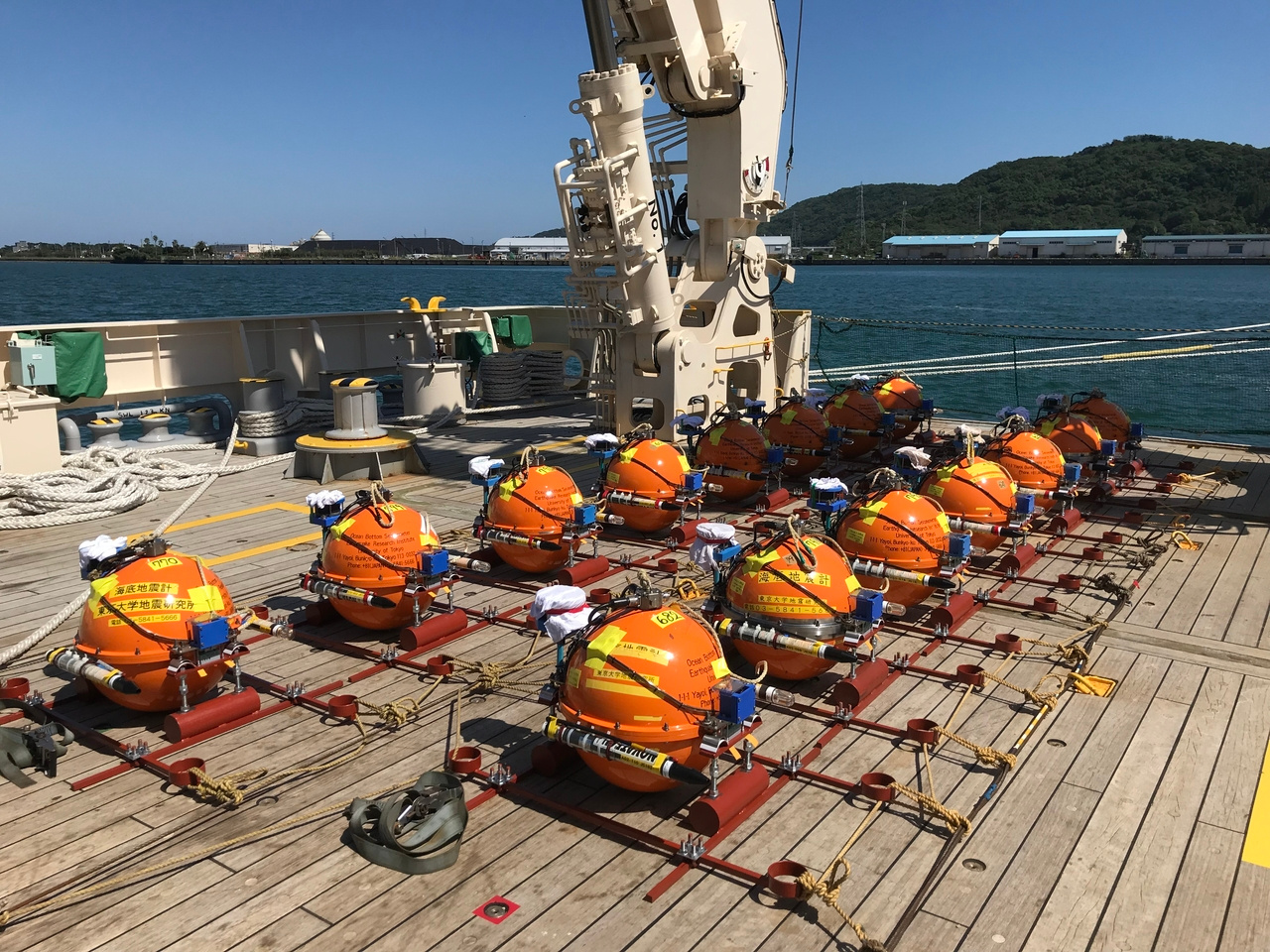
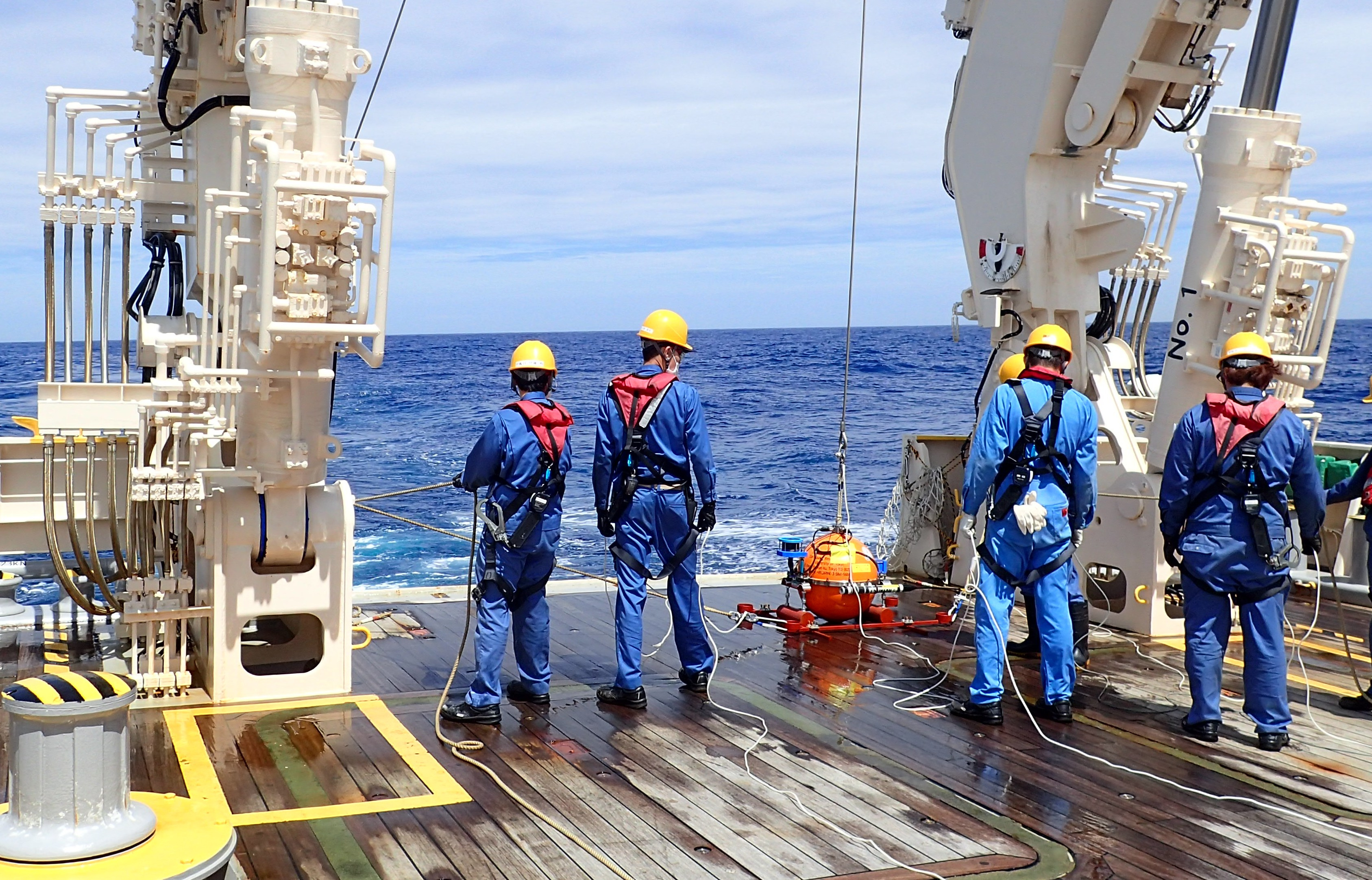
To tackle this issue, we deployed a dense array of ocean-bottom seismometers (OBSs) in 2019 to improve station coverage over the source region of slow earthquakes. This was a challenging project, given the limited battery life of OBSs—typically one to two years—compared with the recurrence interval of slow earthquakes in this region, which is on the order of five to six years. Fortunately, the deployed OBSs successfully captured a sequence of slow earthquake activity in December 2020.
Improving slow earthquake locations also requires robust analysis methods that can properly account for the uncertainties inherent in observational data. For this reason, we had developed a probabilistic approach prior to this study, designed to explicitly incorporate data errors into the estimation of slow earthquake locations. This methodological groundwork proved essential for making meaningful comparisons between slow earthquake slip and subsurface geological structures.
As a result, we achieved much higher spatial resolution in imaging the source region than in previous studies. With this improved resolution, the mapped tremor epicenters showed a striking correspondence with a bathymetric feature. Because bathymetry in this region is known to approximate the underlying geological structure, this spatial correlation gave us strong confidence that geological structural factors play a key role in controlling the slip behaviour of slow earthquakes.
What we saw when the data came together
Building on this first indication from bathymetry, we turned to multichannel seismic (MCS) images to examine the subsurface structures beneath the slow earthquake source region. Although MCS data provide only two-dimensional snapshots along survey lines, they offer a level of structural detail that is difficult to obtain by other means.
Comparison with the MCS data revealed that the updip and downdip limits of tremor activity coincide with changes in megathrust geometry, such as bending or branching of the décollement, as well as with variations in the material properties of the overlying prism. Another notable feature emerged from the analysis of lateral tremor migration: diffusive migration patterns were locally impeded at specific locations that correspond to strike-slip faults identified in the bathymetry. In addition, tremor distributions exhibit clear spatial relationships with stress-shadow regions surrounding the subducted seamount and with low-velocity zones above the megathrust, both of which point to the important role of elevated pore-fluid pressure.
This study focuses on slip behavior during slow earthquake episodes; however, the insights gained here may also be relevant to slip processes during megathrust earthquakes. Future studies incorporating the structural factors identified in this work into numerical simulations may help improve the reliability of seismic hazard assessments.

Follow the Topic
-
Nature Communications

An open access, multidisciplinary journal dedicated to publishing high-quality research in all areas of the biological, health, physical, chemical and Earth sciences.
Related Collections
With Collections, you can get published faster and increase your visibility.
Women's Health
Publishing Model: Hybrid
Deadline: Ongoing
Advances in neurodegenerative diseases
Publishing Model: Hybrid
Deadline: Mar 24, 2026
Please sign in or register for FREE
If you are a registered user on Research Communities by Springer Nature, please sign in