Extraordinarily long duration of Eocene geomagnetic polarity reversals
Published in Earth & Environment

The Phenomenon of Geomagnetic Reversal
The Earth’s magnetic field is generated by dynamo action, an electromagnetic induction process driven by the convective motion of liquid iron and nickel within the planet’s core. The Earth’s magnetic field may have been well established as early as 4.2 billion years ago. Throughout Earth’s history, however, the field has been in constant flux: the shape of the field is largely that of a dipole with a north and south magnetic pole, but the polarity of the field reverses. These geomagnetic reversals are thought to have begun as early as 3.5 billion years ago and they remain a subject of critical importance for understanding the behaviour of the geodynamo and Earth’s interior dynamics.
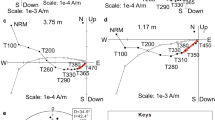
During a reversal, the magnetic field weakens significantly, and both the intensity and orientation of the field changes abruptly. To better understand this process, precise analyses of geological records that capture past magnetic variations are indispensable. Volcanic rocks, for example, can record the direction and intensity of the magnetic field with high accuracy; however, their discontinuous records make it challenging to trace the entire reversal sequence. In contrast, marine sediments offer a near-continuous record of magnetic changes, making them particularly valuable for detailed investigations of reversal processes.
Previous studies based on sedimentary and volcanic records mainly from the last ~17 million years suggest that geomagnetic reversals occur over roughly ten thousand years. But this may be an oversimplification: there are approximately 540 reversals over the past 170 million years of Earth’s history, and fewer than one per cent have been examined in detail. Meanwhile, theoretical models—numerical simulations of the geodynamo run on computers—indicate that reversal durations can vary widely and may even occur over much longer timescales. Until now, however, no high-resolution geological evidence has been reported to substantiate the occurrence of the long-lasting reversals suggested by these models.
Deep-Sea Sediments Capturing Geomagnetic Reversals from 40 Million Years Ago

In 2012, the Integrated Ocean Drilling Program (IODP) Expedition 342 was conducted with the primary objectives of studying multiple extreme climate events at high-latitude sites during an interval when Earth was far warmer than today—when Greenland was truly green and atmospheric carbon dioxide concentrations were comparable to those projected for the end of this century. Records of these ancient environmental changes are preserved in remarkable detail within deep-sea strata, located tens to hundreds, and even thousands, of metres beneath the ocean floor. International collaborative research under the IODP framework enables drilling into these layers and systematically collecting samples.
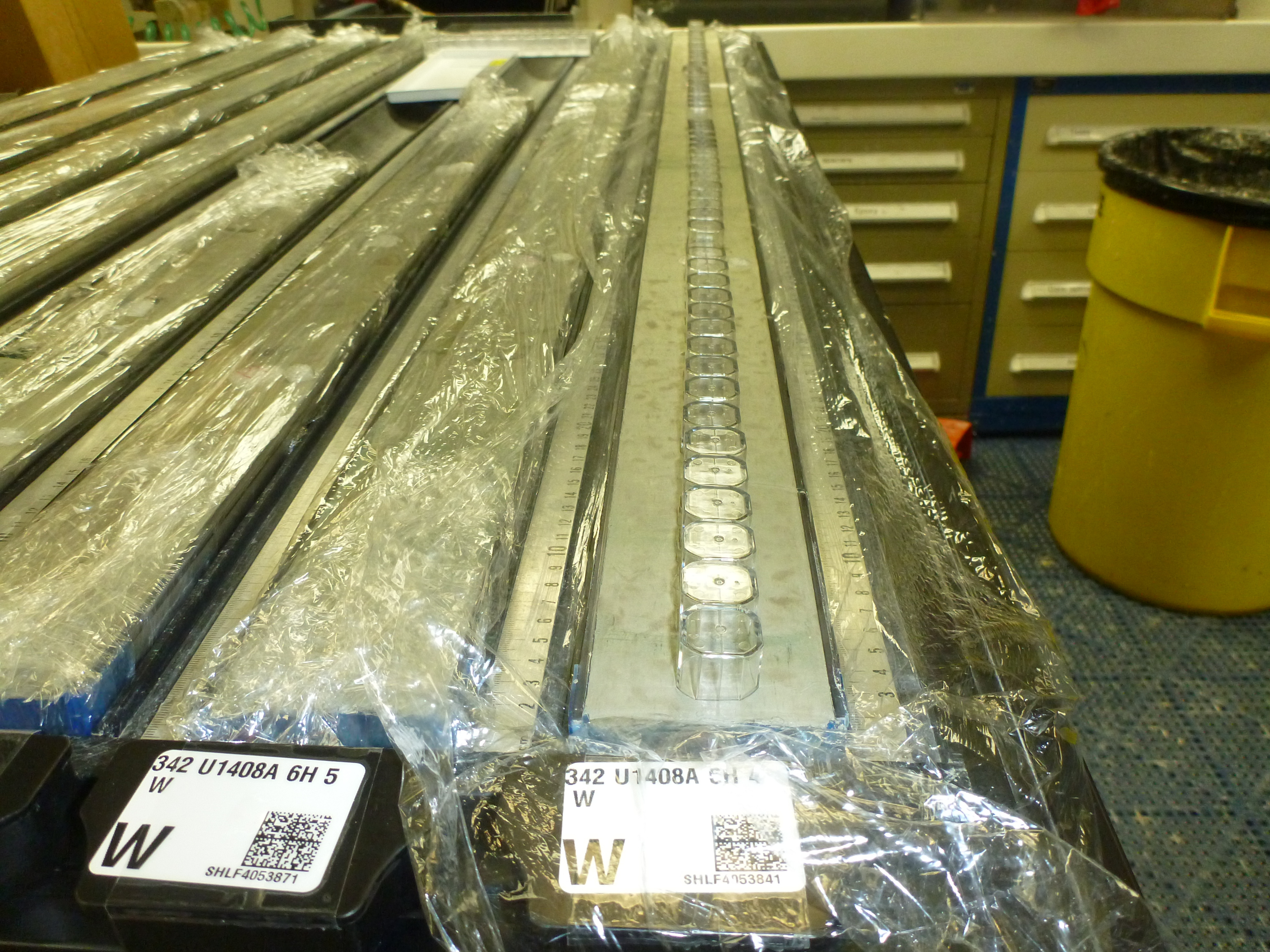
As shipboard scientists on Expedition 342, we witnessed the recovery of deep-sea sediments from Site U1408, located offshore the Newfoundland, near the north-western Atlantic Ridge. Constructing a robust depth–age model for these sediments was essential to achieving the expedition’s primary objectives. While we developed a preliminary analyses and an initial model at sea, we unexpectedly discovered an 8-metre-thick interval contained with an exceptionally detailed record of a geomagnetic reversal dating back approximately 40 million years. Recognising its significance, we obtained special permission—normally granted only after the expedition—to collect high spatial and temporal resolution samples at 2-centimetre intervals during the expedition, ensuring readiness for post-cruise analyses.
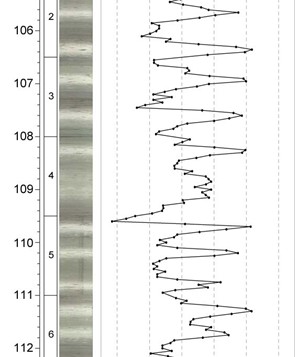
Following the expedition, refining the depth–age model required comprehensive analysis of the entire sedimentary sequence from Site U1408, extending to depths of around 260 metres below the seafloor. This process was time-consuming, and detailed study of the 8-metre interval was deferred. Ultimately, we confirmed that the primary carriers of magnetisation were biogenic magnetite, reliably recording the geomagnetic field of the time. Furthermore, we clearly identified two distinct reversal intervals in the section of interest. The core also exhibited pronounced changes in the chemistry and composition of the sediment, enabling the construction of a high-precision age model by incorporating sedimentary related climatic rhythms linked to Earth’s orbital behavior. More specifically, we used the obliquity signal and its modulating low-frequency astronomical cycle of approximately 173,000 years to develop an exceptionally precise clock. Astronomical time calibration of these sedimentary rhythms provides durations of the recognised reversals of 18,000 and 70,000 years—far exceeding the widely accepted duration of 10,000 years concluded by previous research studies. This finding unveiled an extraordinarily prolonged reversal process, challenging conventional understanding and leaving us genuinely astonished.
Geodynamo Simulations Supporting the Possibility of Prolonged Reversals
Recent numerical simulations have highlighted that the duration of geomagnetic reversals exhibits a broad distribution, with extended cases occurring naturally. Using our own numerical geodynamo model, we analysed 160 reversal events to examine their potential behaviour, including their duration. Due to the substantial computational resources required, both the execution of these simulations and the subsequent analysis demanded considerable time.
Our findings revealed that reversal durations could extend up to 130,000 years. Remarkably, the two reversals identified in Eocene deep-sea sediments—lasting around 18,000 and 70,000 years—fall well within this theoretical range, confirming that such prolonged processes are entirely plausible.
Moreover, both the sedimentary records and our model exhibited complex magnetic behaviour during reversals, including precursor directional changes and multiple “failed reversals,” features that have been observed in other well-resolved magnetic reversal records. These observations strengthened our conviction that the results should be widely disseminated, as they provide compelling evidence for the intricate and extended nature of geomagnetic reversal processes.
Looking Ahead: The Broader Implications of Our Research
The variability in reversal duration revealed by this study reflects the intrinsic dynamical properties of the Earth’s geodynamo, and it provides empirical evidence that geomagnetic reversals can last significantly longer than the widely assumed 10,000-year duration. The analysed Eocene sediments in this research originate from a palaeolatitude of approximately 22°N; however, because reversal duration is latitude-dependent, it is plausible that mid- to high-latitude regions at the Eocene time may experience even longer reversal states.
Protracted periods of weakened intensity of magnetic field lasting tens of thousands of years would have allowed high-energy particles from the Sun and beyond to penetrate more effectively to Earth’s surface, potentially influencing the Eocene environment, biological activity, and global biogeochemical cycles. Thus, understanding the link between geomagnetic field behaviour and environmental changes remains a critical scientific challenge for future research.
To advance knowledge that supports the coexistence of humanity and Earth, it is essential to look deeper into the planet’s past—well before anthropogenic influences—and unravel the variability of Earth systems, including geomagnetism. Records of these ancient environmental changes can be exceptionally preserved in deep-sea rock and sediment records, tens to hundreds of metres beneath the ocean floor. Drilling into these layers and systematically collecting samples through international collaboration is indispensable. With the ongoing progress of the International Ocean Discovery Programme (IODP3), led by Japan and European nations, we anticipate significant breakthroughs in addressing these fundamental questions.

Follow the Topic
-
Communications Earth & Environment
An open access journal from Nature Portfolio that publishes high-quality research, reviews and commentary in the Earth, environmental and planetary sciences.

Related Collections
With Collections, you can get published faster and increase your visibility.
Ecological resistance and resilience under global change
Publishing Model: Open Access
Deadline: Apr 07, 2027
Hazards in Mountain Regions
Publishing Model: Open Access
Deadline: Nov 02, 2026