From inspiration to innovation: How a Patient’s Voice inspired our development of implementing phage therapy for Hidradenitis Suppurativa patients
Published in Microbiology and General & Internal Medicine
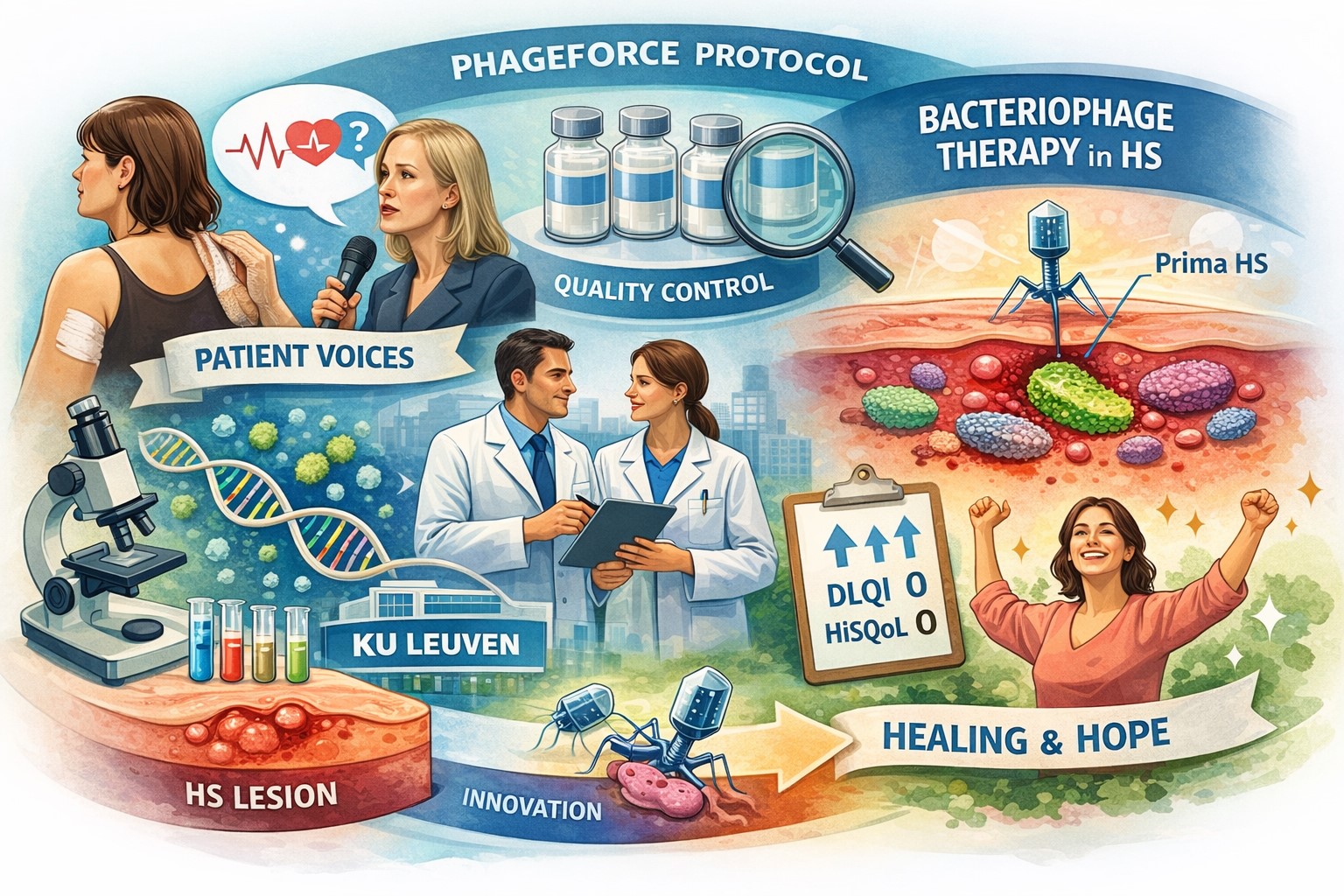





For many, Hidradenitis Suppurativa (HS) means pain, repeated surgeries, and the constant uncertainty of inflammation flare-ups. Listening to these stories, especially those shared by Susanne de Goeij, revealed the urgency for new solutions to treat bacteria that worsen their situations. Her openness and patient advocacy served as an inspiration to tackle this underestimated disease.
HS is a chronic, immune-mediated inflammatory disease that manifests with painful nodules, abscesses, and fistulas. Despite biologics, surgery, and antibiotics, many patients face a therapeutic gap. In our earlier work, published in Clinical and Experimental Dermatology in 2023, we explored the polymicrobial nature of HS lesions and proposed phage therapy as a potential adjunct for treatment of resistant cases. That idea was bold at the time, but it became the foundation for what followed.
In our latest Nature Communications paper, highlighted as editor's pick, we document the implementation and first clinical application of bacteriophage therapy in HS. This was made possible through the PHAGEFORCE protocol, a Belgian framework designed to bring phage therapy safely into clinical practice. Under this protocol, phages are produced as pharmaceutical-grade preparations, undergo rigorous quality checks by Sciensano, and are prescribed under strict ethical oversight. It’s a system that allows innovation without compromising patient safety.
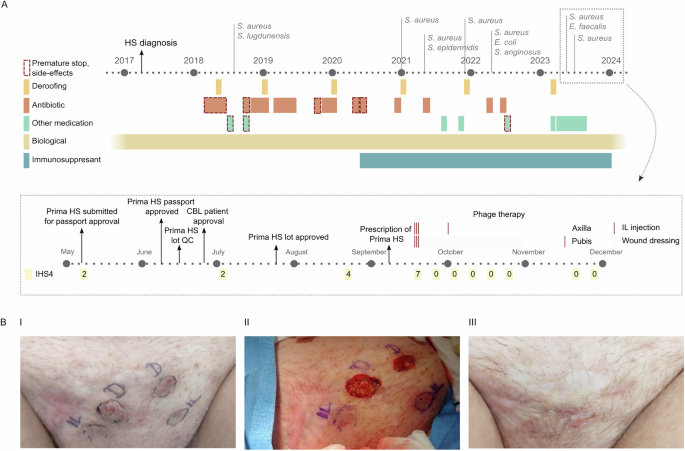
Within this framework, our molecular microbiology research enabled the treatment of a patient whose HS lesions were repeatedly colonized by Staphylococcus aureus. The outcome was striking: complete removal of lesions, a flare-free period of six months, and a dramatic improvement in quality-of-life scores, while no adverse effects were observed. For someone who had endured years of pain and failed treatments, this was more than a clinical result—it was a moment of relief and hope.
The tricky part of this research is that it requires a broad and multidisciplinary team. This milestone was possible thanks to the creativity and persistence of Lene Bens, the clinical vision of An Van Laethem, and the commitment of our multidisciplinary team at UZ Leuven (Prof. W-J. Metsemakers) and Queen Astrid military hospital (Dr. J-P. Pirnay). And most importantly, it was inspired by patient advocates like Susanne, whose voice reminds us that behind every protocol and publication is a person waiting for answers.
However, this case was just the beginning. Several additional patients are currently undergoing treatment, but larger, long-term studies are essential to deepen microbiome insights, through continued interactions between researchers, clinicians, patients and patient advocacy groups like The Hidradenitis Patient Society (HPV) in the Netherlands.

Follow the Topic
-
Nature Communications
An open access, multidisciplinary journal dedicated to publishing high-quality research in all areas of the biological, health, physical, chemical and Earth sciences.

Related Collections
With Collections, you can get published faster and increase your visibility.
Women's Health
Publishing Model: Hybrid
Deadline: Ongoing
Tumor Microenvironment Crosstalk and Therapeutic Implications
Publishing Model: Hybrid
Deadline: Nov 02, 2026