Genome organization around inter-chromosomal transcription hubs
Published in Biomedical Research




Genome architecture and transcription have been shown to be closely linked, but genome folding has mostly been studied in organisms with complex regulatory mechanisms built around DNA-DNA interactions. In contrast, in organisms like African trypanosomes, where transcription initiation is unregulated, a key question emerges: how is the genome organized in such systems?
A few years ago, our group has discovered that a selective inter-chromosomal interaction is essential for regulating the post-transcriptional processing of the major antigen gene in trypanosomes (Faria et al. 2021). This finding highlighted that the three-dimensional organization of the trypanosome genome is intrinsically linked to the regulation of gene expression, similar to what has been observed in higher eukaryotes. However, this finding also raised the question of whether this specific interaction is unique, or whether other genes with unregulated transcription are also involved in specific interactions.
To address these questions, I implemented Micro-C in trypanosomes to capture genomic interactions at high resolution. The resulting heat map revealed two distinct types of contact domains: a ubiquitous presence of discrete dots, and distinct, larger-scale compartments.
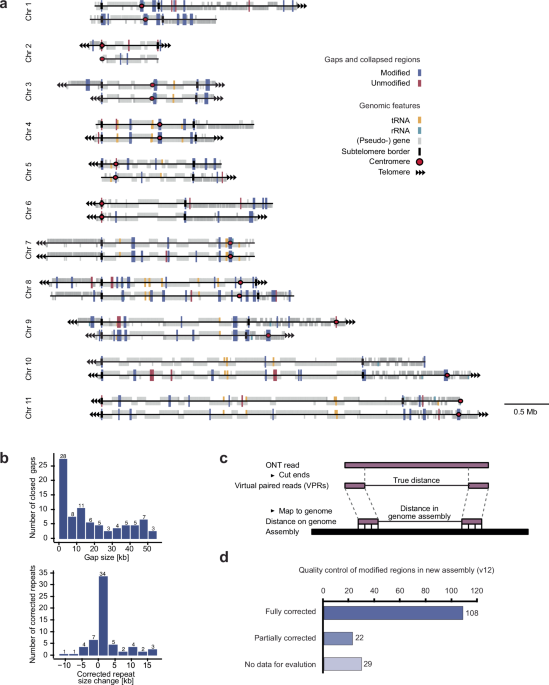
Initially, I focused on the visually compelling dots because the compartment boundaries were difficult to analyze: they overlapped with regions of varying heterozygosity and I doubted whether they were real or an artifact of my analysis. I also noticed that many contact domains were flanked by gaps in the reference genome sequence, further complicating the analysis. However, the question of whether compartments exist in the trypanosome genome persisted and was frequently raised in talks and by reviewers.
To best address this point, we collaborated with Robin Allshire and Keith Matthews (University of Edinburgh) to generate a more contiguous reference genome. Additionally, drawing on insights from Anton Goloborodko (Vienna BioCenter), we developed a normalization strategy to account for heterozygosity variations across genomic regions (Schmidt et al. 2024). These advances have allowed us to thoroughly characterize the trypanosome genome architecture and identify compartment domains at multiple scales.
One type of compartment overlapped with the abundant dots on the heat map, representing interactions between transcription start sites. When I first presented these findings to experts in three-dimensional genome architecture at the EMBO Nuclear Structure and Dynamics conference (Montpellier, 2022), I was understandably excited. However, the excitement was met with caution. The pattern of dots was very pervasive, and before drawing any conclusions, I was advised to carefully review the data processing. This led to extensive quality control, and thanks to an incredible team effort and many hours of data analysis, we were able to prove that the dot interactions were not only real, but even more widespread than expected. The dots were, in fact, real hubs of interactions between transcription start sites on the same and across multiple chromosomes. Similarly, we found prominent inter-chromosomal contacts between polymerase-class specific elements and between centromeres.
In conclusion, our study revealed the intricate three-dimensional architecture of the trypanosome genome. This architecture is characterized by a complex network of inter-chromosomal interactions that connect functionally similar elements and shape nuclear organization. If you want to read more about such complex network, you can read it in full here: https://www.nature.com/articles/s41467-024-55285-9
References
Faria, J., Luzak, V., Müller, L.S.M. et al. Spatial integration of transcription and splicing in a dedicated compartment sustains monogenic antigen expression in African trypanosomes. Nat Microbiol 6, 289–300 (2021).
Schmidt, M. R., Barcons-Simon, A., Rabuffo, C. & Siegel, T. N. Smoother: on-the-fly processing of interactome data using prefix sums. Nucleic Acids Res. 52, e23–e23 (2024).

Follow the Topic
-
Nature Communications
An open access, multidisciplinary journal dedicated to publishing high-quality research in all areas of the biological, health, physical, chemical and Earth sciences.

Related Collections
With Collections, you can get published faster and increase your visibility.
Women's Health
Publishing Model: Hybrid
Deadline: Ongoing
Tumor Microenvironment Crosstalk and Therapeutic Implications
Publishing Model: Hybrid
Deadline: Nov 02, 2026