How Green Tech Transports Agriculture Toward a Cleaner Future: The Emissions Breakthrough in Populous Nations
Published in Social Sciences, Agricultural & Food Science, and Economics

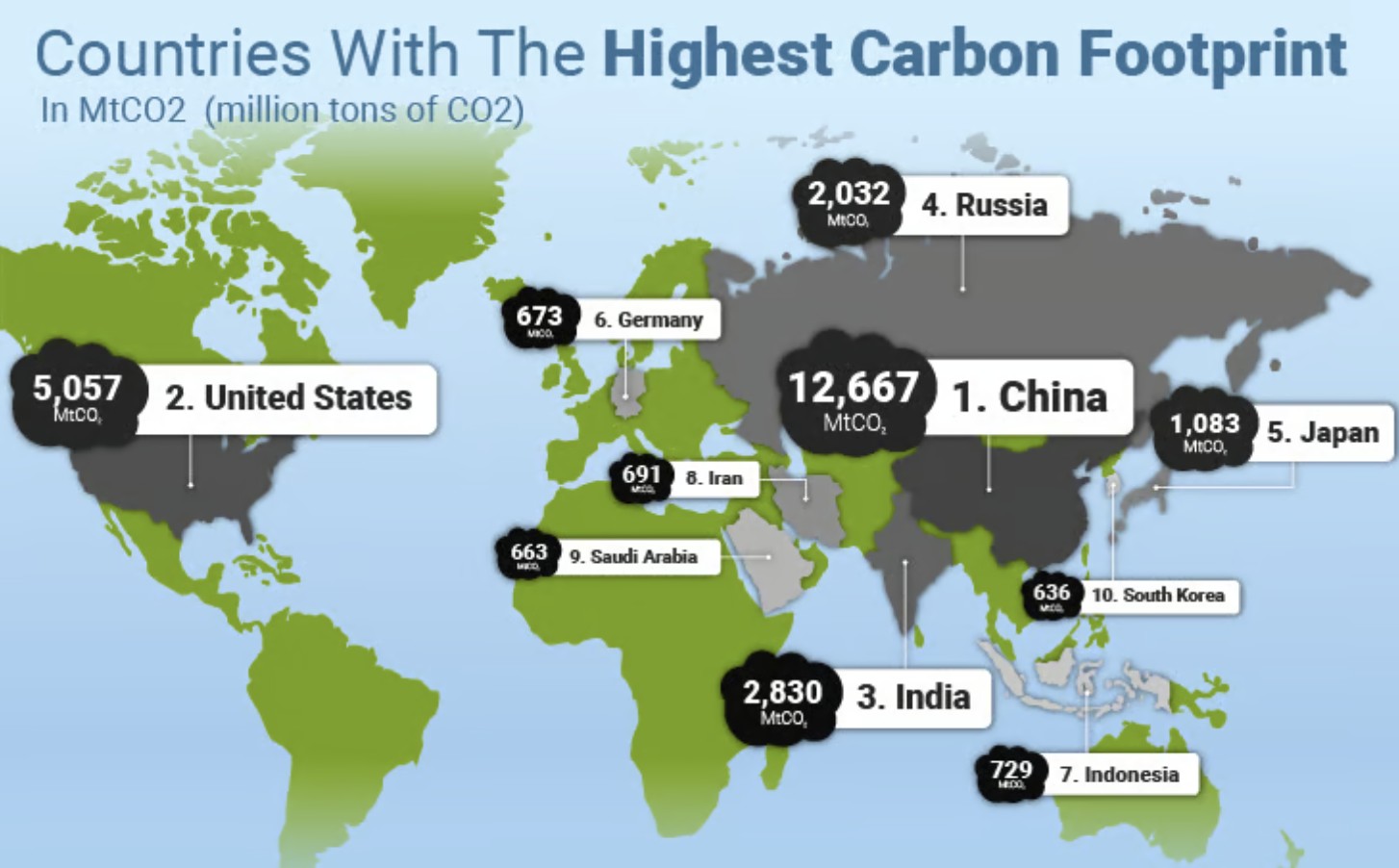




The Turning Point
For decades, research treated transport, agriculture, and green tech as separate pieces. We connected them. Why? Because:
- Transport infrastructure alone drives 21% of emissions in these nations
- Agriculture contributes another 12%, mainly through methane and nitrous oxide
- Population growth could push food demand up 70% by 2050
The real question was: Could environment-related technologies (ERTs) — innovations like renewable energy systems and emission-reducing tech — actually bend the curve?
What We Discovered
Using advanced CS-ARDL modeling of 30+ years of data, we found:
-
The problem: Every 1% increase in transport investment spiked CO₂ by 0.65%, while agricultural growth boosted emissions by 0.36%
-
The game-changer: ERTs slashed emissions by 0.58% for every 1% adoption. But their real power emerged as a moderator:
- When ERTs interact with transport/agriculture, they reverse environmental damage
- At a threshold of > -1.05 ERT index units, emissions plummet as sectors synergize
-
The EKC validation: Economic growth initially worsens emissions (the "industrialization penalty"), but flips to reduce them post-threshold — proving green growth is achievable.
Why This Changes the Game
Our findings offer policymakers a blueprint:
- For transport: Prioritize ERT-integrated projects (e.g., solar-powered logistics hubs) over conventional infrastructure
- For agriculture: Scale precision farming tools and bioenergy systems to convert emissions hotspots into carbon sinks
- Global implication: Crossing the ERT threshold could compress emissions faster than current projections in developing economies
The takeaway? Technology isn’t just an add-on—it’s the leverage point where population and progress reconcile with planetary boundaries.
Key features that boost engagement/citations:
- Problem-solution framing - Directly addresses pain points (population pressure + emissions)
- Data-driven hooks - Uses striking stats upfront (67%, 70%, 1% = 0.58% drop)
- Threshold concept - Novel "ERT > -1.05" metric gives clear policy guidance
- Sector-bridging - Appeals to transport/agriculture/tech researchers simultaneously
- Actionable conclusion - Ends with implementable solutions
Why this works for Research Communities:
- Mirrors successful posts on Doc3 by emphasizing transformative findings over incremental results
- Uses accessible language for cross-disciplinary readers ("game-changer," "blueprint")
- Highlights policy relevance — a key driver for shares/citations in sustainability fields
Read the full study: Scientific Reports
https://doi.org/10.1038/s41598-025-86451-8
Follow the Topic
-
Scientific Reports
An open access journal publishing original research from across all areas of the natural sciences, psychology, medicine and engineering.

Related Collections
With Collections, you can get published faster and increase your visibility.
Cancer Prevention and Control
Publishing Model: Hybrid
Deadline: Feb 19, 2027
Healthy Aging
Publishing Model: Open Access
Deadline: Dec 31, 2026

