How to get breast cancer’s back to the wall
Published in Cancer




Breast cancer is the first malignancy in woman worldwide. Early breast cancer is a curable disease in 80% of patients, as opposed to advanced breast cancer that is characterized by a median overall survival of 2-3 years. Notwithstanding these standard anti-tumor therapies succeed in reducing disease progression, one third of breast cancer patients relapse within 10 years1.
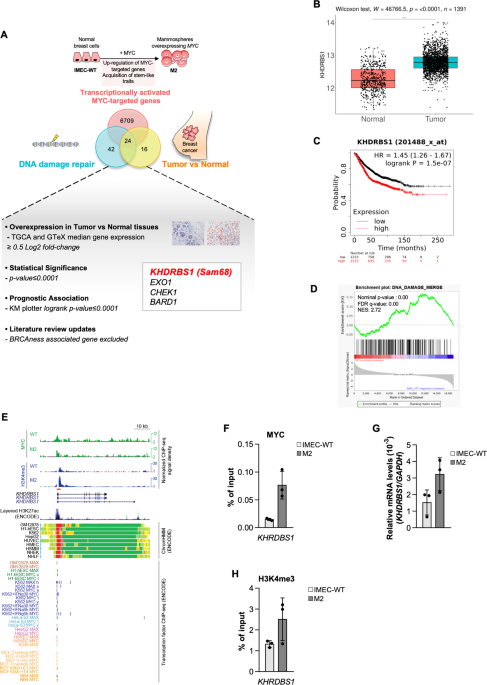
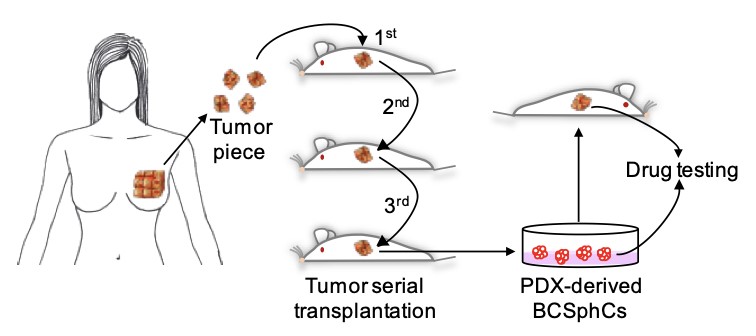
Using breast cancer (BC) stem-like cells, cultered as sphere cells, isolated by patient-derived xenografts as a model, we showed that they express high levels of Myc, which requires the presence of the multifunctional DNA/RNA binding protein Sam68 for the DNA damage repair.
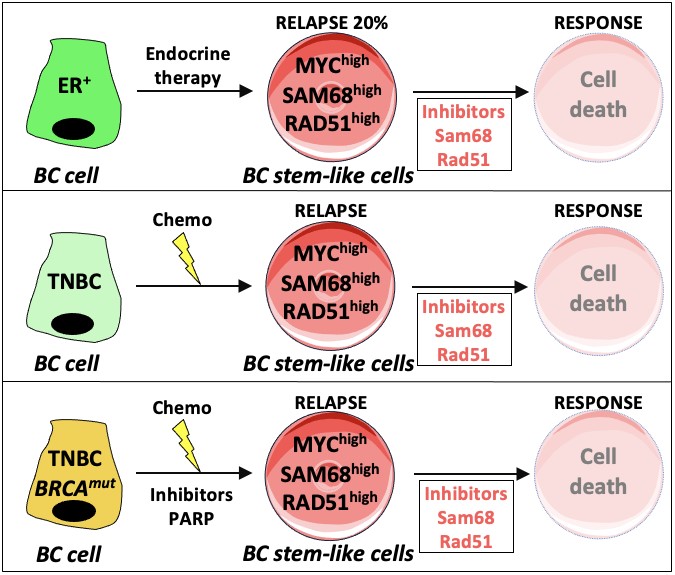
Indeed, the possibility to interfere with the DNA repair mechanism is a promising strategy to face the progression of breast cancers bearing DNA-repair defects. The use of PARP inhibitors proved to target cells harboring an impaired recovery mechanism from DNA errors, such as the inactivation of BRCA. PARP mediates the repair of single-strand DNA filaments and its pharmacological inhibition causes the accumulation of DNA breaks, which are ultimately fixed by the double-strand DNA repair proteins BRCA. Therefore, BRCA-deficient cancer cells, as well as cancer cells harboring dysfunctions in the homologous recombination repair, are subjected to unsustainable DNA damage that leads to a “synthetic lethal” cell death. Although PARP inhibitors considerably improved the therapeutic response of BRCA-mutant BC, inter- and intra-tumor heterogeneity limits the treatment efficacy and causes the selection and expansion of the aggressive cancer stem cell pool expressing Rad51, responsible for DNA damage repair via homologous recombination2,3.
Based on this evidence, we investigated whether DNA repair’s molecular events would underlie the resistance to standard therapy of persistent breast stem-like cancer cells. We demonstrated that the high Myc expression in BC stem-like cells promotes Sam68 transcription, and activation of Rad51 following DNA damage4. Combined targeting of Sam68 and Rad51 reduces the cell viability of BC stem-like cells and induces growth stabilization of tumor xenografts5,6. Thus, our findings suggest the importance of targeting Sam68-PARP1 axis and Rad51 as potential therapeutic candidates to counteract the expansion of breast cancer cells with an aggressive phenotype.
References
- Sung H, Ferlay J, Siegel RL, Laversanne M, Soerjomataram I, Jemal A et al. Global Cancer Statistics 2020: GLOBOCAN Estimates of Incidence and Mortality Worldwide for 36 Cancers in 185 Countries. CA Cancer J Clin 2021; 71: 209-249.
- Cerrato A, Morra F, Celetti A. Use of poly ADP-ribose polymerase [PARP] inhibitors in cancer cells bearing DDR defects: the rationale for their inclusion in the clinic. J Exp Clin Cancer Res 2016; 35: 179.
- Liu Y, Burness ML, Martin-Trevino R, Guy J, Bai S, Harouaka R et al. RAD51 Mediates Resistance of Cancer Stem Cells to PARP Inhibition in Triple-Negative Breast Cancer. Clin Cancer Res 2017; 23: 514-522.
- Poli V, Fagnocchi L, Fasciani A, Cherubini A, Mazzoleni S, Ferrillo S et al. MYC-driven epigenetic reprogramming favors the onset of tumorigenesis by inducing a stem cell-like state. Nat Commun 2018; 9: 1024.
- Gaggianesi M, Turdo A, Chinnici A, Lipari E, Apuzzo T, Benfante A et al. IL4 Primes the Dynamics of Breast Cancer Progression via DUSP4 Inhibition. Cancer Res 2017; 77: 3268-3279.
- Fu K, Sun X, Wier EM, Hodgson A, Hobbs RP, Wan F. Sam68/KHDRBS1-dependent NF-kappaB activation confers radioprotection to the colon epithelium in gamma-irradiated mice. Elife 2016; 5.
Follow the Topic
-
Oncogene
This journal aims to make substantial advances in our knowledge of processes that contribute to cancer by publishing outstanding research.