Long-term wetland biomonitoring highlights the differential impact of land use on macroinvertebrate diversity in Dongting Lake in China
Published in Earth & Environment



Wetlands provide essential ecological functions and services for human, animal, and plant life, including carbon storage, water supplies, fisheries, biodiversity, and recreation, but are under increased threat from human activities and climate change. Since 1990, at least 64–71% of wetlands worldwide have suffered degradation, which includes changes to their physical states, and these changes may result in losses of biodiversity and jeopardize the functions and stability of their ecosystems.
The lack of long-term biological indicators (e.g., macroinvertebrates) in China limits the understanding of historical changes in biodiversity in response to environmental factors, complicating the identification of major drivers of wetland declines. The freshwater biomonitoring systems in China has not been well established prior to 2010, making it challenging to capture longer-term freshwater community dynamics.
In this study, we combined a continuous 30-year-long biomonitoring dataset from Dongting Lake with satellite imagery to investigate the drivers of local ecosystem change. We hypothesize that human-induced changes, including changes in land-use, climate, and hydrology, led to a decline in the integrity of the aquatic community in Dongting Lake. We further hypothesize that these changes occurred along three paths, namely, "land-water connection", "climate change" and "river-lake connection" paths.
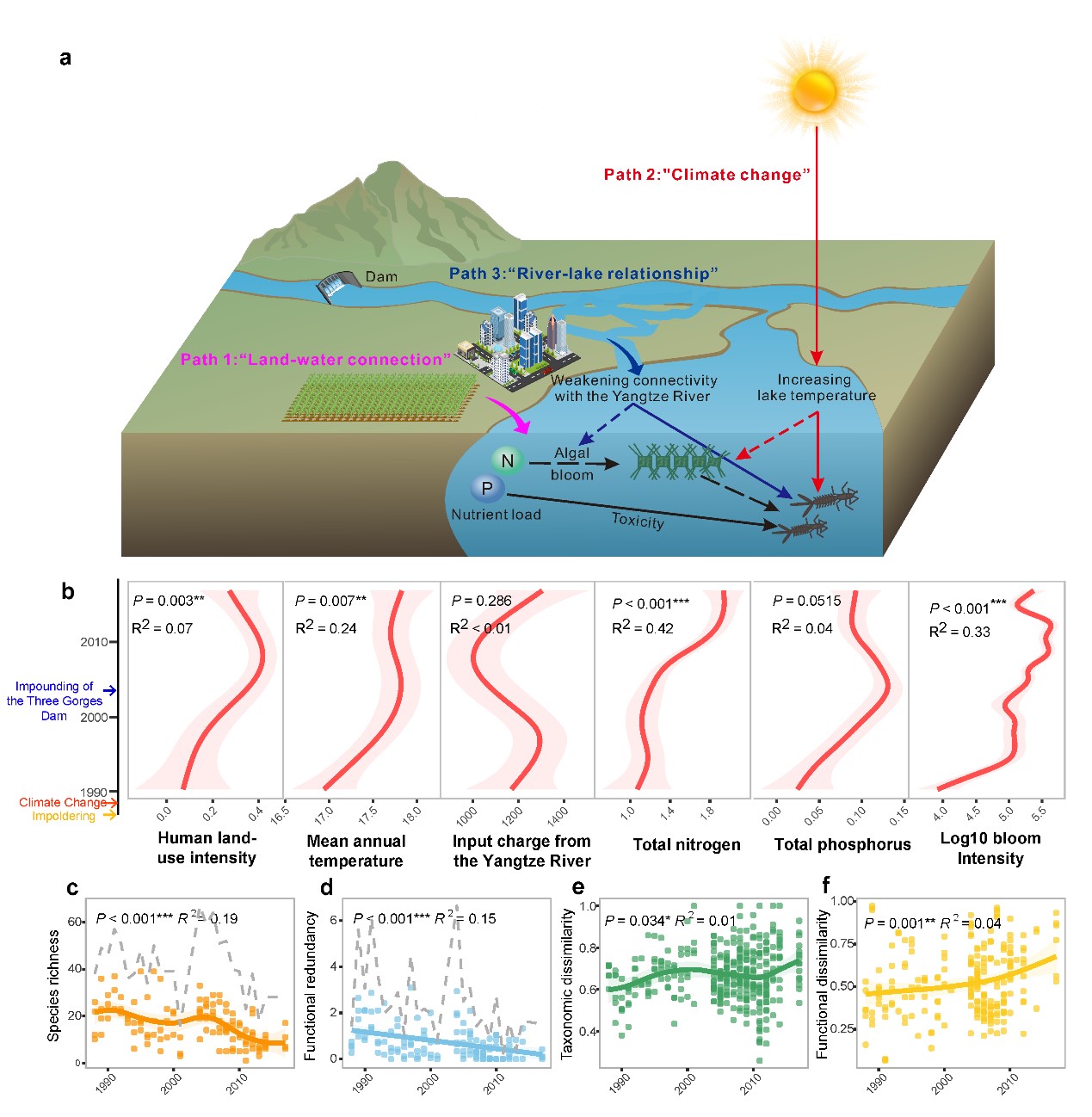
Figure 1 Three possible pathways controlling macroinvertebrate biodiversity in Dongting Lake and temporal dynamics of the ecological status of Dongting Lake.
From 1988 to 2017, the region around the Dongting Lake wetland experienced comprehensive environmental changes, such as an increase in land-use intensity, warming of the climate, fluctuations in its connectivity with the Yangtze River, and increasing frequency of algal blooms. The results revealed declining macroinvertebrate alpha diversity (species richness and functional redundancy) but increased beta diversity (taxonomic and functional dissimilarity).
We applied path analysis based on piecewise fitting of component hierarchical linear-mixed-effects models to test the three hypotheses in Figure 1 for the dynamic changes of the macroinvertebrate communities in Dongting Lake. An increase in nutrients due to changes in land-use intensity in the surrounding terrestrial ecosystem was the primary mechanism for the losses of species and functional groups.
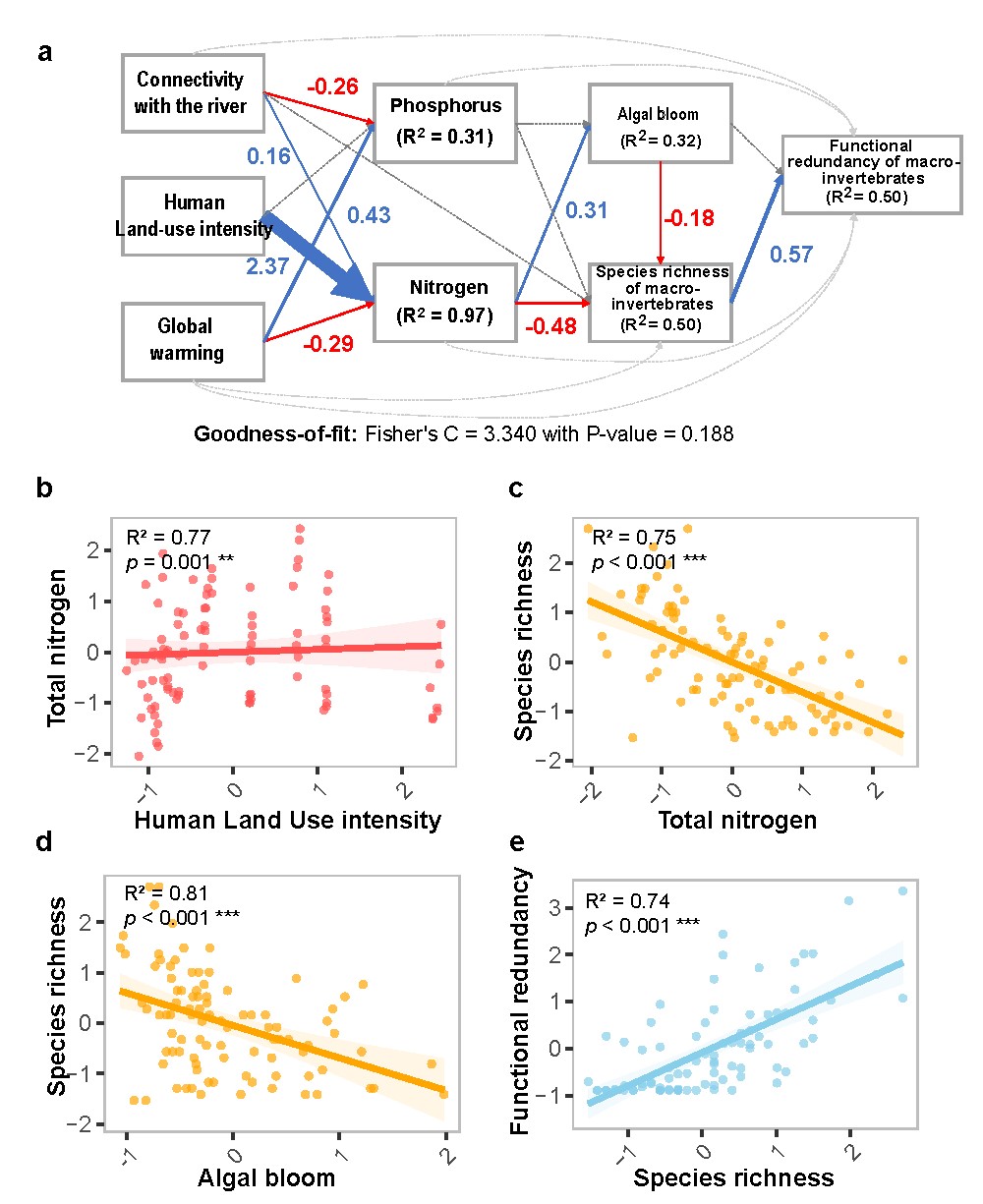
Figure 2 Summary of mechanisms affecting the alpha diversity of macroinvertebrates in Dongting Lake.
To explore the best spatial extent of the associations between human land-use intensity at the surrounding terrestrial ecosystem and parameters in the lake, we tested the associations with increasing terrestrial extent from the sample locations. Alpha diversity changes were most influenced by land-use changes in adjacent land areas 1.5 kilometers from the sampling sites, while beta diversity was affected within 50 meters.
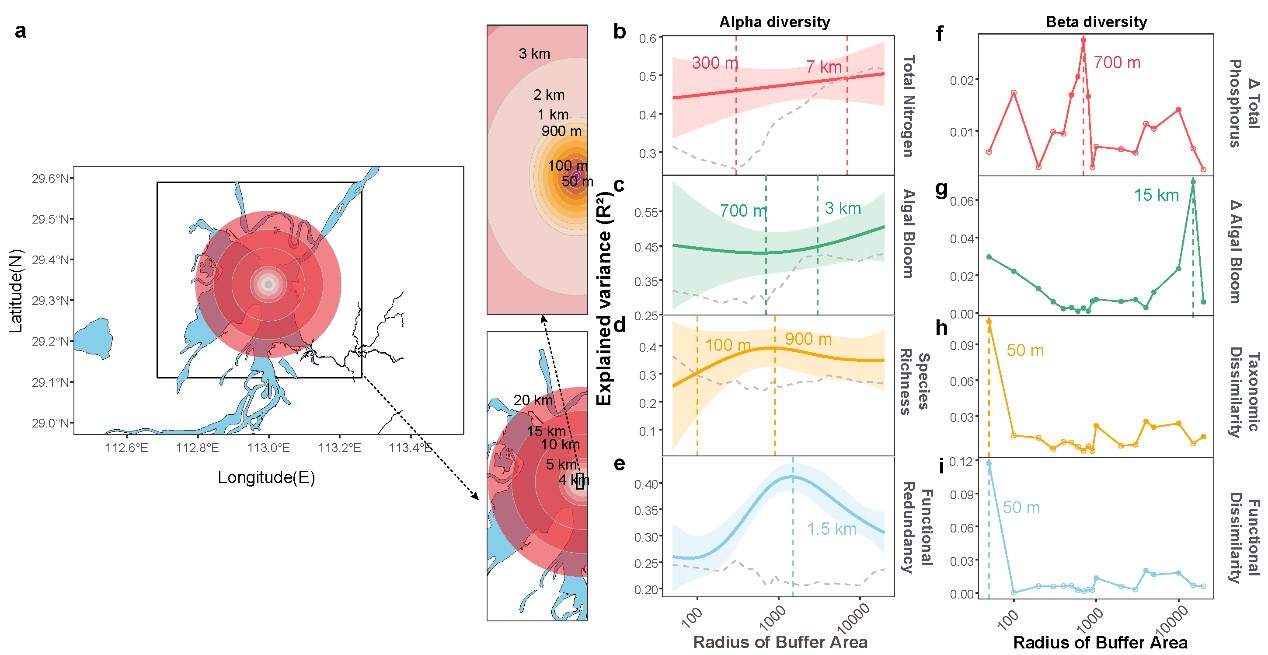
Figure 3 The relationship between human land-use in the terrestrial ecosystem surrounding Dongting Lake and parameters in the lake water across increasing spatial extents.
Our analysis filled a gap in our understanding of the historical dynamics of wetland ecosystems in China while also providing a valuable case study for comparisons worldwide. The results suggest that the land adjacent to the lake is critical for maintaining wetlands and lake biodiversity. Consequently, establishing protected land buffer areas around these wetlands and lakes may be the most suitable strategy for wetland/lake conservation, particularly in the developing world.
With a background in molecular ecology, I am always attracted by the fascinating landscape and diverse biological communities in freshwater ecosystems. My topic focuses on the biogeographical patterns of biological communities, both in lakes and rivers, as well as the local and regional processes that shaping their diversity.
Follow the Topic
-
Communications Earth & Environment
An open access journal from Nature Portfolio that publishes high-quality research, reviews and commentary in the Earth, environmental and planetary sciences.
Related Collections
With Collections, you can get published faster and increase your visibility.
Hazards in Mountain Regions
Publishing Model: Open Access
Deadline: Nov 02, 2026
Carbon Dioxide Removal
Publishing Model: Hybrid
Deadline: Jan 16, 2027

Please sign in or register for FREE
If you are a registered user on Research Communities by Springer Nature, please sign in