“NO Trespassing” how nitric oxide hijacks non-heme iron proteins to control the epigenome
Published in Cancer and Genetics & Genomics



The Origin of the Idea: NO as an epigenetic regulator.
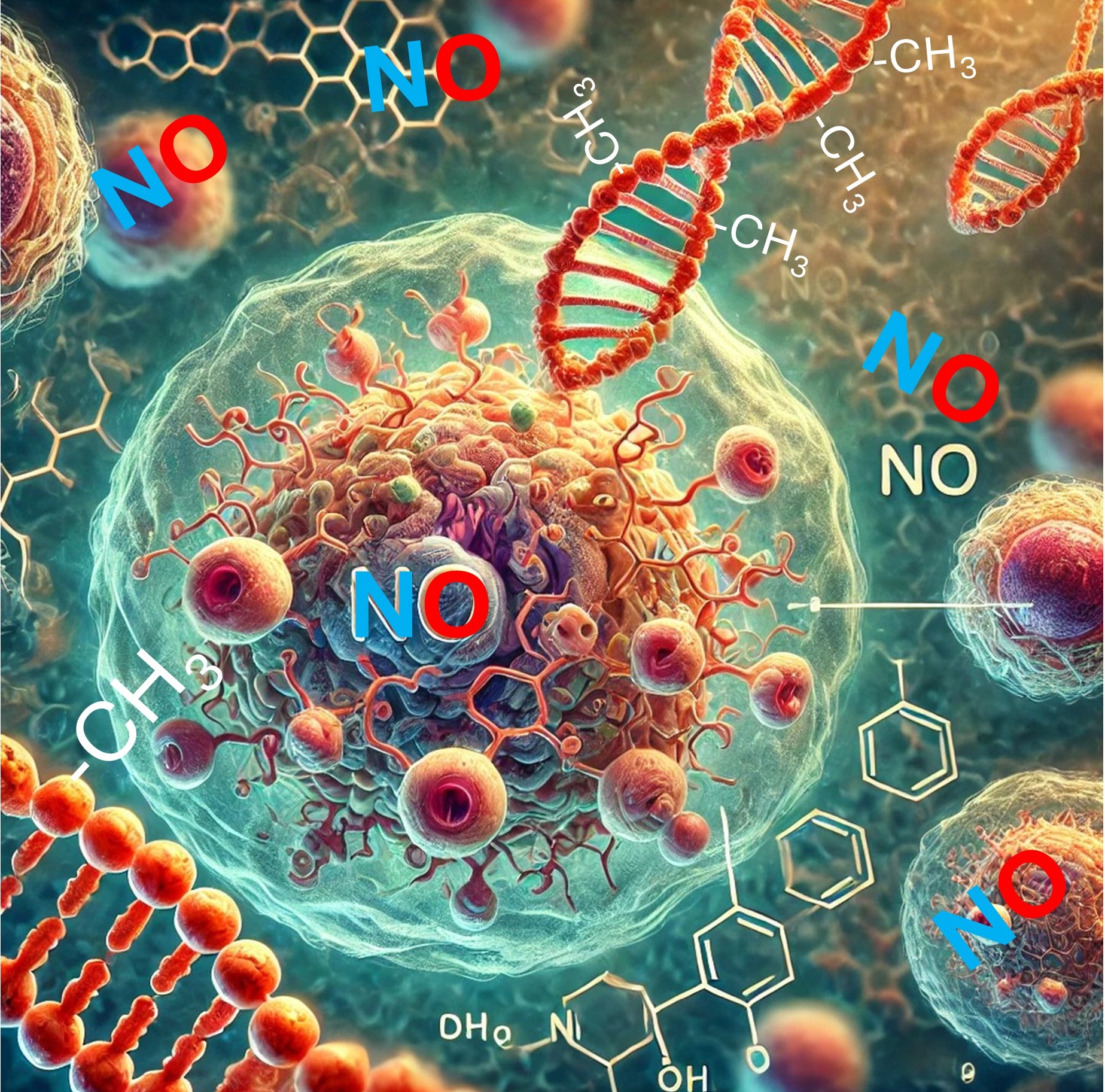
Nitric oxide (NO) is an endogenously generated ubiquitous signaling molecule that plays central roles in human health and disease. Physiological NO signaling occurs predominantly at the post-translational level to regulate fundamental processes such as vasodilation, neurotransmission, and sexual function. Canonical mechanisms of NO signaling occur through activation of soluble guanylate cyclase (sGC) or via the formation of protein adducts containing nitrogen oxide functional groups (i.e. S-nitrosothiol, nitrotyrosine, dinitrosyliron complexes). Although mechanisms of physiologic NO signaling are relatively well established, these canonical pathways do not sufficiently explain how NO drives pathological alterations in gene expression. Epigenetic mechanisms, such as methylation of DNA, RNA, and histones are central regulators of gene expression. Over the past decade our lab has complied multiple lines of evidence to demonstrate how NO can control gene expression via epigenetic means. Specifically, our research demonstrated that NO inhibits mRNA (FTO)1, and histone (KDM) demethylases2, 3, which increases methyl-adducts on mRNA and histones. Methylated mRNA (i.e., m6A) and histones (i.e., H3K9me2) play functionally distinct roles in controlling gene expression by directing mRNA fate or influencing chromatin architecture respectively. We found that, mechanistically, NO has a high affinity for the iron center in these Fe(II)/2-oxoglutarate(OG)-dependent (2-ODD) family of mRNA and histone demethylases. Binding of NO to the non-heme iron atom at their catalytic centers resulted in inhibition. Based on NO’s ability to bind to, and inhibit, mRNA and histone demethylases we asked whether NO could similarly inhibit structurally similar DNA demethylases to regulate DNA methylation patterns.
Challenges and Insights
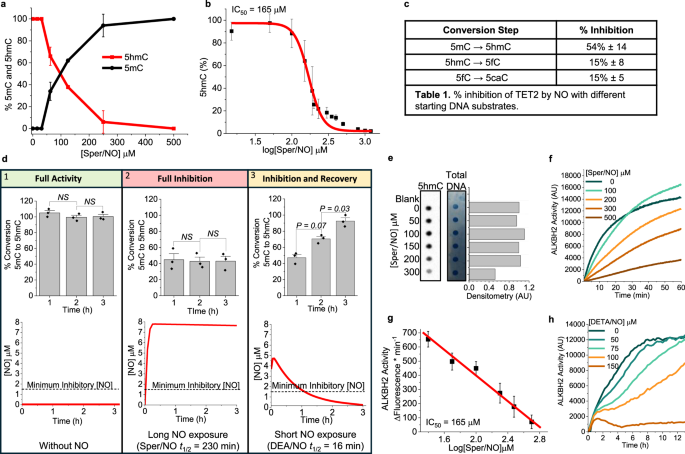
Most proteins that bind O2 (oxygen carriers) or use oxygen as a substrate also bind NO with lesser or greater affinity. In fact, before the discovery of NO as an endogenous signaling molecule, NO was used experimentally as surrogate for O2 to probe oxygen-binding sites of proteins. The general catalytic mechanism 2-ODD starts with 2-oxogluterate binding in a bidentate manner, leaving one iron coordination site available for oxygen binding. We suspected that NO would compete for O2 during this stage of catalysis, bind to the iron to form a mononitrosyl (Fe-NO), and inhibit enzyme activity. To our surprise we did not detect any of the mononitrosyl by electron paramagnetic resonance imaging (EPR). By chance we looked for the dinitrosyliron complex (DNIC) and found a strong signal indicating the binding of 2 NO molecules to the central iron atom. This surprising result suggests that NO does not compete with O2 after 2-OG binding, but instead it NO competes with 2-OG. Although we found previously that DNIC are the most abundant NO-derived cellular adduct formed in cells exposed to NO4, very little is known functionally about DNIC formation. The current results suggest that DNIC formation is a key mechanism of enzyme inhibition.
A surprising finding emerged from our cellular experiments: treatment with NO led to increased levels of both 5mC and 5hmC in isolated DNA. While a rise in 5mC is expected with TET inhibition, an increase in 5hmC was unexpected. Initially, this result was so perplexing that we temporarily set aside the project. However, upon revisiting it, we confirmed the findings across multiple cell types, using three independent methods (ELISA, mass spectrometry, and 5hmC sequencing) in three different labs. Although the mechanisms behind 5hmC accumulation under TET inhibition are not straightforward, we explore several possible explanations in this manuscript.
Further structural work is needed to delineate the specific molecular mechanisms of TET inhibition by NO, and we suspect that the nononitrosyl adduct may actually occur under some biologically relevant conditions. Also, we hope to further explore the cellular mechanism of 5hmC increases as well as dive more deeply into the functional significance of 5hmC at specific locations in the genome.
Impact and Practical Implication
In conclusion, this study demonstrated that NO is an endogenous regulator of TET activity and DNA methylation. This represents an unprecedented functional role for NO in regulating steady-state DNA methylation (and hydroxymethylation) levels. How changes in DNA 5mC/5hmC at specific loci regulate the expression of NO-responsive genes and how this mechanism synergizes with or antagonizes other canonical NO signaling mechanisms is still an open question. In cancer, further mechanistic studies are needed to fully understand the functional consequences of NO-mediated TET inhibition in relation to transcriptional malleability, transcriptional heterogeneity, and phenotypic plasticity, all associated with more aggressive tumors, worse patient prognosis, and resistance to chemotherapies. Although the findings presented herein have been in the context of cancers (breast), we suspect that the fundamental discovery that NO inhibits TET enzymes to change DNA methylation patterns is a contributing factor to numerous diseases where there is dysregulated NO synthesis and aberrant DNA methylation patterns. Moreover, this discovery raises the possibility that NO could regulate DNA methylation to control gene expression under physiological settings which should be explored further. Our previous work demonstrated that NO is an endogenous regulator of histone post-translational modifications and mRNA methylation, and here we show how NO regulates DNA methylation. Therefore, in addition to its canonical roles in cell signaling and gene expression, NO should be recognized as a dominant regulator of the epigenetic landscape.
The bigger picture: NO is a highly conserved signaling molecule found across a wide range of organisms, including bacteria, fungi, plants, and various animal phyla. Also, DNA methylation is widely used as an epigenetic regulatory mechanism in many organisms, but it varies significantly across domains of life. The presence of DNA demethylases, or other mechanisms for methylation removal, differs among these organisms. We hope our study opens new avenues of research and exploration to determine the potential impact of NO on DNA methylation in these diverse areas.
References
(1) Kuschman, H. P.; Palczewski, M. B.; Hoffman, B.; Menhart, M.; Wang, X.; Glynn, S.; Islam, A.; Benevolenskaya, E. V.; Thomas, D. D. Nitric oxide inhibits FTO demethylase activity to regulate N(6)-methyladenosine mRNA methylation. Redox Biol 2023, 67, 102928. DOI: 10.1016/j.redox.2023.102928 From NLM Medline.
(2) Vasudevan, D.; Hickok, J. R.; Bovee, R. C.; Pham, V.; Mantell, L. L.; Bahroos, N.; Kanabar, P.; Cao, X. J.; Maienschein-Cline, M.; Garcia, B. A.; et al. Nitric Oxide Regulates Gene Expression in Cancers by Controlling Histone Posttranslational Modifications. Cancer Res 2015, 75 (24), 5299-5308. DOI: 10.1158/0008-5472.CAN-15-1582.
(3) Hickok, J. R.; Vasudevan, D.; Antholine, W. E.; Thomas, D. D. Nitric oxide modifies global histone methylation by inhibiting Jumonji C domain-containing demethylases. J Biol Chem 2013, 288 (22), 16004-16015. DOI: 10.1074/jbc.M112.432294 From NLM Medline.
(4) Hickok, J. R.; Sahni, S.; Shen, H.; Arvind, A.; Antoniou, C.; Fung, L. W.; Thomas, D. D. Dinitrosyliron complexes are the most abundant nitric oxide-derived cellular adduct: biological parameters of assembly and disappearance. Free Radic Biol Med 2011, 51 (8), 1558-1566. DOI: 10.1016/j.freeradbiomed.2011.06.030 From NLM Medline.

Follow the Topic
-
Nature Communications
An open access, multidisciplinary journal dedicated to publishing high-quality research in all areas of the biological, health, physical, chemical and Earth sciences.

Related Collections
With Collections, you can get published faster and increase your visibility.
Women's Health
Publishing Model: Hybrid
Deadline: Ongoing
Tumor Microenvironment Crosstalk and Therapeutic Implications
Publishing Model: Hybrid
Deadline: Nov 02, 2026